Stevens’ U.S. Senate policy agenda seeks to help Black, minority communities thrive
Jan 17, 2026 | 10:00 am ET
Description
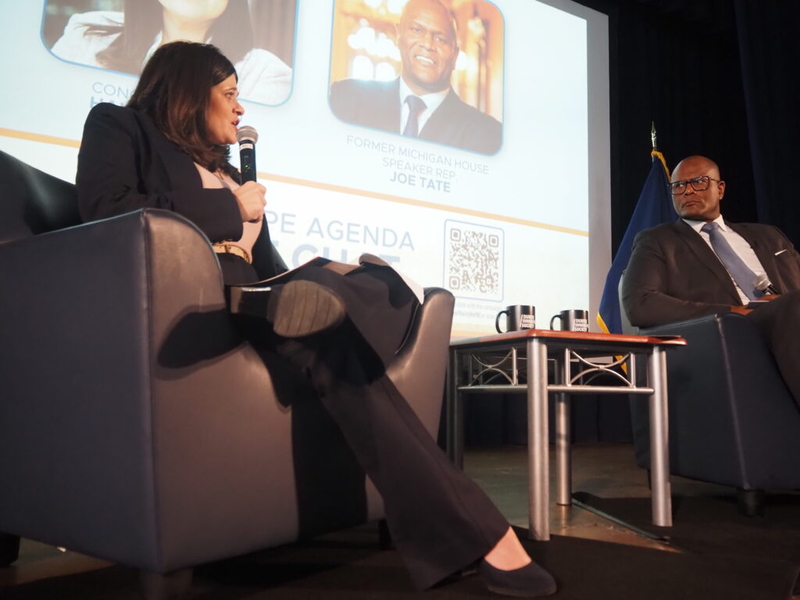
U.S. Rep. Haley Stevens (D-Birmingham) talks with state Rep. Joe Tate (D-Detroit) at the Durfee Innovation Society as she unveils her policy agenda for Black and brown communities in her bid for the U.S. Senate. Jan. 16, 2026 | Photo by Ben Solis/Michigan Advance
DETROIT – U.S. Rep. Haley Stevens said Friday that a key portion of her time in the U.S. Senate, if she becomes the Democratic nominee in August and is elected in November, would focus on helping Black, brown and other minority communities thrive across Michigan.
Stevens visited Detroit this week to roll out what those plans might look like, calling it her “Michigan Hope Agenda.” The congresswoman unveiled the policy proposals during a “fireside chat” Friday moderated by state Rep. Joe Tate (D-Detroit) at the Durfee Innovation Society.
Stevens said she would focus on equitable federal investments back into communities, economic empowerment and access to capital, safer communities so families and businesses can flourish, and health and stability for those same families. The congresswoman further extolled the need for education innovation and workforce assurances, well-managed water and infrastructure, and lowering the overall costs of housing.
Stevens said that for her to succeed in the U.S. Senate, she needs to make sure that residents back home can connect the dots to quality economic development that doesn’t leave minority communities behind.
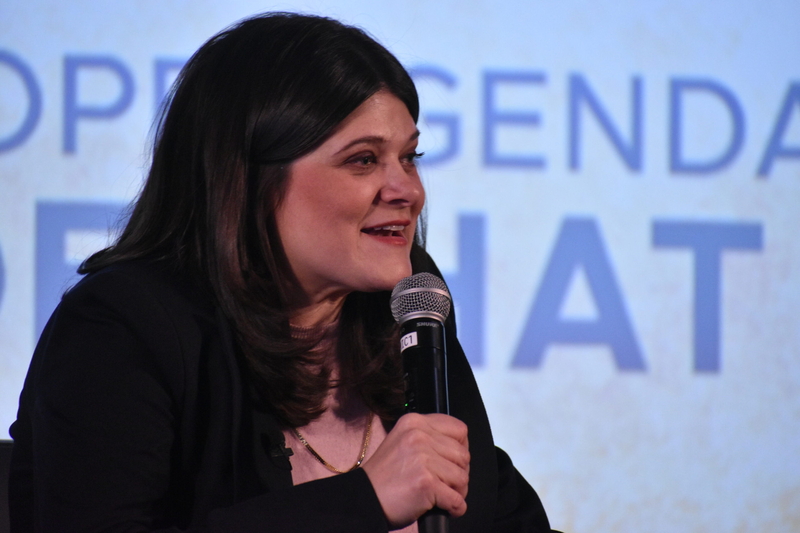
“We know that there, for too long, have been communities that get overlooked. We know that there has been a lack of investment in communities of Black and brown communities,” Stevens said. “That hope for equal really deeply matters.”
That’s why things like housing and investments and public health will take center stage in a would-be Senate tenure for Stevens.
“It’s a path for all of us to succeed,” she said. “And to do this in the Motor City, the heart of Detroit, we’re going to put our stake into what Michigan needs at the lawmaking table, in that chief lawmaking role for our state, in the U.S. Senate.”
Stevens previously worked as an organizer and later in the administration of former President Barack Obama as the chief of staff to his auto rescue efforts. The congresswoman said that people had written Detroit off the map, but now, the lights continue to be on in the city and it has become a beacon of urban renewal since those Obama years and onward.
She hopes to continue that work serving in the Senate as she ramps up her bid to win the Democratic nomination in the August primary. She would have big shoes to fill after U.S. Sen. Gary Peters announced that he would not seek reelection this year, although both he and Stevens have been routinely hailed as two of Michigan’s most effective federal lawmakers.
Stevens, Peters rated most effective Democrats in technology, other key policy areas
Making a policy pronouncement on how she would assist minority communities, at the top of the year, follows Stevens’ aim to make a splash as primary season gets into full swing — she currently faces a three-way race with state Sen. Mallory McMorrow (D-Royal Oak) and former Detroit health official Abdul El-Sayed.
On federal investments, Stevens said she would work to ensure federal resources and infrastructure dollars are delivered equitably to underserved Michigan communities to strengthen public services, transit, and economic opportunity where it is needed most.
Stevens would expand access to capital and training for underserved communities and advance an industrial policy that creates jobs, lowers costs, and strengthens Michigan’s economic future.
Safer communities would take precedence in her policy agenda, and Stevens said she would advance fair and accountable policing, invest in community-based violence prevention, and strengthen common sense gun safety laws to protect families and rebuild trust.
A common theme for the Democrats in the race, Stevens said her tenure would also focus on health care issues, particularly lowering the costs of care, advancing health equity, protecting science-based care, and defending Social Security, Medicare, and Medicaid so Michigan families can live with dignity, health, and security.
A 21st Century manufacturing model would guide her policy focus with an emphasis on investments in STEM and job-training pipelines, and other policies that strengthen the supply chain and prepare workers for the industries of the future.
Clean and safe drinking water is also top of mind for Stevens. She said she would champion funding for lead pipe replacement and ending PFAS contamination, all with a focus on environmental justice.
Housing is also a big component of the plan. Following the chat with Tate, Stevens told reporters that her plan would also focus on Generation Z homebuyers who may feel like they are left out of attaining home ownership due to financial strains and lack of access to the very capital she wants to make available.
She said that was something that she and Tate, the former Michigan House Speaker, often talk about at the local level in Detroit.
“Under his leadership, there were some remarkable improvements to our housing development here in the state. There is a lot more to do, though,” Stevens said. “It’s not just about starting the conversation and recognizing that home ownership now begins at a much later age. For this next generation, we need to put more money in people’s pocketbooks.”
Stevens said one of the federal solutions she’s working on legislatively is for a pre-tax savings program so people can buy homes earlier.
“That way, we can increase the affordable home stock here in Michigan and support our building trades as we move forward,” Stevens said. “But this has to do with an economic agenda that is clearly not serving us well under this current administration. Erratic tariffs have been a tax on people. Their pocketbooks are being stretched, and that’s taking away from the investments that people could be making in that first home.”
Lansing, MI