Fearing arrest and deportation, immigrant parents look for willing guardians for their kids
Jan 09, 2026 | 1:01 pm ET
Description
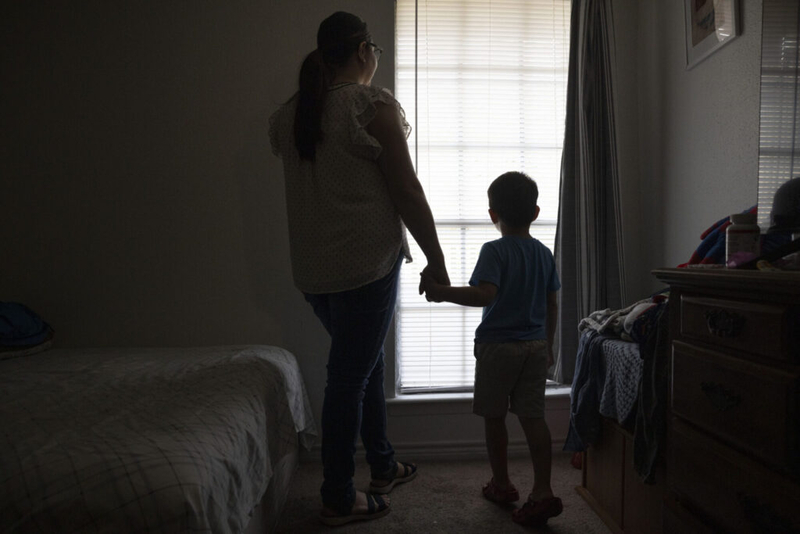
"Having this Plan B gives me peace of mind, knowing that no matter what happens my child will be protected and cared for," said an immigrant mother who lives in Metairie, pictured here in August 2025. (Photo by Christiana Botic/Verite News and Catchlight Local/Report for America)
For weeks after hundreds of U.S. Border Patrol agents were deployed to New Orleans as part of the Catahoula Crunch immigration crackdown, one Metairie woman and her husband — both of them undocumented immigrants from Honduras — lived in isolation, barely leaving the house.
Each time they leave, the woman said, they risk arrest, detention and deportation. She asked not to be identified for fear of being targeted by immigration enforcement agents. (Verite News previously interviewed the woman in August.) Her husband, a construction worker, stopped going to work entirely for the first few weeks of December, after the beginning of the U.S. Border Patrol surge in New Orleans.
Despite the risk, he has since returned to work, she said, because they need the money.
“He needs to go out and work, we have rent to pay,” she said in a message on WhatsApp in December.
“My husband works alone when he is sure that there is not much movement on the streets,” another message, sent in January, said.
The couple worry about what would happen to their child — a 4-year old U.S. citizen — if they do get picked up. So they devised a backup plan — a notarized letter that names a close friend they trust as a temporary guardian for their son, also called “provisional custody by mandate.” The letter, which was drafted in March, authorizes the friend to take the child to and from school, to take him to his medical appointments and, if necessary, to travel with him out of the country.
“Having this Plan B gives me peace of mind, knowing that no matter what happens my child will be protected and cared for,” the mother told Verite News. “This decision was made with my child’s safety and stability in mind.”
As President Donald Trump’s immigration crackdown continues, a growing number of immigrant parents — even some with legal status in the U.S. — across the New Orleans metro region are making such provisions to protect their children’s well-being, immigrant rights groups told Verite News.
There is no publicly available data to show how many temporary guardianship arrangements have been created in Louisiana since Donald Trump’s second presidential inauguration or since the “Catahoula Crunch” operation began in December because these mandates are private legal documents, not court orders. But representatives from local organizations that support Latino and immigrant communities, including Puentes New Orleans and Familias Unidas en Accion said they have seen a sharp increase in families requesting help with making provisional custody arrangements.
Leticia Casildo, executive director of Familias Unidas, said before 2025, her organization encouraged undocumented parents to create guardianship arrangements for their children should they ever be detained, but back then, the group had few takers.
“Maybe we would have 10 people sign up in one year,” Casildo said.
Last year, however, Casildo said more than 200 families requested help to arrange for temporary guardianship. Since Catahoula Crunch launched, Casildo said, Familias Unidas has been arranging for volunteer notaries to visit peoples’ homes to assist with getting these legal documents signed because many are afraid to leave their residences.
Suma Setty, a senior analyst of policies affecting immigrant families at the Center for Law and Social Policy, said her organization has received a “huge increase” in inquiries about temporary guardianship from local advocates and child care providers.
“The reason why these are becoming more popular is because parents are terrified” of what could happen if an arrangement is not in place, Setty told Verite News in a phone interview Thursday.
In April, U.S. Immigration and Customs Enforcement agents deported two mothers from Honduras, and their U.S. citizen children, after they were taken into custody at routine check-ins with operators of the agency’s immigrant surveillance program. A lawsuit filed in August on behalf of both families alleged that the mothers were not given the opportunity to arrange care for their U.S. citizen children, including one boy who was in treatment for stage 4 cancer.
In July, ICE issued a policy directive instructing officials to designate a “detained parent coordinator” and to “facilitate required participation in family court, child welfare, or guardianship proceedings, and communication with child welfare services” when parents or legal guardians of minors or incapacitated adult dependents are detained. ICE officials did not immediately respond to a request for comment on this article.
The Center for Law and Social Policy interviewed undocumented immigrant parents in six states last year. Setty said the parents who already had agreements in place were people with large social networks that included adults with legal status in the U.S. who they trusted. She stressed the importance for advocates to connect immigrant parents who don’t have those networks with people who they can build trust with.
Although temporary guardianship agreements vary from state to state, Setty said they generally allow for another adult to make decisions about children’s education, medical care and sometimes finances, while they are separated from their parents.
“These agreements are critically important for immigrant parents to ensure the best possible care for their children,” Setty said.
Arthur Ago, director of strategic litigation and advocacy at the Southern Poverty Law Center, who focuses on education and youth policy, acknowledged that such arrangements are often the best way to guarantee a child’s security when a parent is taken into immigration custody, he wishes that parents were not being forced to make them. Sudden changes in a child’s family structure have long-lasting negative consequences, he said.
“You are going to end up with children that could potentially be socially isolated within that new guardian unit, let alone if they have to move school districts,” Ago said. “That isolation destroys any sense of security and hope for children. … And that is going to set them back years.”
Originally from Guatemala, Mayra, a New Orleans mother of three with work authorization in the U.S., said she worries about how the “persecution” of immigrants is affecting her three children. Her two daughters are glued to the social media accounts of local immigrants rights activists, watching to see where Border Patrol and ICE agents are showing up next. Whenever there are alerts that agents are in their community, her kids beg her not to go outside, she said. And when she goes to work as a cleaner, they inundate her with phone calls to make sure she’s safe and will return home.
“I think the fear that they feel is more than I feel,” Mayra, who asked Verite News to use her first name only because she fears being targeted by immigration enforcement, said in Spanish, speaking through an interpreter. “After all this [is over] I don’t think they’re gonna be the same.”
When the Border Patrol operation began in New Orleans Mayra sat her daughters — ages 10 and 13 — and her 18-year-old son down to tell them the plan she’d come up with if she were to be detained. The conversation was difficult, she said. When she told her son he’d have to sell her car to make sure they had enough money to get by without her, at least for a while, the children burst into tears.
But the first thing they’d have to do, she said, was call Elizabeth, a social worker they’d known since her youngest daughter was a baby. Elizabeth had agreed to take care of the kids if Mayra were to get picked up.
Mayra didn’t make a formal arrangement with Elizabeth. Since her eldest son is 18, he would be able to maintain legal guardianship of his younger siblings. And with his permission, Elizabeth, who asked to be identified only by her middle name, would do the actual work of taking care of them.
Mayra said she trusts Elizabeth — who has previously taken the children to Guatemala to visit their family members there — completely.
Mayra and Elizabeth have both spoken about preparing her children to be independent in case they’re separated from their mother.
“It’s out of necessity, they need to be able to survive without [her],” Elizabeth, who said she is honored that Mayra asked her to watch over her children, said. “[It’s] deeply sad for the orientation for your kids to have to shift in that way.”
This article first appeared on Verite News New Orleans and is republished here under a Creative Commons Attribution-NoDerivatives 4.0 International License.

Baton Rouge, LA