Finding a long term farm aid fix after huge agricultural losses
The Trump administration proposed $12 billion in aid to farmers to help recover from temporary market disruptions and high production costs. However, the administration did not mention the effect of the tariffs that Trump put into place, which critics have said are responsible for decreased agricultural exports and hurting farmers’ bottom lines.
While these one-time payments are expected to provide some relief, some farmers and economists want to see a long-term farm bill.




In Episode 8, we’re handing the reins to our States Newsroom colleagues at the Kansas Reflector. Over in Topeka, the Kansas Reflector Podcast spoke with Jennifer Ifft, an extension specialist in agriculture policy at Kansas State University.
Ifft talked with Kansas Reflector senior reporter Morgan Chilson about why long-term aid from the federal government is needed to support farmers.
Episode produced and edited by Mallory Cheng. Music for Stories From The States composed by David Singer. A special thank you to Morgan Chilson from the Kansas Reflector.
Got questions? An episode idea? Email us at [email protected].
Subscribe to Stories From the States on Apple Podcasts, Spotify and Youtube.
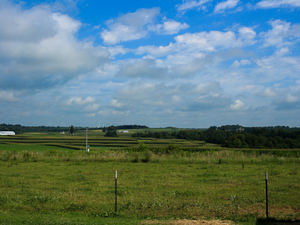
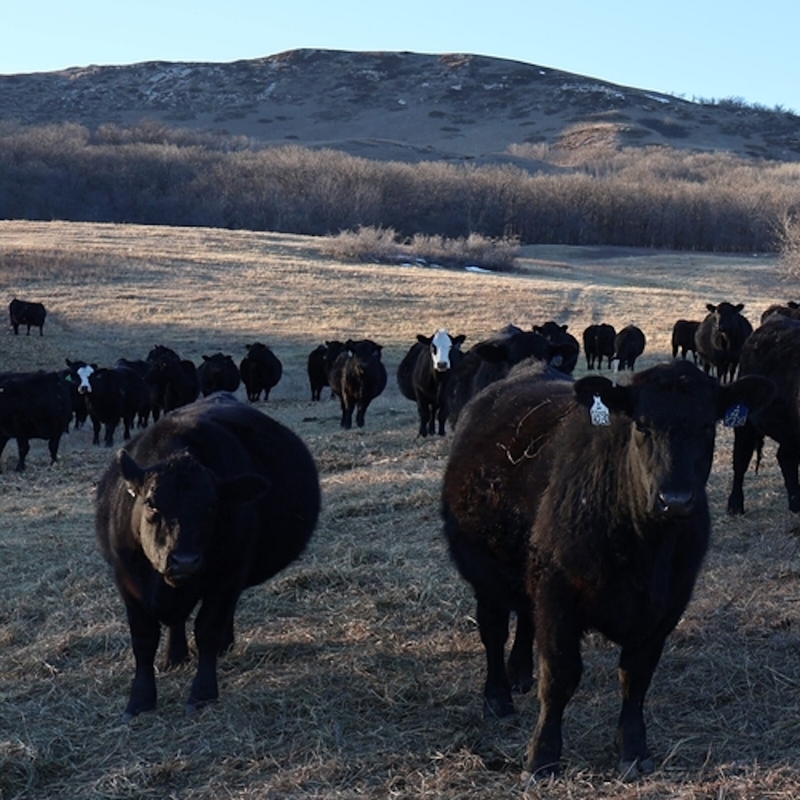
Photo: Cattle roam in a pasture near Killdeer in southwest North Dakota. (Jeff Beach/North Dakota Monitor)
Stories From The States is a production of States Newsroom, the nation’s largest state-focused nonprofit news organization, with reporting from every capital. At this pivotal moment in American democracy, our veteran journalists from all 50 states are reporting the consequences of government decision making. By zooming into one story each week, Stories From the States contextualizes and gives a human voice to what is happening now.
Transcript was created using an automated software.
Chris Fitzsimon
This is Stories From The States. I'm Chris Fitzsimon. Here at States Newsroom, we know there's a lot going on around the country, in every state. Thank you for being here. This week, we're talking about financial relief for farmers. The Trump administration proposed $12 billion in aid to farmers to help recover from what they cal...
Transcript was created using an automated software.
Chris Fitzsimon
This is Stories From The States. I'm Chris Fitzsimon. Here at States Newsroom, we know there's a lot going on around the country, in every state. Thank you for being here. This week, we're talking about financial relief for farmers. The Trump administration proposed $12 billion in aid to farmers to help recover from what they called temporary market disruptions and high production costs. The administration did not mention the effect of the tariffs that Trump put into place. While this aid is providing relief, some farmers and economists want to see a long term farm bill.
Jennifer Ifft
So you know, once the Farm Bill programs aren't being perceived as doing enough, then you start having ad hoc programs, which you know do provide often provide much needed help, but you don't know when they're going to come.
Chris Fitzsimon
Over in Topeka, the Kansas Reflector Podcast, spoke with an economist on why long term aid from the federal government is needed to support farmers. This week, we're handing the reins over to our States Newsroom colleagues at the Kansas Reflector we'll let Senior Reporter Morgan Chilson take it away.
Morgan Chilson
Thank you for joining the Kansas Reflector Podcast today. I am here with Jennifer Ifft who is going to talk with us about agriculture and the industry and what we're seeing right now. I feel as if, as someone who's been covering the business side of agriculture this year that we've seen a lot of different stories, a lot of different approaches, a lot of things about rising input costs and the impact of trade and tariffs and things like that. So I'm looking forward to hearing from Jennifer. Hi. How are you doing today?
Jennifer Ifft
Great, great. Great to be here.
Morgan Chilson
Well, thank you so much. Let's start by just introduce yourself and tell me a little bit about the work that you do.
Jennifer Ifft
All right. My name is Jennifer Ifft. I am based in the Department of Agricultural Economics at Kansas State University. I hold the Flinchbaugh Agricultural Policy Chair, and I'm also the State Extension specialist in agricultural policy.
Morgan Chilson
Wear a lot of different hats there.
Jennifer Ifft
Absolutely.
Morgan Chilson
Yeah, that gives you a good overview of what's happening and happening in agriculture. And you know, I started by talking just a little bit about some of the things that we're seeing that are just really affecting our Kansas farmers and ranchers. Can you talk a little bit about what the biggest issues are that you've seen so far this year?
Jennifer Ifft
Right? Right? Well, if I had to pick one thing that's uniform, I'd say rising input costs across the board, or, or, you know, not necessarily rising from last year, but still at elevated levels. It varies from category to category. So that's the one common thing is this general inflationary pressure on production expenses. But once you get beyond that, I think this year, more than ever, you really have to look at crop supply stock separately. So the you know, the one category of expenses that hasn't gone up is feed. Feed costs have gone down. Cattle prices. Focus on cattle just because we're based in Kansas, right? That's most, most, but not all of we have a substantial and growing dairy sector that's very important, but it's, it's mostly beef cattle. The beef cattle prices are high, historic highs. You know, for the cow calf side, especially, they're finally making money after, you know, some, some pretty long, rough spells. So that would be called a margin expansion, where you have strong prices, and at least on the feed side, expenses are going down. On the crop side, it's opposite. We call that a margin squeeze. So prices are down, not necessarily historic lows, but they're down. Expenses are down too, but not that much, not, you know, back to two previous levels. So margin squeeze on the crop side, margin expansion on the livestock side, especially beef cattle.
Morgan Chilson
That is one thing I've noticed as I talk to different folks throughout the state, is getting a lot of different stories about, you know, just depending on who I'm speaking with, I mean, where there's..
Jennifer Ifft
Oh absolutely.
Morgan Chilson
Yeah, yeah. So one of the reports that you all have put out this year, I think it came out in October on and it looked, took a really good look at agricultural income. It talked about net farm income. Can you tell me what's included in that calculation?
Jennifer Ifft
Right? Right? So that is a statewide measure of farm income. You could think of it roughly like agriculture GDP, gross domestic product, or gross state product. I don't know what you'd call it, but for the state of Kansas, so it's it's all revenues on the crops and livestock side, all expenses as well. And then you have a couple other you have something called farm related income. We make adjustments for inventory levels, we account for depreciation. So those are the things that are in there, but what it really reflects is all the revenues across different crops and livestock and all expenses. It's an aggregate number. It is not a farm level number.
Morgan Chilson
Okay, so, yeah, so that's why when I took a look at that report, it was reporting an increase this year of approximately 88% in net farming. But again, it's not separating out those industries right, in terms of crops?
Jennifer Ifft
No.
Morgan Chilson
and cattle. So is that what?
Jennifer Ifft
No
Morgan Chilson
A little bit about why that increases there?
Jennifer Ifft
Yeah, yeah. And if you a couple, first of all, if you look at net farm income in Kansas, it goes, I think it's got gotten down to close to 2 billion. It can go up to like nine, 10 billion. So there is just swings. And, you know, farm income, you add you you know, you add our weather, you add crop markets, you have cattle markets. Lot of swings in farm income historically. So that is nothing uncommon, that 88% it's a high number, and to a large degree, it reflects strong cattle prices, strong beef cattle prices. But that's not the whole story. Another part of the story is government payments. There's large increase in government payments in the 2025, calendar year, but you gotta take that carefully, and I need to explain how we measure net farm income, to really put that government payments number in context, which is a substantial part of the 88% increase. So net farm income, what's not important is, if we measure that, it's 9.1 or $9.3 billion that you know that the specific level isn't as important as this is a well understood measure, like we know what the different components are, and we're doing it consistently. We want to understand the change in the components, and we want to be able to compare to last year. Compare to last year. That is the most important thing with with these numbers, and how we do that for government payments, is we count them in the year that they are received. So a large, much larger amount of government payments are being received in 2025 so if you were doing farm level accounting, you might do an accrual adjustment. So those payments for 2025 are mostly disaster payments, either for low profitability for crop farms or disaster payments, and those cover losses from 2023 and 2024, so you would see much smoother income if you assign those payments into the year that loss was incurred. But you don't do that for you know, it's just consistent reporting an accrual adjustment doesn't make sense for the state level net farm income measures for farm level. It makes a lot of sense. So you gotta, and this isn't necessarily an issue every year. It's just this year, just because of all all these things that are happening together, it really sticks out.
Morgan Chilson
That's one thing I think I've we've mentioned when we've talked in the past that, um, I always think about is that data can be made if you don't understand what's behind the data, then you're gonna in a spot, it can be made to show a lot of different things. And I did not understand that the delay in those payments that was really making that kind of pushing up that net farm income amount for this year. I did notice that the report was projecting a decrease for 2026. Can you talk about what's behind that, and how you write those projections
Jennifer Ifft
Right? So there's not, at this point, we don't see large, large swings. There are some changes on, you know, the crops and livestock receipts and on the the expensive side, but government payments are projected to come down, and that gets back to consistent measurements. When you do the state forecast, we don't guess about programs that we don't know about. And so for these ad hoc and disaster payments, you don't know until it's authorized, right? So you know. So those 2025 payments, they're on this year, because this is the year they're authorized. We know about them. The 2026 government payments only reflect the ones that are in the Farm Bill. And we do expect some substantial ARC and PLC. So Agricultural Risk Coverage, Price Loss Coverage, that's for your major commodity crops, the protection provided by those programs was increased in the One Big, Beautiful Bill Act in July. But that's known. So once you know that a program, you know is going to happen, it's authorized, you can do the forecast. If I was going to do a personal forecast, I could say, Well, I think there's a 50% chance that there's going to be $12 billion in tariff relief, you know, trade war relief, whatever you want to call it, for our crop producers. I'm going to put that in my forecast, and that would be fine. I think a lot of you know could argue over the numbers, but for you know, these official forecasts, you don't, you don't make those kind of guesses that there's just a lot of lot of uncertainty. So you know that's not in there at all. It's only about what we know today.
Morgan Chilson
Right? You know, I spoke with someone earlier this year, and then, of course, as I talked to farmers and ranchers around the state, they all talk about the need for a long term farm bill. And I know one person I spoke with said that it would be really nice to look out 20 years even, so that we had some type of, yeah, the dream, and we can't even get the five year one to pass. Why is it important farmers and ranchers, as they do their work and make their plans, to have some type of certainty?
Jennifer Ifft
Well, farmers and ranchers, I'd argue, especially in Kansas, are absolutely experts in risk management. I mean, if they're surviving, they're they're dealing with this. You know, again, you face, markets go up and down, yields go up and down. So that's, that's a part of agriculture. And then there's this, this policy stability component. And you know, it's farm income, farm the farm safety net. And this could change next year. We'll see. But since about 2018 19, these ad hoc programs have been a big part of the farm safety net. And there, you know, there's some trade offs there. These, these programs cover real losses. They help, you know, they help, help our help the agricultural community. But do you plan on them? Right? They're not predictable. They're as needed. Whereas you have crop insurance or something that's in the Farm Bill, you can make some plans. I think five years might be looks like the optimistic forecast. Five years, right? So you know, once the Farm Bill programs aren't being perceived as doing enough, then you start having ad hoc programs, which, you know, do provide, often provide much needed help, but you don't know when they're going to come. You don't know whether they're going to come. And then maybe you don't know when they're going to come. Sometimes it's, you know, maybe one or two or even three years later, and that's, you know, if you think, if you're making farm management decisions, again, the help that, you know, it's helpful for a lot of people. But let me give you an example to make this more concrete. So if you're your crop producer, it's mid November right now. Some producers have probably already paid for some of their inputs right now. So seed is a big one. If you pay early, either in cash or through early financing, you can usually get a lower price. So it's a farm management strategy. It also helps the seed manufacturers with their inventories and other things. So this is a common practice. So let's say you're a crop producer. Margins are tight this year, but that, you know, there's some advantage to prepay, you have to work with your lender. But, you know, there's been talks about $12 billion maybe 15, for some type of trade aid for crop producers. And we've heard a lot about this in the media. This isn't my guess at all. We've heard about this. So if you're that producer, do you say, Okay, I like you have to figure out what you think is going to happen, what you believe that's personal, and then you have to make this risk management decision, which, again, it's very personal, no right or wrong. But do you make your decision? Do you ignore that you could be getting a substantial payment, maybe in a month, maybe in six months, and make that decision, or do you hold on wait. And so there is this, you know, this, this, this aspect of farm management that has to take into account the uncertainty of had ad hoc payment. So we did a my colleague, Brady Brewer, and I did a webinar on that last January, farm management, the ad hoc era, you know, we're putting out an extension publication in December talking about this sort of consideration, and saying, you know, look, if you get these additional payments, maybe have a strategic plan for how you would use them to put yourself in a better position for the next two years. Right?
Morgan Chilson
That makes a lot of sense. I know a lot of folks that I talked to were holding off on equipment purchases and things like that, because those it's so expensive and they don't want to put themselves out there in terms of being strategic. So...
Jennifer Ifft
Absolutely.
Morgan Chilson
I had a reporter from New Zealand reach out to me, and it was a really interesting email. He just was talking about something that was happening in the states with the Farm Bill, and he asked me, he said, 'our farmers feel like they can never be really competitive with the US because of the subsidies they get from the government'. A little bit about how important those subsidies are and why we why we do this?
Jennifer Ifft
Right, right? Yeah, that's absolutely a policy issue, and I think they are pretty competitive on the dairy side, but I can't speak about much else, but there's, there's really two, two aspects to this question. What is, one is about global competitiveness, and the other one is how these subsidies actually affect farms in the long run. So I'll talk about global competitiveness and sort of the limits. On, on growth of the agricultural sector. And, you know, we've seen amazing technological improvements, seed varieties, mechanization in the past. I mean, forever, but in the past 50 years, it's, it's been, been phenomenal. But in any country, you know, once you start, start getting beyond subsistence levels, people start eating more meat, and as you eat more meat, that generates more demand for crops. So you see a growth in demand for agricultural products that is substantial. And in the US we've, we, you know, we've pretty much reached our saturation point. You know, as good good Kansas. Maybe we shouldn't say that about beef, but
Morgan Chilson
Eat more beef, but...
Jennifer Ifft
Eat more beef! Yes, but, but, yeah, that sort of demand, it's not, you know, it's not going up that much. So if we want markets for agricultural products to grow, you have to look outside your borders. And you know, we have some and then there are some crops where over half the crop gets exported every year, as we've seen the growth of international trade wealth, you know, in the long term, it's generated a lot of wealth for for US producers, for US agriculture. There's obviously risks with that as well. But going back to the comments in that context, you know, the WTO was being founded in the late 90s, and part of that was for calculating these measures, aggregate measures of support to the agricultural sector. And the idea was you were going to have a cap on on country support to agriculture to maintain some level of fair trade and competitiveness, and so you would classify policies as distorting or non distorting. So if policies were tied to base acres, they'd be at least partially decoupled. They'd be non distorting, and that wouldn't count conservation payments. Wouldn't count crop insurance or disaster subsidies or disaster payments, those would count because they'd be directly tied to production. And so this was something that played a role in, you know, Freedom to Farm 1996 Farm Bill. It played a role in the design of the 1996 farm bill and subsequent Farm Bills. It was a big part of the policy discussion, and we've really seen like since, since, you know, 2018...19 is like, well, WTO, so what? And that's political. It's across the spectrum. It is what it is. So we're not having these, these conversations about how trade distorting our agricultural support is it could go, go back to that. But that's, you know, that's it does. It does affect competitiveness. And those markets are, are important to us. The other part of the question is, what is the long term impact of the support we give to our farmers? And that, you know, economics is called the dismal science, for a reason. We always have to talk about the trade offs and those payments could have inflationary pressures, especially in the long run. It's just, it's basic economics. Economists, they don't argue about the principles, will argue about the levels of impact. So you could think about this in land markets. I think it's, it's the clearest. So if you know, you get an, you know, an average level of government payments you want to go buy land, that's a payment that you could you could expect it. So you know, you could expect that that payment will continue. You might bid more for land, or you might go out and be willing to pay a little bit more for cash rent. It could also potentially spill over to other input markets. So, you know, you maybe don't see dollar to dollar increase in competitiveness with these payments.
Morgan Chilson
Really interesting. That's just not a approach that I had ever thought about when I look at those payments. And I do think, you know, again, keeping a secure food system as well is really critical here, and sometimes you think about with it. So thank you so much for joining me today, Jennifer and my pleasure explanation. All right. You have a wonderful day.
Jennifer Ifft
Okay. You too. Thank you so much.
Morgan Chilson
Take care. Bye.