Why the SNAP food crisis isn’t over yet
SNAP benefits are back, but the federal government is hinting at changes to the food-assistance program.
U.S. Agriculture Secretary Brooke Rollins has called for the almost 42 million people who receive SNAP to reapply and has threatened to yank funding from Democratic-led states.
Meanwhile, some food banks and food pantries are experiencing an increase in demand even after the government reopened in mid-November.






In Episode 6, we’re heading over to Arnold, Missouri to chat with Patrick McKelvey. He’s the executive director of Gateway Food Pantry.
His organization, like many food banks and food pantries across the country, saw dramatic increases in the number of people needing help during the government shutdown in October and November.
Now, with upcoming SNAP work requirement changes because of the One Big Beautiful Bill, they’re worried the need will only increase.
And they anticipate other changes too. In recent weeks, the Trump administration has threatened to make additional bureaucratic changes to the federal food-assistance program. Jacob Fischler, States Newsroom’s D.C. Deputy Bureau Chief will help us understand what’s happening.
Finally, Evening Wrap newsletter author Danielle Gaines shares the top stories she’s watching.
Episode produced and edited by Mallory Cheng. Music for Stories From The States composed by David Singer.
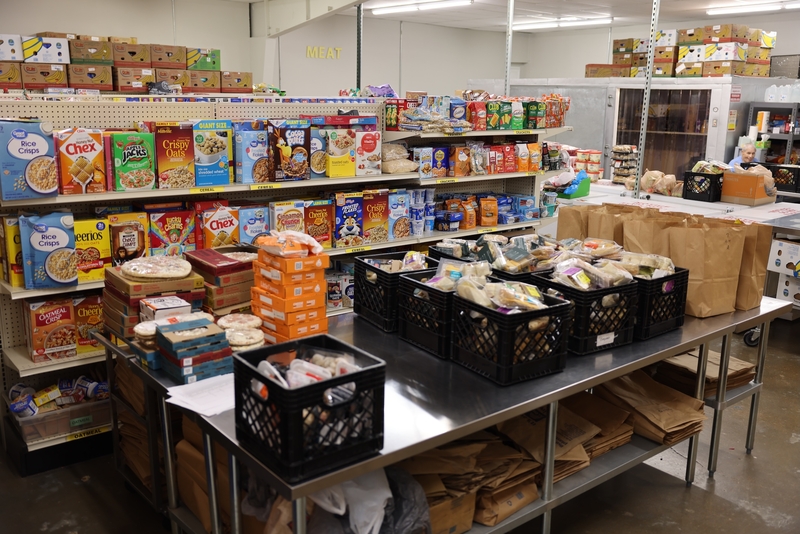
Photo: The Gateway Food Pantry in Arnold, Missouri is still seeing an increased demand of need in their community, even after the government reopened in mid-November. (Photo courtesy of Patrick McKelvey)
Stories From The States is a production of States Newsroom, the nation’s largest state-focused nonprofit news organization, with reporting from every capital. At this pivotal moment in American democracy, our veteran journalists from all 50 states are reporting the consequences of government decision making. By zooming into one story each week, Stories From the States contextualizes and gives a human voice to what is happening now.
Transcript was created using an automated software.
Chris Fitzsimon
This is Stories From The States. I'm Chris Fitzsimon. Here at States Newsroom, we know there's a lot going on around the country, in every state and every capital. Thanks for being here. This week, we're talking about the Supplemental Nutrition Assistance Program, also known as SNAP, formerly known as food stamps. In the final wee...
Transcript was created using an automated software.
Chris Fitzsimon
This is Stories From The States. I'm Chris Fitzsimon. Here at States Newsroom, we know there's a lot going on around the country, in every state and every capital. Thanks for being here. This week, we're talking about the Supplemental Nutrition Assistance Program, also known as SNAP, formerly known as food stamps. In the final weeks of the government shutdown, SNAP funding was all over the news as fears rose that as many as 42 million people could lose the food aid. That disaster may have been avoided, but it's not the end of the story. In recent weeks, the Trump administration has threatened to yank funding from Democratic led states. Also the Big, Beautiful Bill that passed this past summer includes cuts to the program in years to come. We'll check in with States Newsroom D.C Deputy Bureau Chief about all that. While all this talk is happening, food banks and food pantries are bracing themselves. Even after SNAP benefits were reinstated after the shutdown, they are still seeing an increased need. Today, we're heading to Arnold, Missouri, to hear about how a local food pantry is managing.
Chris Fitzsimon
During the 43 day federal government shutdown, food banks and food pantry saw dramatic increases in the number of people needing help. Now SNAP benefits are back in people's accounts, which is quite a relief after the shutdown, but some food banks and food pantries are still experiencing the same amount of demand they saw during the shutdown, and they're worried the need will only increase. Joining us now is Patrick McKelvey. He's the Executive Director of Gateway Food Pantry in Arnold, Missouri. Patrick, thanks for being with us.
Patrick McKelvey
I'm glad to be here with you.
Chris Fitzsimon
Tell us, first of all about Arnold, Missouri. Where are you?
Patrick McKelvey
So I am in Jefferson County, Missouri, which is the sixth most populous county in Missouri. Now it is below St Louis City in St Louis County. So we are just south of St Louis County. About half of our service area is in the southern part of St Louis County, and the other half is the northern half of Jefferson County, and Arnold is the northernmost part of Jefferson County.
Chris Fitzsimon
Would you say you had rural and urban folks that come to the pantry?
Patrick McKelvey
We have a very weird mix of urban, suburban and rural. So we kind of cover it all, right. We definitely have people who come from urban environments, who are more like 20 minutes north. But then, since we're the gateway to Jefferson County, if you go 20 minutes south of us on I-55 you are getting into rural populations very fast.
Chris Fitzsimon
I want to ask you a lot of questions, but during this recent SNAP sort of kerfuffle, what was the feeling like at the food pantry and the folks who were coming to see you for help?
Patrick McKelvey
So the raw data tells a story, but there's also nuance you can add. So we went from servicing about 300 families each week to over 450 overnight. Basically on November 1, and I use a temperature analogy, the mood at the food pantry was that of extreme stress. When people were coming into our pantry, they had nothing left on their shelves, they had nothing in their fridge. They had nowhere else to turn, and that made things extremely stressful. Normally, when people are coming to our food pantry, they've been our clients for a while, they have a plan. We saw 150 families who had nowhere else to turn, and they were very worried about what the future looked like.
Chris Fitzsimon
For folks who've never spent much time in a food pantry. Now you do this as your as your profession and helping people, and thank you for doing that. Who are these people? Give us an idea of folks who are coming in and need assistance because they simply can't afford food.
Patrick McKelvey
So 40% of our clients are five to 18, so school aged children. So we primarily serve children, and then the next biggest client demographic is individuals, 75 and up. And I know we obviously know that that age demographic is primarily a population on a fixed income, but we see social security checks as low as $700, $800, $900 a month, and these are primarily non property owners. So between rent, increased medical expenses at that age, as well as rising utility costs, rising gas costs and rising grocery costs, our clients are having to choose between paying a medical debt or a medical bill and buying food, paying their rent and buying food, or are they going to be able to stretch their utility delinquency one more month before it gets shut off? Or do they have to pay it and go without food? So we primarily have working families, those who work jobs where they are not able to support themselves enough to be able to take care of their meals for their family, as well as individuals who are on a fixed income, who may be open to working but they don't have the capability to do so. I always tell people like on a job application, can you stand unassisted for 30 minutes? Can you lift 30 pounds? A lot of our individuals, who are 75 and up, and our non property owners simply cannot work anymore. They are relying on Social Security that cannot meet their basic needs, and we also serve as a bit of a stop gap as well. Some of these people are able to qualify for SNAP benefits, colloquially known as food stamps, but maybe their benefit is only $100 a month, right? I think most of us know it's hard to survive on $100 of groceries a month, and then other people are simply unable to qualify for SNAP, either because the administrative barriers are so high, or they've recently been rejected. And Missouri has, you know, a pretty poor state run SNAP program, but they've tried to get SNAP. They can't for one reason or another. Maybe it's their assets, and they're coming to the pantry. So primarily working families, as well as those on a fixed income.
Chris Fitzsimon
I was looking this up, and in Missouri, the maximum monthly income limit for a two person household is $2,215 that's different depending on where you live, what state you live in, but two people living off of around $2,000 doesn't seem like a lot of money to live on. I don't I'm not sure how anybody can make it.
Patrick McKelvey
I always stress the non property owners, like, especially if you throw rent into that occasion, and granted, like, I cover the gambit. I think we know, like, if you live in St Louis County, rent is going to be higher. Now, fortunately, we're in Arnold, and Arnold is one of the more developed parts of Jefferson County, but if you get 20 minutes south so like rural rent may not be that bad, but for the residents of Arnold, Missouri, or the residents of St Louis County, like rent is going to be over $1,000 to be able to get, like, a one bedroom apartment. And I think the other thing is, like, the assets that our clients are allowed to have and get SNAP for a lot of clients like you can imagine why they would have $3,000 in savings. I think you or I will be like $3,000 and say, of course, we have to have that. But a lot of our clients who have that it stops them from being able to get Medicaid or food stamps, which is, you know, an interesting part of the program.
Chris Fitzsimon
The other thing I'm always struck by, one other thing I'm always struck by is during any debate about SNAP, it does feel like there's always a mixed bag of rhetoric in the media and social media about people, who these people are, that they, you know, they're somehow taking advantage of all of us as taxpayers or food pantries or whatever. And every time in my career as a reporter when I talk to folks like you, it feels like the opposite. It's not like people want to come to the food pantry.
Patrick McKelvey
Absolutely. And I try to explain this to people all the time as well. There are valid critiques about SNAP, and we don't have to get into those. But are you going to allow those valid critiques get in the way of my clients who are five to 18 who need that food to be able to survive? Right? There are universally popular social programs in our country, Social Security, free and reduced lunch programs for students who are in school, and I believe that SNAP benefits are one of those as well. And you can find a critique about any social program, but then you look at it and you go, this is really about the elderly and about children being able to get food. And the mission of my food pantry is to treat each person we serve with dignity and respect. And I think we do an excellent job of that. But I just told you we have 450 to 500 clients right now, and we know the demand is far greater than that. A lot of parents until they are unable to provide for their children, there's simply no food left in the pantry, will not come to us. And SNAP benefits are amazing, because they take care of that problem. It is dignifying to get a card and be able to go to the grocery store and buy what you want. As much as my pantry provides a great service to our clients. You do have to come to a food pantry. You do have to fill out our paperwork for an adult who's 75 and up. It it may be a little bit embarrassing to show us your Social Security check and try to explain why the way that is, or why you don't own property, there's dignity and SNAP benefits for our clients, and cutting them feels extremely inhumane, because these are people who really just need food, right?
Chris Fitzsimon
Yeah, it seems hard to argue with somebody who's hungry.
Patrick McKelvey
Yeah, 100%
Chris Fitzsimon
But I know that. I know that we live in an unusual time, interesting. I was reading about you. You are an educator before you became someone in a food pantry. What was that transition like, and why are you in this career now?
Patrick McKelvey
I often ask how. Now I will tell you there's no way I could have known, when I started at the food pantry, we had 150 families, so we went from 150 to 300 over the past two years. And there's a lot of reasons for that, right, like, I think we know groceries have not gotten cheaper. Gas has not gotten cheaper. There was a tornado in my community. There were two tornadoes, one in St Louis City, and then one in the more south of St Louis as well, in a short period of time. And like that impacts that. And Boeing just got done with a 101 workday stoppage. I tell people all the time, the machinists at Boeing make more money than me, but I can't go 101 days without a paycheck either, right?
Chris Fitzsimon
Right, who can? Right.
Patrick McKelvey
So when the government shutdown and so really, I helped run food drives during the pandemic. They primarily needed younger people who were one, vaccinated, which I was that didn't bother me. Two, they needed people who are willing to wear a mask. I was unbothered by doing that. I of course, stepped up to volunteer. And then the really amazing thing that happened during COVID, if there is any silver lining to COVID, any student could get free lunch and free breakfast at school. And I saw how big of a difference that made to the students in my school district. And I was a professor, but I also serve on a school board. I'm like, we all know about Maslow's hierarchy of needs, and like we all I eat food, three meals a day, right? But to see the difference that it could make to a person if they even have to skip one meal a day, it was really a radicalizing experience where I was like, wow, this is super important. And then the food pantry that I serve at as executive director also serves the community that I'm on the school board of. And I said, if I can do anything to help the children in my community get food, I was going to do it. And so I've been very lucky that I've been given this opportunity. Certainly there have been challenges I could not have foreseen when I accepted the job, but this is worthwhile work, right? Like, I just want to make sure no one, no kid, in my community, goes without a meal. And I think everyone feels that way.
Chris Fitzsimon
Yeah, I hope so. I think, I think that that's true. What about the so called Big, beautiful Bill does include cuts to snap. What are your worries when you go to the food pantry every day? What keeps you up at night?
Patrick McKelvey
So I think there's two big factors. I want to live in a world where demand goes down. Like you said before SNAP benefits are back, and they've been back for over 15 days. The demand at my pantry has held steady so far, and we're at an all time high every single week right now. So there's that concern, right? Like, does this problem of food insecurity get better? That's obviously a massive concern. Is the economy going to get better or at least stay the same? That's a concern no one knows the answer to. Now the other concern is, well, we know there are these very big cuts to SNAP benefits. There were cuts that benefited food banks, which my food pantry directly benefits from, as most food pantries do in the United States. And you know that that funding is going down. When you actually look at our support from our food bank this year, we have received $300,000 less January to November of this year compared to last year. Now I can't blame that all on cuts, but what if that number continues to decline, like our retail partners and our food bank support are our largest supplier of food. My community can step up as much as possible, but making up a $300,000 loss when our demand went up 33% overnight, that's a scary situation. And so we know the situation on the ground with food banks and SNAP is going to get worse. The question is, well, what happens if it compounds with another government shutdown? What happens if it compounds with the worsening economy, right? What if another natural disaster, like a tornado we saw happen in the spring, happens again, right? Will my food pantry be able to handle that demand and it keeps you up at night?
Chris Fitzsimon
What would you want people to know who are listening to this about the importance of food pantries, and especially the people that you see every day. You've talked a little bit about them, but what would be the one message you would want people listening to this to understand, as we're in this turbulent time.
Patrick McKelvey
Food pantries need your help right now, and as much as I wish everyone could make every every company you work for could donate $100,000 or $10,000 I tell people all the time, our median donation is less than $25 but it far exceeds our corporate giving. Because if everyone just adds a few items one time a month when they go to the grocery store that will be able to help me sustain my operations. I always think people are afraid that they're going to give too little, so they don't give it all. If you can only help us with $5 a month that is two boxes of cereal and a jar of peanut butter that a family would not have gotten otherwise, right? Like that is a big difference to some people when it may not be that big of a difference to you. And it doesn't matter if you're donating to the Gateway Food Pantry, the food pantry in your church's basement, or a food bank, right? Everyone needs your help right now. And the other thing I would say is it is very easy to talk about SNAP as an entire program, or to talk about all of the clients at my food pantry as a group, but dignity and respect is recognizing that all these people have very unique circumstances and how they've made it to this pantry. I could share 100 stories from 100 different clients to tell you why they got here, whether that's a Boeing machinist who dad works, mom stays home. You have two kids, and now you're going on your third missed paycheck, you're gonna need temporary help at the food pantry, right? There are other people with Social Security checks below $1,000 a month between rent, medical expenses. They're going to need help, and they would go back to work. But there are reasons why they can't right? And finally, the thing that hits me most around the holidays is every single one of our clients got a Thanksgiving turkey and sides. The hard part is how many parents told me that they were like, 'Well, I wasn't going to tell my kids that we have turkey on Thanksgiving' or 'at Christmas, I wasn't going to tell my kids that kids get presents instead', or that should we, you know, normally families get together and have a ham because for a lot of our clients, they're having to choose between paying a utility bill, paying rent, or having a Christmas meal or having Christmas presents. And once you realize that you can take a foundational part of that away and make sure that all of our clients get supplemental grocery and food assistance. It makes a massive difference in people's lives, and it doesn't matter if it is a food pantry doing that or it is SNAP benefits. These are people who all have very unique circumstances. I tell people all the time, the average time a client is at my pantry is less than three months. A lot of people just need a little bit of help to get by and then they're going to get back on their feet. Right now, that's not necessarily the case with the 75 and up crowd, but for a lot of working families, they just need a little bit of help to get back on their feet, and then they're ready again.
Chris Fitzsimon
Well, I want to thank you for what you're doing for everybody in your community, and hope folks take your advice to heart, and thank you very much for being with us.
Chris Fitzsimon
The U.S Agriculture Secretary is focused on ending fraud in SNAP. Some way she wants to do that is potentially getting the 42 million people on the program to re enroll. Coming up in a moment. States Newsroom DC, Deputy Bureau Chief, Jacob Fischler, will explain more about that. We'll be right back.
Nelle Dunlap
Hi, it's NelleDunlap, product and engineering director at States Newsroom. At States Newsroom, we believe journalism should be fair, fearless and free, with reporters working on the ground in all 50 states and Washington DC, we provide non partisan coverage of the state issues that matter most to you. You can subscribe to our work by going to states newsroom.com/subscribe.
Chris Fitzsimon
The SNAP benefits may have been fully restored, but additional changes to the program could be coming. This is on top of the changes already in place from the so called Big Beautiful Bill. One of the big changes includes new work requirements US Agriculture Secretary Brooke Rollins also called for the almost 42 million people who receive food assistance to reapply, and she's even threatened yanking away funding from Democratic led states. Joining us now with more perspective on all this, is Jacob Fischler. He's States Newsroom DC, Deputy Bureau Chief. Jacob, thanks for being with us.
Jacob Fischler
Thanks for having me, Chris.
Chris Fitzsimon
Well, let's there's a lot to jump in on in the SNAP world, I guess a lot of people were sort of surprised and confused when the Agriculture Secretary said everyone should have to re enroll in the program. What? What did you make of that? What does that mean?
Jacob Fischler
Yeah, well, I think you're right. You hit on the main reaction that I saw, which was confusion. Not a lot of details provided in those statements by the Secretary. You know, it's, it's, it would be logistically challenging, because, as you said, there's, there's 42 million people who are on SNAP, so forcing everyone off the rolls and then to go through the sort of burdensome process of re enrolling would be difficult to manage from like an administrative perspective.
Chris Fitzsimon
And would the states have to do that?
Jacob Fischler
Yeah, so the way SNAP works right now, with the benefits aren't funded entirely by the federal government, with states responsible for the administration, so that's figuring out who, who's eligible, and making sure that that their benefits are processed and available to them.
Chris Fitzsimon
And so all we have is really a statement by the USDA Secretary, would that take legislation? Would that? Would that something the administrative branch could do on their own?
Jacob Fischler
It's kind of unclear. That's might be a theme of our of our conversations today, but, yeah, generally, I mean, there's certainly Democrats in Congress, when this came out, said, 'You know, this is illegal'. The laws governing snap, do not allow the Secretary of Agriculture to do this in part because it would it would likely take an act of law, it would require coordination with the states and yeah. So again, it's really not clear how it would work.
Chris Fitzsimon
The big concern seems to be they think fraud is rampant, is that what we surmise?
Jacob Fischler
Yes, which is not true. SNAP is sort of among the federal programs, is actually has a lower fraud rate than many other federal programs, and the types of fraud that we see in SNAP wouldn't really be solved by having folks reapply. You know, what's more common is beneficiaries having their having their benefits stolen, and the acts of people who are committing fraud against the state in an effort to gain more benefits are exceedingly rare. You know, less than 1% of applications were referred for prosecution or some kind of administrative irregularities.
Chris Fitzsimon
So the fraud is really over the level of actual individual folks who are seeking to get some help buying food?
Jacob Fischler
Yeah, exactly, yeah. You see some fraud from retailers, although that's also low. And in general, I mean the big, sort of the biggest problem in this larger bucket is, is error rates. The overpayments and underpayments from states, especially overpayments the Republican Big Beautiful Bill sought to sort of control that a bit, but in terms of like, if the goal of making people reapply for SNAP is to reduce fraud. That's sort of, that's going after sort of the wrong type of error here.
Chris Fitzsimon
I guess, the conventional wisdom there is obviously some people either wouldn't reapply, wouldn't realize they have to, or have find it somehow burdensome, they couldn't get there, or whatever, and it would mean that fewer people eligible would actually receive the benefits, I guess,
Jacob Fischler
Yeah, that's, that's one big issue for sure. So I wrote a story about this. On the right, there is sort of an idea that if you make it more difficult than some, some of the people who don't really need it, but could, could still sort of qualify, maybe they decide that's not worth it, but, and so maybe that reduces the roles and the cost of the program. But also, you know, you are reducing, you're making it more difficult for the people who who do really need it. These are people who who don't have stable access to food, who don't have, you know, time to to be doing that. And also, you know, I should just mention it's a real, it's a real administrative burden on states. The application process to get on SNAP to begin with, is a lot harder, you know, longer and harder than than recertifying, or sort of renewing your status. And that is spread out throughout the year, so that people are reapplying and recertifying, you know, all the time. If you have 42 million people all trying to go through the sort of the longer process, and having people, having the state, you know, the state office is trying to to go through those applications, it's going to create a real backlog.
Chris Fitzsimon
And while we're on the topic of confusing, things that have been said, I guess, the Secretary also said they might block funding for States led by Democrats that haven't provided data on the fraud help us understand that that plan?
Jacob Fischler
Yeah, I'll do my best. So earlier this year, the Department of Agriculture, which runs the SNAP program federally, asked states to supply a bunch of data on their SNAP recipients. This included, you know, a lot a lot of personal data, social security numbers, stuff like that. And there was, there was some concern among Democratic states that it was used, that there was an immigration enforcement aspect. Again, this is something that is not part of the federal law on SNAP that, you know. States are not required to share this kind of data. So many Democratic states did not.
Chris Fitzsimon
People would understand, I guess, in these days, why people wouldn't want to share a lot of personal data.
Jacob Fischler
Yeah, there's all kinds of reasons, but the Secretary, then, in the past few weeks, has threatened that the states that have not provided the data will will not receive federal funding for SNAP. Digging a little deeper, we found that what they're really talking about is the administrative costs. So as I mentioned earlier, the federal government pays for all of SNAP benefits. Currently they split 50/50, with states the cost of administration. And so the Trump administration is saying that they will withhold some of that funding for administrative costs.
Chris Fitzsimon
So it would be a big, just a big financial penalty in effect, for states that they didn't think were being forthcoming. And most, and they think most of those, are Democratic states.
Jacob Fischler
Right.
Chris Fitzsimon
It sort of got lost maybe in the shuffle. Not with you, you guys who cover this every day, but when the shutdown was over and there was all this publicity, Oh, SNAP benefits are coming back, I think a lot of people didn't realize, or don't realize, that the Big Beautiful Bill actually made some changes that are going to happen to the SNAP program in general, like the whole swirling thing about work requirements and other changes.
Jacob Fischler
Yes, it sure does.
Chris Fitzsimon
Tell us about some of those, especially the work requirement.
Jacob Fischler
Yeah, so the work requirements, generally, it increases the work requirements and these sort of reporting requirements so that there's, there's, there's more burden on the recipient.
Chris Fitzsimon
Does feel like, sorry, it does feel like, when I read about it, that there's two things. One is that they're they do claim that people need to be working or whatever, which seems not to be true, but that the for putting that aside, a lot of it feels like sort of bureaucratic requirements and reporting the same way as re registering all that as a way to make people who are eligible not actually receive the SNAP benefit, right?
Jacob Fischler
Yeah, so that, I mean that that is a criticism that you hear is that it's not, it's not really effective as a as a way to make sure that people are working, or, you know, and when we say working, it's also, you know, you can volunteer and qualify. You can be, I believe, going to school. So there, you know, it's sort of, it is a bit broader than that, but it's not the most effective way to do that. What it is effective at is, is increasing the paperwork and the red tape and and, like you say, sort of acting as a as a gatekeeper, or for people trying to get on the program.
Chris Fitzsimon
Well, that's a lot of information. It's very complicated program, but obviously very important to people. Important to people's literally daily lives and survival. So we appreciate you covering it, and thanks for being with us.
Jacob Fischler
It's my pleasure. Thanks for having me.
Chris Fitzsimon
Some states are filing lawsuits to fight back against the Trump administration's changes to the SNAP program. 21 states and Washington DC have declined to share personal SNAP recipient data requested by USDA that includes SNAP applicant and recipients, names, addresses, social security numbers, immigration and marital status dating all the way back to January 1, 2020. 22 states are also suing USDA over the abrupt cuts to food assistance for refugees and asylum seekers. The attorneys general argue that US Agriculture Secretary Brooke Rollins broke federal law by trying to cut off food assistance for some non citizen groups even after they've obtained permanent residency. You can read more and stay up to date on if your state is part of these ongoing lawsuits at newsfromthestates.com. Coming up, shortly Evening Wrap newsletter writer Danielle Gaines will join us with the top stories she's watching out for. And as always, one last thing.
Moses Esheit
At a time when so many communities are losing their local news outlets, state's newsroom is filling a gap. We are now the nation's largest state focused nonprofit news organization with reporters based in every state capital and Washington DC. But we can't do it without your support. Your contributions allow us to produce award winning journalism and deliver it to you for free. No pop ups, no pay walls. This is a crucial time to support local journalism, and every bit helps to give go to statesnewsroom.com/donate.
Chris Fitzsimon
All right, we are back. And my favorite time of the week talking with Evening Wrap newsletter writer, Danielle Gaines about what caught her eye this week, what's coming up. And our favorite feature always one last thing. Well, let's start at the beginning. Danielle, what caught your eye this week?
Danielle Gaines
Yeah, well, of course, the midterms are getting closer, and so we're seeing a lot of movement on the election front, and Democrats are really working to make gains this year, despite the ongoing redistricting efforts that could hamper them. In the South, this week, party leaders were celebrating. They had another Democratic win in Georgia. We of course, covered the election of the Democratic utility regulators there just recently, that was the first statewide win for Democrats in decades. And now the party has flipped a seat in the House of Representatives in a special election. In Florida, the officially nonpartisan mayor of Miami will be a Democrat for the first time in decades, and that's a race that got a lot of national attention, including endorsements from the president himself. So they're celebrating there. We had a story with, like, lots of good details on sentiment and where districts seem to be heading in Florida, and we've also had some coverage going into the midterms. So the Arizona Mirror covered a memo from the Democratic legislative Campaign Committee which outlines plans to try to flip 650 state legislative seats. And our DC Bureau has been covering the efforts in Congress and specifically national Democrats are going after Republican seats on the issue of healthcare cost.
Chris Fitzsimon
Lot of political news. Tell us what's coming up.
Danielle Gaines
Yeah, I'm going to be watching out for more news on these continued National Guard deployments throughout the country. So there's a congressional hearing on the issue, and a California judge ruled for the second time that the Trump administration needs to end the deployment there. There are, of course, other cases as well. Our Tennessee site had a really interesting and really visual story looking at the task force that's operating in Memphis and the effect that it's having on businesses. So they were on Memphis' famous Beale Street on a busy Friday night, or what would have been a busy Friday night, and things were almost empty. Foot traffic is down, spending is down, and it's having a real effect there.
Chris Fitzsimon
Yeah, that's a story I feel like, doesn't we're covering it just it's amazing the economic impact of these policies, not just the human impact
Danielle Gaines
Exactly.
Chris Fitzsimon
Well, tell us what's our one last thing for this week?
Danielle Gaines
Well, one last thing is our kind of quirky, offbeat segment of the Evening Wrap newsletter. And so this week, I have three words for you: Louisiana sewer balls.
Chris Fitzsimon
Oh my. I don't know if I want to know or not. Tell me what's a Louisiana sewer ball.
Danielle Gaines
So this was just a great story out of the Louisiana Illuminator. This is a topic I just really love, but it's about the effort to lower the cost barriers to monitoring municipal wastewater as a disease control and prevention strategy. So we started to hear during COVID about all these efforts to track the spread of COVID through wastewater. But it's very expensive, and the devices can cost, you know, up to $25,000 and small communities just can't afford that. So these researchers at Louisiana State 3D printed something that looks like a whiffle ball, and you can basically, like, put charcoal inside, attach a string, lower it down and get your information.
Chris Fitzsimon
Wow, that's an interesting one. Thank you for bringing that to our attention. It's it's great, great to hear from you. As always. Have a good week.
Danielle Gaines
Thanks you too.
Chris Fitzsimon
Thanks for listening to Stories From The States. I'm Chris Fitzsimon. Mallory Cheng produced and edited this podcast. David Singer produced our theme music. If you liked what you've heard today, please leave a rating and review. It means a lot to us to know what you think about the podcast. To stay up to date on the latest episodes, subscribe now to Stories From The States, a podcast from States Newsroom available wherever you listen to podcasts. We'll talk to you soon.