Gather around and debate these criminal justice policies
Nov 24, 2025 | 7:00 am ET

Description
Cash bond, the death penalty and enhanced penalties are key criminal justice issues up for debate. (Getty Images)
It’s the most wonderful time of the year. The traveling, the cooking, the shopping, and, of course, the airing of grievances. You — the lucky few — will have the opportunity to share with your loved ones what you’re thankful for this year and what you’re looking forward to in the year to come. It’s Festivus for the rest of us.
Let’s make it the best one we’ve ever had! When the conversation turns to politics, you could take up where you left off last year. When exactly did the country start going to hell, and which generation is to blame? It’s a classic, and there’s tradition to it. But of all the Charlie Browns in the world, it’s the Charlie Browniest.
Instead, try something more productive. Maybe something fun and completely natural, like the merits of competing criminal justice policies. As you pass around the pumpkin pie, you could ask, “Grandpa, do you think it’s possible to reconcile our urge to punish with our limited resources and our constitutional duty to rehabilitate?”
To get you started, here’s a rundown of criminal justice topics likely to grab attention at the General Assembly in 2026.
New crimes, enhanced penalties
Like Clark Griswold’s jelly-of-the-month membership, this is the gift that keeps on giving. Every year, new crimes and enhanced penalties are proposed. In the last three sessions alone, more than 30 changes to the Indiana Code have expanded the reach of the criminal justice system. Just as surely as the Hoosiers will keep the Oaken Bucket, there will be proposals to add more pages to the law books.
This overcriminalization is untenable. Changing times may require changes in the law. But steady expansion of the criminal code is, as Justices Kagan, Scalia, and Thomas put it, a “pathology.” With a 36% recidivism rate, incarceration isn’t particularly rehabilitative. And with roughly 3,000 ways to commit a crime, we’ve set plenty of traps and given the prosecution tremendous leverage. It all leads to more pressure to plead guilty and longer sentences.
And it’s unsustainable. Prison populations are growing, and capacity is hovering around 95%. Even when the new billion-dollar facility opens, the DOC plans to keep the 19th-century Indiana State Prison open indefinitely. New crimes and enhanced penalties are partially to blame.
Preventive Detention
Pretrial release legislation is also a lock in 2026. From the White House to the local courthouse, some think we are presuming too much innocence.
We will see the return of a proposed constitutional amendment to eliminate the right to bail for those who pose a “substantial risk.” The term is loosely defined, with few guidelines and no due-process protections for those labeled too risky to enjoy their liberty.
Fortunately, a broad coalition agrees that due process is not optional. So, alongside the amendment, we should see implementing legislation. If done correctly, this trailer bill could significantly improve the system.
In a world with preventive detention and risk-based assessments, we can promote both safety and fairness without relying on an antiquated bail system. The dangerous can be detained, and the harmless can be released on their own recognizance. In between are conditions like house arrest, electronic monitoring, and frequent reporting, none of which speak to wealth or poverty.
If this sounds like “bail reform” or “cashless bail” and makes you uncomfortable, try calling it “less cash bail.” Either way, preventive detention and reform are not mutually exclusive.
The Death Penalty
We are at a genuine crossroads with respect to capital punishment. A bipartisan group of legislators wants to abolish it. Some want to enlist firing squads. Others are somewhere in the middle. Legislation from these camps will likely surface in 2026.
The death penalty is fundamentally flawed. It is impossible to apply uniformly across the state. Counties can’t afford it, and trading the executioner’s expensive syringe for a cheap bullet won’t solve the problem. It adds to the moral quandary and won’t meaningfully reduce costs. Most tax dollars are rightly spent on ensuring the trial is fair and the penalty appropriate.
Then there is the unacceptably high error rate. Beyond wrongful convictions, it is unclear whether we consistently apply medically informed standards when assessing the intellectual functioning of capital defendants.
Suffice it to say, the conversation should continue — ideally without callous sloganeering.
Mental Health
Of all the topics here, this might be the most suitable for your holiday gatherings. As Scrooge’s nephew put it, this is the time of year to think of people “as if they really were fellow passengers to the grave, and not another race of creatures bound on other journeys.”
Yet our jails and prisons remain the mental-health providers of last resort. State hospitals are filled with defendants receiving competency-restoration services, many of whom are charged with minor misdemeanors. And law enforcement officers are still being thrust into situations even trained medical professionals would fear to tread.
The General Assembly has taken this seriously in recent years. Mental health advocates and providers will come calling again. Hopefully, we can find the political will to invest in treatment and housing, rather than punishment and detention.
I hope you get your shopping done early, soak up the sights and sounds of the season, and enjoy your time with your family and friends. At least you can’t deny that you’re prepared for the annual political dustup. It’s up to you to get ready for the feats of strength.
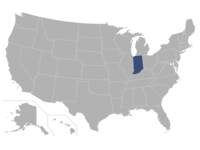
Indianapolis, IN