AG Ellison sues Trump administration — again — over conditions for funding for crime victims
Aug 20, 2025 | 3:57 pm ET
Description
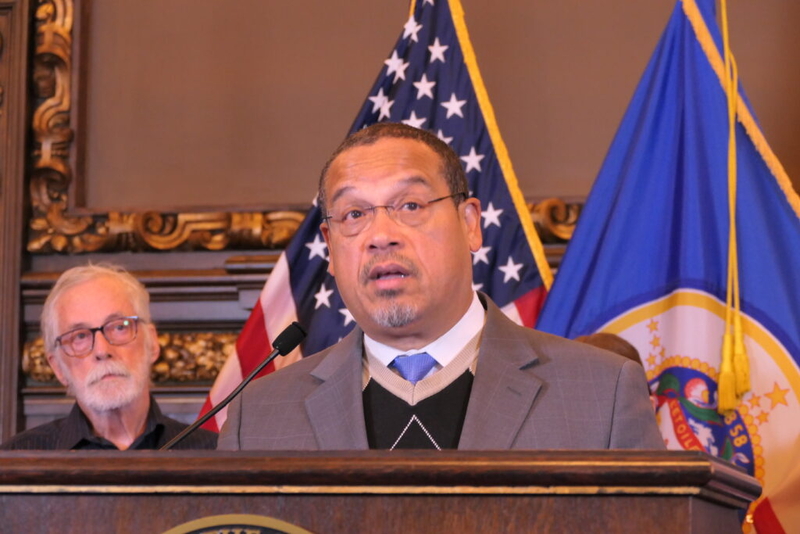
Attorney General Keith Ellison at a press conference on Feb. 9, 2024. Photo by Madison McVan/Minnesota Reformer.
Minnesota Attorney General Keith Ellison sued the Trump administration for the 35th time this year, this time alleging that the federal government is illegally placing conditions on funds for services and resources for crime victims.
Ellison joined 20 other attorneys general in filing the suit.
The Victims of Crime Act, signed by President Ronald Regan in 1984, created grant programs to pay for victim and witness advocacy services; emergency shelter; medical, funeral, and burial expenses; crime scene cleanup; sexual assault forensic exams; and more.
This year, the U.S. Department of Justice, which administers the program, imposed new conditions on the grants, mandating that they may not be used for “any program or activity that, directly or indirectly, violates (or promotes or facilitates the violation of) federal immigration law…including by failing to…give access to DHS agents, or honor DHS requests and provide requested notice to DHS agents.”
In other words, states — and the organizations that provide crime victim services, like domestic violence shelters, rape crisis centers, child advocacy centers — can’t access the funds without agreeing to cooperate with President Donald Trump’s immigration priorities.
“Crime victims deserve so much better than to be used as political leverage, so I am filing a lawsuit to put an end to that and make sure victims get the support and compensation they deserve,” Ellison said in a press release.
Over the past four years, Minnesota has received an average of nearly $2 million per year in Victims of Crime Act grants. Last year, grant recipients served more than 115,000 individuals in Minnesota, according to DOJ data.
The lawsuit alleges that the DOJ violated the Administrative Procedure Act, which requires federal agencies to work within the language of the law approved by Congress — the Victims of Crime Act makes no mention of immigration.
The lawsuit also accuses the federal government of violating the separation of powers outlined in the Constitution by refusing to spend money allocated by Congress.

Saint Paul, MN