NV congressional Democrats help advance reckless Trump-crypto agenda
Jul 22, 2025 | 7:59 am ET
Description
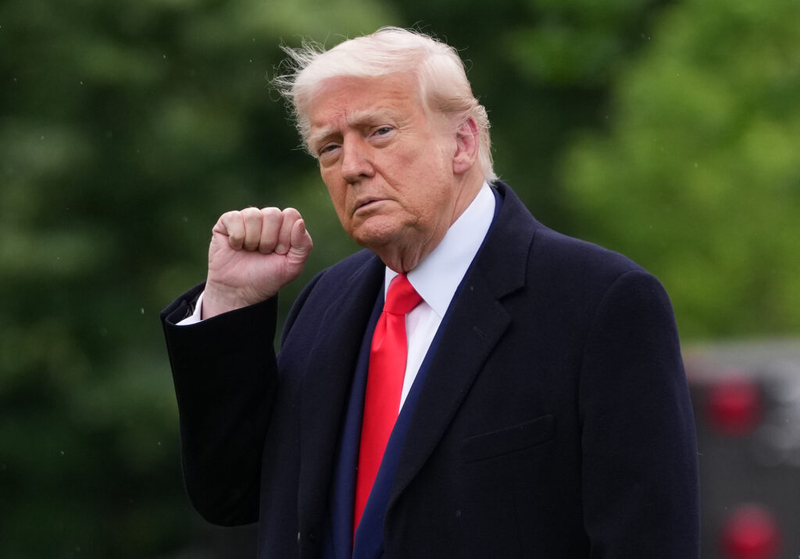
On the way to his Trump National Golf Club in Virginia in May for the dinner he held for top investors in his $TRUMP cryptocurrency. (Photo by Kevin Dietsch/Getty Images)
Three cryptocurrency-coddling bills strongly backed by corrupt cryptocurrency magnate Donald Trump passed the U.S. House last week, two of them with help from Nevada Democrats.
The GENIUS Act passed with support from 102 Democrats, including Nevada Reps. Steven Horsford, Susie Lee, and Dina Titus. (110 House Democrats voted against the bill.)
The CLARITY Act passed with support from 78 Democrats, including Horsford and Lee. Titus was among the 134 Democrats voting against the bill.
A third bill prohibits the Federal Reserve from creating its own digital currency, which is something the Federal Reserve has reportedly never contemplated, but the cryptofolk and some hard-right congressional Republicans want to make sure it never does. Only two House Democrats voted for it, and neither of them were from Nevada.
The GENIUS ACT had already passed the Senate in June, with the support of both Nevada’s senators, Democrats Catherine Cortez Masto and Jacky Rosen. Trump signed the bill into law Friday.
The GENIUS Act applies to stablecoin, a form of crypto that’s value stays pegged to the dollar (stable, get it?) and is primarily backed by U.S. Treasury bonds. Hence, it’s not as dangerously volatile as typical digital currency. The GENIUS Act for months has been viewed as the easiest crypto bill to enact into law.
The most worrisome of the trio of bills, and the one Trump and the industry is jonesing for most, is the CLARITY Act. It would ease the integration of most digital currency, including the dangerously volatile stuff, into the financial system, but with very weak regulations that would exempt crypto from requirements that apply to existing financial services and that are designed to protect consumers, investors, and the economy. The CLARITY Act now heads to the Senate.
Meanwhile, the stablecoin-centric GENIUS Act that Trump has already signed is problematic enough on its own.
For one thing, it ignores Trump’s stablecoin conflicts of interest (to say nothing of his many other crypto creations that most likely violate the Constitution’s Emoluments Clause and unquestionably obliterate its spirit).
Trump and his fortunate sons created a stablecoin that was then used by an investment firm connected to the Abu Dhabi royal family to make a $2 billion investment in a crypto exchange. Democratic Sens. Elizabeth Warren and Jeff Merkley have warned the deal is yet another example of how foreign governments and others can use Trump’s crypto interests to easily and directly — and corruptly — enrich Trump in exchange for favors.
The GENIUS Act is plenty creepy in other ways too.
The legislation is designed to accelerate stablecoin’s integration into the U.S. financial system, while exempting it from regulatory requirements and consumer protections administered by (what’s left of) the Securities and Exchange Commission.
“The reason you would never recommend grandmother use a stablecoin is she would have to give away a dollar that’s protected by the federal government and deposit insurance, and which comes with a ton of consumer protections, and which pays interest in her banking account, in exchange for a stablecoin that doesn’t have any of those things,” Corey Frayer, director of Investor Protection for the Consumer Federation of America, told NBC News.
When the GENIUS Act was moving through the Senate earlier this summer, Warren compared it to the law that deregulated the financial services industry and led to the mortgage backed derivatives fiasco and the onset of the Great Recession. “This is not the first time Congress listened to the financial industry and created a weak regulatory regime for a new, innovative financial product,” Warren said.
As if on cue, when Cortez Masto and Rosen indicated their support for the GENIUS Act before it passed the Senate, they said things like “providing regulatory clarity our domestic industry needs to innovate here at home” (Cortez Masto) and “an important step to protect consumers and support America’s innovation” (Rosen).
Explanations like that, however heartfelt, are far from the only reason Democrats are sidling up to and supporting what has become an important (and extremely lucrative for him) part of Trump’s agenda.
The crypto elite built a campaign war chest bigger than any other industry’s during the 2024 campaign cycle, scaring the living daylights out of Democrats everywhere, who fear the industry will spend against them in 2026 and beyond.
Trump is coordinating more closely and more favorably with the cryptocurrency elite than with arguably any other industry in the nation. And as the industry demonstrated at the Bitcoin conference in Las Vegas in May, the industry is deeply, even rabidly, on board with Trump, not merely in a transactional alliance of financial self-interest, but culturally.
The bill Trump signed Friday would not have passed the House without Democratic support. So for those of you who have been wondering when congressional Democrats would finally have a chance to thwart at least some of Trump’s agenda, they had one last week, and they took a pass.
Dozens of congressional Democrats, including Nevada’s, are falling in line with the Trump-crypto agenda, in the hope that the big bad crypto bros will play nice.
Nice isn’t a quality of Trump- or crypto-culture. So don’t be surprised when the cryptocurrency industry spends money against some of those Democrats anyway.
A version of this commentary originally appeared in the Daily Current newsletter, which is free and which you can subscribe to here.

Las Vegas, NV