Lawmakers mull measure to ban octopus farming in New Jersey
May 23, 2025 | 6:42 am ET
Description
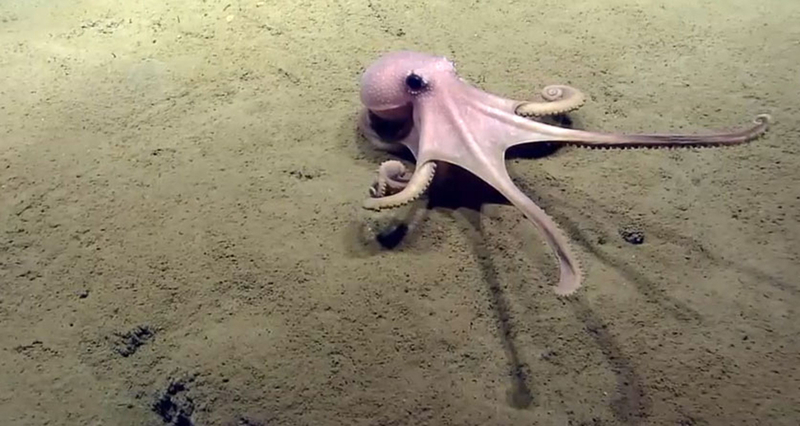
New Jersey lawmakers are considering banning octopus farming. Supporters say it is cruel to octopuses and breeds germs that threaten public health, while critics in the seafood industry complain it would hurt their business. (Image courtesy of the NOAA Office of Ocean Exploration and Research, 2013 Northeast U.S. Canyons Expedition)
Aquaculture farmers in New Jersey grow everything from clams and oysters to trout, bass, and other fish popular with sport anglers.
They don’t farm octopuses. Several state lawmakers want to keep it that way and now are pushing legislation that would ban businesses from raising octopuses in captivity to sell as seafood.
Washington and California already have such bans in place. Sen. Sheldon Whitehouse (D-Rhode Island) introduced a bill last summer in Congress that would have enacted a national ban, but it failed to advance. The only known octopus farm in the U.S., in Hawaii, shut down in 2023 after years of advocacy by animal rights activists, and a Spanish company’s plan to farm octopuses in the Canary Islands has also drawn opposition.
In Trenton Thursday, the Senate’s economic growth committee heard testimony on a bill that also would prohibit businesses from selling, possessing, or transporting farmed octopuses, with violators facing fines of up to $1,000 a day. They did not vote on the measure, with committee chair and bill sponsor Sen. Nilsa Cruz-Perez saying she would use public feedback to improve the bill.
Most of those who testified urged the committee to enact a ban, calling octopus farming cruel because octopuses are intelligent creatures who feel pain and stress.
They’re escape artists, too, so farming them threatens the broader ecosystem and its wildlife, as well as public health, should they break out of captivity, said Kerrie Espuga, New Jersey state director of the Animal Rights Initiative. They’re voracious carnivores and consequently create a lot of waste, she added.
“Wastewater from such facilities can spread harmful pathogens and parasites, which are transmissible to humans. Since octopuses are immune to vaccines, the farms could turn into pathogen incubators,” Espuga said.
Brian Hackett of the Associated Humane Societies seconded concerns about public health and the environment.
“Anytime an animal is factory-farmed, where mass numbers of animals are confined in a tiny space, given tons of antibiotics to prevent them from getting sick because they’re in disgusting conditions very close to one another, it’s a very bad situation for human health, environmental health, animal welfare, all things considered,” Hackett said.
The bill’s critics complained that a ban is pointless.
“Why are we passing a law now to ban something which isn’t even happening in the state of New Jersey?” said Scot Mackey of the Garden State Seafood Association, which represents more than 1,200 commercial fishermen.
Aquaculture is “the future of seafood production in the United States,” Mackey said. Banning octopus farming would be another restriction on an already overregulated industry, he added.
He reminded legislators of other sea creatures they’ve protected from commercial fishing, including striped bass, horseshoe crabs, and shark fins.
“Slowly and surely, we are dying, the commercial fishing industry, from the death of 1,000 cuts,” Mackey said. “As we continue down these paths of setting up these special rules and closing down these doors and windows of opportunity, you’re just making it harder and harder for hard-working people to make a living in the state of New Jersey.”
Hackett pushed back on that claim.
“Nothing in this bill would impact the Garden State Seafood Association from catching wild-caught octopus,” he said.
Kathleen Schatzmann of the Animal Legal Defense Fund said a ban is needed, even though octopus farming isn’t happening here, “to prohibit rolling out the red carpet for such an industry before there is an economic tie to this industry.”
“There’s research being done on octopus farming, but there is no viable way to farm octopus, and that’s why we want to ensure that big companies and those corporations do not come to New Jersey to try to get a foothold on this industry,” Schatzmann said.
The measure was one of two the committee considered Thursday that touch on animal welfare. They advanced another bill that would ban the surgical declawing of cats.
Supporters said these surgeries hurt cats and can cause long-term disabilities, with one likening it to an amputation. They also can drive declawed cats to resort to biting in self-defense, leading cat owners to surrender their pets to animal shelters, Hackett said.
A veterinarian opposed to the bill testified that pets’ medical care should be decided by pet owners and veterinarians, not legislators.
The Assembly versions of both the octopus farming and cat declawing bills have yet to be heard by any committee.

Trenton, NJ