The Topline: DUI arrests are going up
Dec 02, 2024 | 7:00 am ET
Description
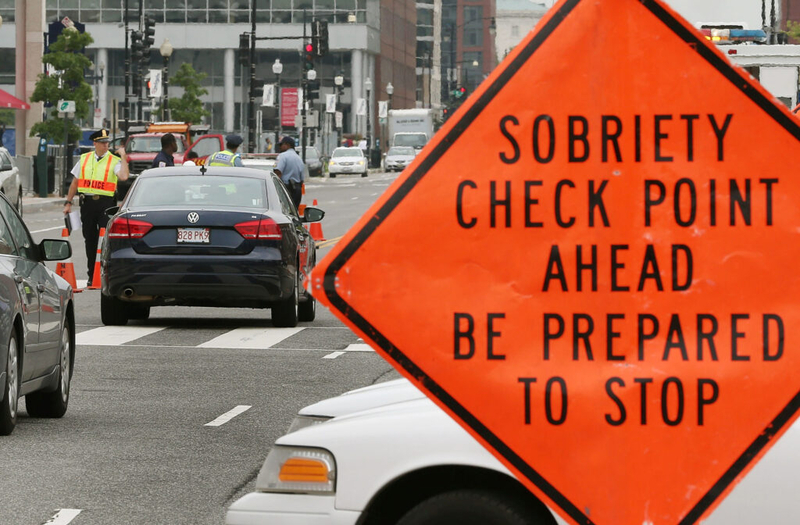
Washington Metropolitan Police conduct a sobriety check point on August 14, 2012 in Washington, DC. (Photo by Mark Wilson/Getty Images)
Welcome to The Topline, a weekly roundup of the big numbers driving the Minnesota news cycle, as well as the smaller ones that you might have missed. This week: Minnesota DUIs creeping upward; putting a biobank on the moon; Walz polling at 1% for 2028; and elite college diversity.
DUI arrests continue to climb upward
Last week the Star Tribune reported on a statewide holiday law enforcement push to curb driving under the influence of alcohol and drugs. One stat that jumped out of the story: last year there were about 27,000 drunk driving arrests in the state, up about 4% from the prior year and a continuation of a steady annual rising trend since 2020. The trend is all the more baffling given the widespread availability of Uber and Lyft, at least in the metro area and other bigger cities.
Drunk drivers are becoming more lethal too: In 2020 they killed 114 people on Minnesota’s roadways, and by 2022 that number rose to 145. (Caveat: 2020 was the major pandemic year.)
Tallying all crashes (not just alcohol-related ones), 418 people have been killed on Minnesota roads so far in 2024, up 64 from the same period in 2023. That’s an increase of close to 20%. The causes of that increase are not entirely clear, and the Department of Public Safety still hasn’t released final traffic safety data from 2023, making it hard to discern which factors might be involved.
Roughly 1 in 7 Minnesota drivers have a DUI on their record, according to the agency. The typical BAC at the time of arrest is 0.15, nearly twice the legal limit. About 40% of DUI arrestees will re-offend.
UMN scientists want to put biobank on the moon
Scientists at the University of Minnesota are part of a national project to create a repository of seeds, DNA, cells and possibly even cryogenically frozen organisms on the moon, KARE 11 reports.
“What would it look like to create a genuinely public cooperative single biorepository that is not vulnerable to ecological, nuclear, other disasters on Earth and could really be a hedge against disaster? Our big insurance policy up on the moon,” law and medicine professor Susan Wolf said.
There are already several well-known biobanks here on earth, including a global seed bank on the remote arctic island of Svalbard. But those earthbound repositories are vulnerable to the same potential disruptions — wars, global warming, nuclear bombs — that prompted their creation in the first place.
A separate stash of biological material way up on the moon could provide an additional insurance policy against an apocalypse.
There are, obviously, many challenges to doing this. The primary one, which the Minnesota researchers are working on, is keeping living tissue alive at -200 Celsius. Joe Kanga, a postdoc, is working with zebrafish, which can be frozen as embryos and revived at a later date.
“They get pulled out of the liquid nitrogen when they are ready to be rewarmed and they are shot with this laser and that heats them up at millions of degrees per minute so like in a matter of milliseconds it goes from -200 degrees C up to room temperature,” Kanga said.
Walz polling at 1% for 2028
Emerson College has released its first horse race poll for the 2028 Democratic nomination. As a predictor of what’s actually going to happen four years from now it’s virtually meaningless, and to the extent it means anything it’s basically just a barometer of simple name recognition.
However.
It does seem notable that just 1% of Democratic respondents chose Gov. Tim Walz, one of the two names at the top of the Democratic ticket just a few weeks ago. That puts him behind Michelle Obama, and ties him with former Daily Show host Jon Stewart, as well as Maryland Gov. Wes Moore, whose name I had to Google.
Again: a polling result almost completely devoid of meaning. But still kind of interesting that second-place billing on a presidential ticket gets you nowhere with voters.
Economic diversity at elite colleges, or lack thereof
The National Bureau of Economic Research recently released a new study on historic trends in college enrollment, which draws on the actual enrollment records of 2.5 million students at elite private and public colleges and universities.
The most interesting finding is that those elite schools — think Ivies and similar institutions that overbearing upper middle class parents are always trying to get their high-achieving kids into — have increased both their geographic and racial diversity over the past century.
Economic diversity, on the other hand, is basically stagnant. As the 20th century unfolded those schools simply began drawing from a geographically larger and more racially diverse pool of well-off kids. Today roughly 70% of the students at elite public colleges come from the top 20% of the income spectrum, same as it was in the early 1900s.
“These patterns suggest that changes in racial and geographic diversity have all taken place within the middle and upper portions of the parental income distribution,” the authors write.

Saint Paul, MN