What happens when private equity joins your doctor’s visit?
Across the country, joint ventures between private equity firms and healthcare nonprofits are growing increasingly popular. However many critics say investors and nonprofit care providers can be partners with fundamentally different missions.
As these joint ventures grow, they will test a wave of recent state laws that were designed to increase oversight of private equity in healthcare.




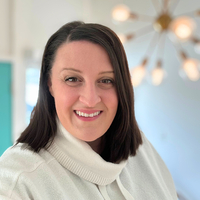

In Episode 38, you’ll hear from Anna Claire Vollers, a reporter at Stateline. She’s been covering how private equity is changing hospital operations to make a profit for shareholders at the expense of the patient.
You’ll also get a weekly news wrap-up from Evening Wrap newsletter writer, Danielle Gaines, with the latest on: ICE’s arrest tactics, drama in New Orleans and why an Alaskan state legislator chased a black bear.
Episode produced and edited by Mallory Cheng. Music for Stories From The States composed by David Singer.
Got questions? An episode idea? Email us at [email protected].
Subscribe to Stories From The States on Apple Podcasts, Spotify and Youtube.
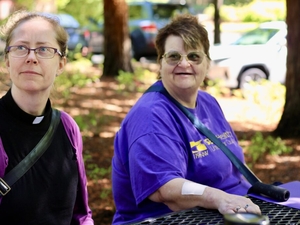
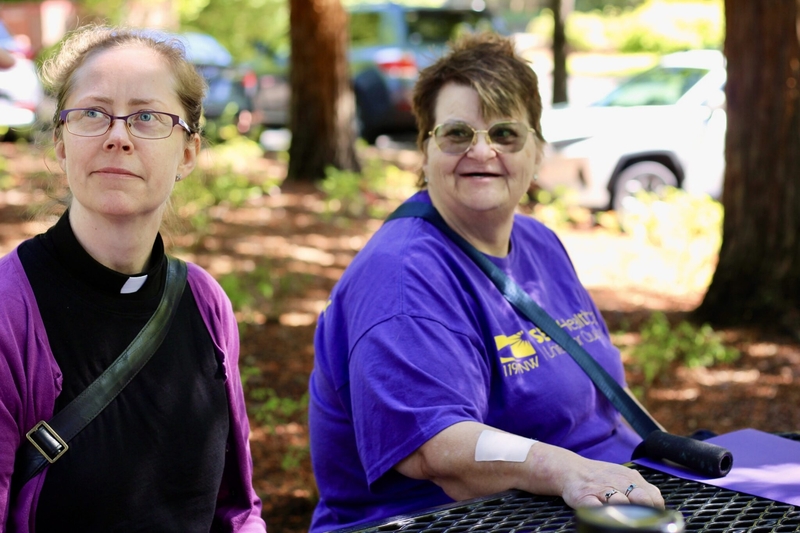
Photo: April Frazier, left, and Milli Palmer sit together before speaking last month at a meeting of the Washington State Investment Board, in Olympia, Washington, about their experiences at Providence at Home with Compassus, a home health and hospice company. (Photo by Saiyare Refaei)
Stories From The States is a production of States Newsroom, the nation’s largest state-focused nonprofit news organization, with reporting from every capital. At this pivotal moment in American democracy, our veteran journalists from all 50 states are reporting the consequences of government decision making. By zooming in on one story each week, Stories From The States contextualizes and gives a human voice to what is happening now.
Transcript was created using an automated software.
Chris Fitzsimon
This is Stories From The States. I'm Chris Fitzsimon here at States Newsroom. We know there's a lot going on around the country in every state capital. Thank you for being here. First, let's jump in with the news of the week from around the country. We'll have the latest on ICE's most recent tactics in detaining people that have...
Transcript was created using an automated software.
Chris Fitzsimon
This is Stories From The States. I'm Chris Fitzsimon here at States Newsroom. We know there's a lot going on around the country in every state capital. Thank you for being here. First, let's jump in with the news of the week from around the country. We'll have the latest on ICE's most recent tactics in detaining people that have turned deadly, and how some states are fighting back and calling for more accountability. We'll also talk about what's going on in New Orleans and some drama between prosecutors and the state's attorney general. Then we'll go to Alaska, where a state lawmaker had an incident with a black bear. Later in the show, we're going to dive into the world of private equity's partnerships with healthcare nonprofits and how they might dodge state laws by doing so.
Anna Claire Vollers
Their new management is pushing them to do things that they feel like is not in the best interest of their clients. They're pushing them to see more patients per week than they used to.
Chris Fitzsimon
We'll chat with Stateline reporter Anna Claire Vollers about that. But first, let's get to the news with our States Newsroom newsletter author Danielle Gaines, who writes the Evening Wrap. Hi, Danielle. How are you?
Danielle Gaines
Hi, Chris. I'm good. How are you?
Chris Fitzsimon
I am well. So we got a lot of things happening in the news, and then we have a lot of smoke from Canada. The World Cup's over. There's a like hurricane season started. I can't keep up.
Danielle Gaines
There's so much going on. You know, I'm back from vacation. I was in the Midwest where the Canadian wildfire smoke was very thick, and I went down lots of rabbit holes exploring Canadian wildfires while I was heavily drugged to get rid of my cough.
Chris Fitzsimon
That sounds like a recipe for something. I don't know. Well, I'm glad you're you're on the upswing.
Danielle Gaines
Yes, and I hope you know there's rain where you are, and there was flash flooding in West Virginia. I just hope everybody's staying safe.
Chris Fitzsimon
Yeah, me too. We went from drought here in North Carolina to closing part of an interstate because cars were stuck. So you never know, I guess.
Danielle Gaines
It's wild.
Chris Fitzsimon
A lot of news too. It's hard to almost keep up with. I guess let's start with a theme that certainly we've talked about on the podcast before. It's been on the country's mind like never before. ICE and its tactics are back in the news.
Danielle Gaines
Yeah, so there's renewed scrutiny on immigration arrests and the processes for those in the country. Obviously, following recent killings in Maine and in Texas, and so there are some interesting groups coming together to call for reform. So, in Biddeford, Maine, which is where one man was killed during a traffic stop, the city council had their first meeting. They had to move their meeting from their typical council chambers to a high school auditorium in order to fit the crowd, because so many people wanted to come and address this issue, and the city council, which typically most city councils don't get involved in kind of national issues, read a proclamation calling for the federal government to reform the broken and inhumane immigration system, calling for more accountability in agents. The agent there obviously, some things have come to light about his criminal history or abusive history that is bringing more attention back to the issue of how agents are vetted in this day and age.
Chris Fitzsimon
Yeah, there's been talk now, obviously, about the body cameras. You know, I I must have missed it, but I sort of thought we were having this debate in Minnesota in January about the need for body cameras, and I guess as that you know that effort in Minnesota when the when the the after the horrible shootings there, I don't know. It's my fault, but I sort of thought we had solved and settled on that that that was a good idea. But apparently not.
Danielle Gaines
Right. I think you know Democrats were really pushing for that as independent legislation, and then, you know, Republicans have been on Capitol Hill been able to go their own way through different maneuvers. So there was a new letter sent by a supermajority of the Senate Democratic Caucus this week to the Department of Homeland Security, asking again for uniform, universal body cameras, and then in Texas, where a man was killed recently, we talked about it on the podcast. It was actually a large group of religious leaders came together and asked for like very specific reforms of policing and of immigration policing, which also is an unusual move.
Chris Fitzsimon
Yeah, and thNen on top of that, there have been stories all along, including in our States ewsroom, about these cases that really make you shake your head of people who have been deported to places they're not from, people who have been here since they were a child, an infant, 30 years with no criminal history or record. Those stories sort of continue. It feels like that that they're happening all over the place.
Danielle Gaines
Yeah, so you know, there's like this issue of the just like hurry up and run on the Trump administration part to arrest and incarcerate as many people as possible. And so in both of those cases we talked about in Maine and Texas, neither man was actually the target of any investigation, but they were nonetheless well killed, but attempted to be arrested, and then the Trump administration has this policy of holding people without bail. So any immigrant is being held without bail. It's leading to an uptick in all sorts of court cases and court challenges. The Trump administration this week did get a court victory out of Texas, well, out of the Fifth Circuit, U.S. Circuit, and that covers three southern states, including Texas and Louisiana, that have large immigration facilities, and is basically backing that Trump policy that they can hold people without bail, and it it's an enormous number of people. It now has created a split in the different court systems, and so this is something that will likely go up to the U.S. Supreme Court.
Chris Fitzsimon
And then there's a story we didn't have as much this week, but obviously our our folks. I just think about the Arizona coverage of how are these people being treated when they are in these detention centers, awaiting some whether it's a legal disposition or whether awaiting their deportation or whatever the case may be. That's a whole issue that continues to be there.
Danielle Gaines
Yeah, this week we had a feature on Andrea Pedro Francisco, and you might recognize her name. She was arrested in Minnesota, and her case got a lot of attention because she was scheduled to go in for a surgery for an ovarian cyst. Right, right after she was arrested, she ended up being held in detention for four months. There was a lot of concern about her health, whether or not this had deteriorated to a life-threatening condition, and she was released. She has had surgery right after she was released. She's on an ankle monitor now, and she's looking forward to what is really amounts this day and age to a long shot fight for asylum.
Chris Fitzsimon
Wow! Another topic, shifting gears a little bit, but it does seem that people are talking a lot about food assistance. We used to call that food stamps. Now it's the SNAP program. There are a lot of stories in our in our network about that.
Danielle Gaines
Yeah. So we've had a few stories this week about calls to, you know, as we're seeing more people removed from the rolls, as we're seeing more of the real world impact of these changes, you're seeing more people calling for the provisions in the One Big Beautiful Bill Act to be rolled back. So there was a letter this week by more than 200 American mayors. They cited a hunger crisis and a growing emergency of people not being able to afford food. One from these rollbacks and people getting less benefits two from the overall increased costs that we're dealing with, and so they were calling for Congress to step in and reestablish some eligibility to also push back a provision that will have require states to pay a portion of SNAP benefits, because states really aren't prepared for it either. And just on the heels of that letter, there was another meeting by public health experts and and hunger advocates in D.C. calling for Congress to step in and do something, especially as they're looking to bail out farmers who also are struggling financially to think about people who need to get that end product food as well.
Chris Fitzsimon
Yeah, it really hit some for me when I'm reading our stories, and then I know I think this week there was one in Alabama. 80,000 people might lose their benefits. That's imagine, you know, all those numbers sort of they're so big they just sort of blur together. But that's 80,000 people who were literally relying on that to, to eat, and that you know every state does those kind of stories. And then the interesting part of the the story about it might even affect school meals for poor kids.
Danielle Gaines
Yeah, yeah. So we had a figure in one of our stories that was about 4.5 million people have stopped receiving benefits. 1.5 million of them are children, and one area that's not getting a lot f attention where this is happening is that the amount of children who receive food benefits in a school can qualify that entire school for universal school breakfast and school lunch, free free breakfast and free lunch. They have this at my child's school, and it is wonderful. The they call it morning snack, but it's a real like low key way for children who maybe didn't get to eat at home that morning to just have breakfast in their classroom. And when you have less people eligible for SNAP, you're going to have fewer schools eligible for this universal program, and you have kind of a greater knock-on effect than what we were even discussing in the first place. In Indiana, where we wrote a story about this, there are nearly 2000 schools that are eligible for that program. Some had already opted out because they didn't want to pay for it, but when you think about kind of the impact, it's. It's pretty large,
Chris Fitzsimon
yeah, huge. And then there's the sort of the I don't know how to put it the stuff where the the political legal battling going on. It's all it feels like it's happening off and on always. It's just politics and an interesting case in New Orleans.
Danielle Gaines
Yeah, well, I think I put in all capital letters WHAT IS HAPPENING IN LOUISIANA?
Chris Fitzsimon
What is happening?
Danielle Gaines
They say, well, they say all politics is local, and there is this incredible legal political drama playing out in Louisiana over the last few months. For many years, there has been tension between Republican state leaders and the Democratic-heavy city of New Orleans, of course. This latest issue started in May when Louisiana Attorney General Liz Murrill wrote to city officials, warning that she could charge them with with crimes if they tried to hold a special election for a court clerk's position. So this goes back, of course, further than that. Republican lawmakers this year abolished that position after a man named Calvin Duncan, who was formerly incarcerated, he has since become a lawyer. He was exonerated, and he won election to that position. So Republican lawmakers abolished it. The city said no. We're going to go ahead and hold a special election for the new consolidated court position, so that he could potentially win that position. That's when Murrill made her threat. Several weeks later, a New Orleans parish grand jury handed up an indictment against her, accusing her of intimidation and malfeasance. A special prosecutor was assigned. Tensions were high, higher than normal. And just this week, the special prosecutor announced that they were going to go ahead and drop the charges. That this was something that was pursued by the grand jury on their own accord, and the local officials who were the purported victims of the intimidation and malfeasance asked the case not to go forward, and so that's where it's at.
Chris Fitzsimon
And the governor, I guess, at least had something to say about it, even though he wasn't involved, right?
Danielle Gaines
Yes. Well, naturally, there was a press conference shortly after the charges were dropped, and Murrill and the governor said that you know, quote, it's not over. That there will be more consequences for the city. They accused the city of weaponizing the court system. So familiar language there. And Murrill said she's going to pursue having the state pay her legal fees, which she said were $250,000 related to this. It would be interesting to see what attorneys are paid for that. And the governor said that state lawmakers are interested in having a special session to take more control over the local court system,
Chris Fitzsimon
And it's worth noting before we get to one last thing. Although this could be one last thing in a normal universe, is that Governor Landry is also President Trump's representative to work with Greenland to figure out how to get Greenland. So I wish I was making that up.
Danielle Gaines
Yes.
Chris Fitzsimon
All right. Let's move to let's move to let's move to one last thing. This might be my favorite one of all time.
Danielle Gaines
This is wild. This is the most Alaska story to ever have Alaskaed. Honestly, so lawmakers in Alaska they typically walk from the state assembly, or often walk from the state assembly to apartments that are used by lawmakers in the capital. And one night, there was a lawmaker, Rep. Julie Coulombe, I believe, is how we would pronounce her name. She was walking home, and there was a bear in the middle of the street coming towards her. Luckily, another representative, Garret Nelson, had just gotten into a ride-sharing car nearby. He asked. asked the driver to stop. He got out of the car. He did all the things you're supposed to do. He made himself big. He made himself loud, and he charged the bear, who then went its own separate way, and everyone got home safe.
Chris Fitzsimon
I wonder what the Uber driver was thinking.
Danielle Gaines
Right, I know. Like, please, stop! I need to deal with that bear. But the lawmaker did say that you shouldn't charge bears. That he basically got lucky in in doing it.
Chris Fitzsimon
Well, there's a lesson for the day: don't charge bears.
Danielle Gaines
Yeah.
Chris Fitzsimon
Danielle, thank you so much for all your work. Thanks for being with us.
Danielle Gaines
Thank you.
Chris Fitzsimon
To stay up to date on the latest news, you can subscribe to Evening Wrap, written every day by Danielle. You can subscribe at newsfromthestates.com/subscribe. More than a fifth of private equity-backed hospitals are now owned through a joint venture with nonprofits. Joint ventures in healthcare are nothing new, but private equity firms and nonprofits that co-own hospitals, urgent care clinics, and home health agencies are partners with fundamentally different missions that could ultimately drastically impact a patient's quality of care. In a moment, we'll talk about that with Stateline's Anna Claire Vollers.
Moses Esheit
At a time when so many communities are losing their local news outlets, States Newsroom is filling a gap. We are now the nation's largest state-focused nonprofit news organization, with reporters based in every state capital and Washington D.C. But we can't do it without your support. Your contributions allow us to produce award-winning journalism and deliver it to you for free, no pop-ups, no paywalls. This is a crucial time to support local journalism, and every bit helps. To give, go to statesnewsroom.com/donate.
Chris Fitzsimon
Anna Claire Vollfers is a staff writer at Stateline. She joins us now. Hi, Anna Claire.
Anna Claire Vollers
Thanks for having me.
Chris Fitzsimon
Well, a lot of questions to get into in this private equity healthcare world and the great reporting you've been doing. But for people who don't maybe don't consider themselves a business expert or a private equity person, can you give us an overview of what what when we say private equity and health private equity and healthcare? What does that mean?
Anna Claire Vollers
Yeah. So a private equity firm takes money from big, big institutional investors that want to buy a stake in a company, and so they do that. They usually take an active role in managing that company, like restructuring it, maybe overhauling the management or streamlining operations with the goal of increasing its value, and then they typically try to sell it within a few years for a profit. So the goal is to generate money for shareholders. We're seeing kind of more partnerships recently, though, with nonprofit hospital systems and healthcare systems, and they're called joint ventures. And basically, that's where a private equity firm or a company that it owns and a nonprofit health system come together to jointly own and run a business, so that could be a business that owns hospices, a chain of behavioral health centers, or a bunch of rural hospitals.
Chris Fitzsimon
So, just the other thing, I guess it's it's true, isn't it, that a lot of the the model of private equity is that when they take over a company, before we get to this the the joint ventures, they the company they're buying actually incurs a lot of debt, which raises an alarm for a lot of people that there might be a lot of cuts coming, as to make it more profitable, just in general.
Anna Claire Vollers
Yeah, and you know, private equity firms will operate in different ways, but some of the really concerning situations we've seen in healthcare in the past 10 years or so have involved loading hospitals and other systems down with a lot of debt in order to create money or create revenue for those private equity firms.
Chris Fitzsimon
There's there's been an opposition to private equity sort of outright buying healthcare firms, which is I guess what your your your reporting gets at is they're sort of they're forming these partnerships as I guess for lack of a better phrase, a way around the regulations or trying to keep them out of the healthcare industry per se.
Anna Claire Vollers
Yeah, I think the overall concern is that these joint ventures are partnering two types of entities that have fundamentally different missions. So, like a nonprofit health system, they're required by a lot to prioritize the needs of their community. So that might mean like offering medical services that may lose money, but they're important to the the people who live there. And in return, those nonprofit systems don't have to pay most taxes. But private equity's goal is different because its goal is basically to make money for shareholders. And so there are healthcare workers and state lawmakers that are concerned that that clashing of those two missions could lead to problems down the road.
Chris Fitzsimon
Well, let's talk about some of the what what you found. You focused a lot on LifePoint Healthcare. Tell us about about LifePoint and its joint venture with a hospital system or a healthcare system, Duke Health, which a lot of folks, obviously in in North Carolina, are familiar with.
Anna Claire Vollers
Yeah, LifePoint is one of the largest operators of rural hospitals in the nation, and it's owned by the private equity firm Apollo Global Management. But it's had its share of issues, and so LifePoint and Duke Health have this partnership or joint venture, like we're looking at my story, that owns 15 hospitals across four states, and it's called Duke LifePoint, but LifePoint owns 97% of it.
Chris Fitzsimon
Wow!
Anna Claire Vollers
So Duke is in the name, and when you go to one of those hospitals, I think most people would assume that it, you know, is part of the Duke health system. But with LifePoint owning 97% of it, it's kind of unclear how much control they have. So the problem comes in in recent years; those hospitals have been the subject of some state and federal investigations. Like there was an incident at a North Carolina hospital where a man was given contrast dye for a CT scan at the hospital, but that was against his doctor's orders, and it led to kidney damage. It made him dependent on dialysis. There were other incidents.
Chris Fitzsimon
Wow.
Anna Claire Vollers
Yeah, that uh. Federal investigators said have led to patient deaths. So there are a lot of a lot of problems that have cropped up with this particular joint venture over recent years.
Chris Fitzsimon
Yeah, it's interesting you said that about Duke in the name. I do think a lot of people who are familiar and Duke Hospital is world renowned. It's fairly highly rated. I think they're probably when they walk in and they see a sign that says you know Duke LifePoint or Duke is in the name. They make an assumption about that Duke runs everything.
Anna Claire Vollers
Yeah, that's right. I think that's kind of the situation with a lot of these joint ventures. And again, not all of them have had negative consequences. But a private equity firm is going to, or a company that it owns, is going to want to partner with a nonprofit that has that reputation in the community for that people trust they they feel like they know what they're getting when they go to something branded like that. But what we found is that they may not be getting exactly what they expect.
Chris Fitzsimon
And what do the nonprofits, in this case Duke or other nonprofits, what do they get out of these partnerships? Why is it to their advantage?
Anna Claire Vollers
So they they get the money that that private equity will will bring to them, so that might help them. Do you take on capital projects, build new facilities, invest in better equipment, presumably? And this does happen across some joint ventures. It a lot of times the private equity companies also have some expertise in management, and so if you are a company that needs help, kind of streamlining the way that you operate your business. They a lot of times have that kind of expertise that they can help you do that.
Chris Fitzsimon
What about the workers at these facilities? Who do they work for, or do they have any input, or have they had any reaction to this change?
Anna Claire Vollers
Yeah, I talked with some staff at a home health and hospice company that has it operates in California, Oregon, Washington state, and a couple other places. Their company is a nonprofit or was, and it recently entered a joint venture with a private equity-backed company. And the nurses and social workers there-they're reporting. They told me that in the last few months since this joint venture came through, their new management is pushing them to do things that they feel like is not in the best interest of their clients. They're pushing them to see more patients per week than they used to, and that they feel comfortable with. One staff member told me she was asked to lie on patient paperwork. There was a visit. She was asked to mark it as being missed because the patient had had requested that it be moved, but she said the real reason was that there was not a staff member available who could do it, and so they're at that particular you know joint venture. They're seeing a lot of situations that they don't feel comfortable with, and they're asking state regulators to intervene.
Chris Fitzsimon
And what are the state regulators doing or saying? I know there's been legislation in some states.
Anna Claire Vollers
Yeah, there have been several states. I think seven or eight at least that have tried to put guardrails around private equity involvement in healthcare, in particular. Most of those are let's see: California, Indiana, Maine, Massachusetts. Most of those are laws around requiring transparency and accountability, and this year actually Connecticut enacted what might be the strongest law yet in the country. It bans private equity from controlling day-to-day decisions about the care that nursing home residents receive, and it has some other requirements about disclosing financial dealings for for private equity related hospitals, and that makes sense because Connecticut was one of the states that saw hospitals closed and bankrupted due to some of the more predatory practices from private equity.
Chris Fitzsimon
So, how did you get started reporting all this? What led you to start looking into private equity and and healthcare and nonprofits?
Anna Claire Vollers
Yeah, I've been a healthcare reporter for several years, and there was an incident a couple years ago. There's this home health company here where I live in Alabama. It provided services for disabled and elderly people in their homes, like help with like bathing and cooking and that kind of thing. And it was the largest provider of those kinds of services in our state for people who are on Medicaid. And then the company, which was owned by private equity, just abruptly decided to leave the state entirely, shut all of its operations down, and that left I think around 1,100 clients who are elderly or disabled scrambling to find somebody new to help them, a new a new caregiver at their home, and it left 800 workers without jobs. And that really struck me as as a problem that one company could own so much, and you know, make a decision for financial reasons, which of course makes sense for that company benefits it. But those decisions have such an impact on really vulnerable people, and and the state really didn't have any way to to deal with that.
Chris Fitzsimon
Is there a role for consumer advocates or consumer you know, help in some states. I know they're trying regulation, but it just strikes me that I wonder if people would have sometimes, and sometimes people don't have an alternative. But would they have second thoughts if they knew, for example, that the organization that Duke is partnering with, we talked about earlier, or the situation in Alabama, if they knew going in that this wasn't really just a healthcare company; it was a private equity company. Are there state efforts to make that transparency more obvious, or is that asking too much? And it does seem hard if you're a low-income family trying to figure out a place to take care of your loved one that you'd be able to do that research.
Anna Claire Vollers
Yeah, I ask experts all the time when I do stories on private equity about how people are supposed to know, and and it all honestly always comes down to, well, you've got to do your homework. You've got to be your best advocate or your loved one's best advocate in healthcare space. And I mean, I've seen that a little bit in my my own life with parents who have had medical issues. You really do have to do that, but I I really dislike putting the onus on individuals all the time, especially when you're talking about people who are more vulnerable, there are patient advocacy groups. There are actually healthcare worker groups that are trying to sound the alarm when situations are going badly, such as the nurses and that I spoke with in Washington. So there are groups out there doing the work, and they are pushing legislators to do more to protect people.
Chris Fitzsimon
And finally, you mentioned we've been talking about a variety of healthcare interests. You mentioned nursing homes. It does feel like private equity is reaching into new aspects of healthcare and just in general our society. And is there a possibility of federal? Would federal legislation help, or has that ever been discussed?
Anna Claire Vollers
Yeah, it's it's been discussed. I think there are bills that get brought up every single year at the federal level. It's just you know congressional gridlock is a difficult thing, and it's hard to get anything passed. So I think that there are a lot of states that are saying, "Well, we can't wait on the feds to to try to fix this, so we're going to do it ourselves. But that does mean we've got a piecemeal system here where your protection kind of depends on the state you live in.
Chris Fitzsimon
Well, thank you very much for this reporting. I really appreciate it, and we appreciate your time. Thanks for being with us.
Unknown Speaker
Yeah, thanks for having me.
Chris Fitzsimon
Thanks for listening to Stories from the States. I'm Chris Fitzsimon. Mallory Cheng produced and edited the podcast. David Singer produced our theme music. If you liked what you heard, please share it with somebody who might enjoy it. Leave a rating and review as well. It means a lot to know what you think about the podcast, and it helps other people find us. To stay up to date on the latest episodes, subscribe now to Stories From The States, a podcast from States Newsroom, available wherever you listen to podcasts. We'll talk to you soon.