States take the lead on regulating AI as federal action lags
Anxiety over artificial intelligence is growing. Will it replace humans and take jobs? How will it change our privacy? Will it impact our elections? The list of existential questions about AI goes on.
The technology has not been regulated on a national level. Congress has struggled to pass federal legislation, while the Trump administration has pushed to limit state oversight efforts.
One expert says states have stepped up to the plate to create commonsense guardrails on AI.





In Episode 47, you’ll hear from Maddy Dwyer, a policy analyst on the Center for Democracy & Technology’s State Engagement team. She’ll break down how states are regulating AI and whether it's too out of control for the federal government to set limitations on what the technology can do.
You’ll also get a weekly news wrap-up from Evening Wrap newsletter writer Danielle Gaines and Daybreak newsletter writer Madyson Fitzgerald. They’ve got you covered with the latest on: mail-in ballots, SNAP participation and state laws protecting wildlife.
Episode hosted, produced and edited by Mallory Cheng. Music for Stories From The States composed by David Singer.
Got questions? An episode idea? Email us at [email protected].
Subscribe to Stories From The States on Apple Podcasts, Spotify or YouTube.
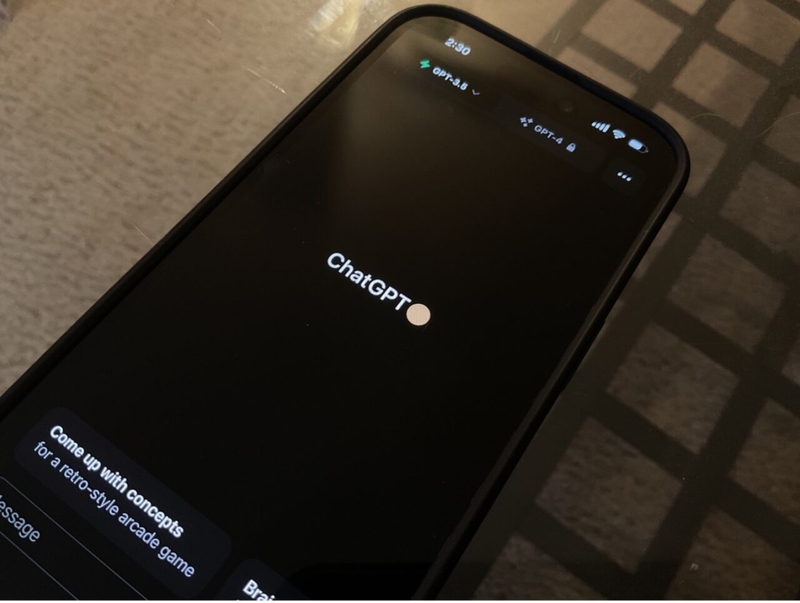
Photo: ChatGPT, an AI-powered system trained to follow instructions and carry out conversations, is being limited in some states. (Madyson Fitzgerald/States Newsroom)
Stories From The States is a production of States Newsroom, the nation’s largest state-focused nonprofit news organization, with reporting from every capital. At this pivotal moment in American democracy, our veteran journalists from all 50 states are reporting the consequences of government decision making. By zooming in on one story each week, Stories From The States contextualizes and gives a human voice to what is happening now.
Transcript was created using an automated software.
Mallory Cheng
This is Stories From The States. I'm Mallory Cheng, filling in for Chris Fitzsimon this week. First things first, we're jumping right into the news. We're another week closer to the November midterms, but redistricting and the future of mail-in ballots is still front of mind for many states. We'll also hear about what is going on i...
Transcript was created using an automated software.
Mallory Cheng
This is Stories From The States. I'm Mallory Cheng, filling in for Chris Fitzsimon this week. First things first, we're jumping right into the news. We're another week closer to the November midterms, but redistricting and the future of mail-in ballots is still front of mind for many states. We'll also hear about what is going on in New Hampshire, where they're trying to figure out how to protect wildlife as many federal protections shrink, and they're not the only state trying to figure out that dilemma. But we have been thinking a lot about AI over here at States Newsroom, and I'm sure you have too. Will it actually take over? And are there any protections for us? Coming up, Chris Fitzsimon will chat with an expert from the Center for Democracy and Technology, who says states have really stepped up to the plate to create common sense guardrails on AI. But first, let's check in on the news with our States Newsroom newsletter authors Danielle Gaines and Madyson Fitzgerald. Danielle and Mady, thank you for being here. How are you?
Madyson Fitzgerald
Doing good. How are you?
Danielle Gaines
Hi, Mallory. I'm good.
Mallory Cheng
Good. Well, I just want to acknowledge the most important thing that is in our doc to talk about today, which was this week was the 21st night of September, the first transition to fall. Selfishly, yeah, exactly. Selfishly, my favorite season because now it's officially Libra season, which is
Madyson Fitzgerald
Oh goodness. I feel like this is a more like official like startle fall than anything else. Like I think this actual startle fall was on Tuesday, but I feel like the 21st night of September. Like that's when I know like the weather's about to change, the leaves are about to fall, all that stuff.
Mallory Cheng
Oh yeah, and I don't know about you guys over on the East Coast, but in Chicago, it's been a very rainy summer and a very rainy start to fall. So I'm very excited that it's cloudy, but there's no rain.
Danielle Gaines
Very cold and cloudy. It was my daughter's birthday, and I think we had it on the the last sunny day of the year. Maybe it seems like.
Mallory Cheng
Dang. Oh man. Well, hopefully a little bit more sunnier skies coming up for you know pumpkin patches, corn mazes, whatever y'all like to do for autumn. But another busy week of news. First things first, we're about almost around 40 days out from the November 3 midterm elections, and it looks like there's still a lot of conversation around redistricting and the mail-in ballots.
Madyson Fitzgerald
It's I feel like this is a conversation we do have like almost every week on this podcast.
Mallory Cheng
Oh yeah
Madyson Fitzgerald
but I do think it's it's really important. And one thing that I especially realized this week was that you know redistricting and mail ballots are kind of going to be an issue, just both leading up to the elections and at the actual polls. And so, this is especially true in Missouri, where state officials began mailing out ballots while still awaiting a ruling on a congressional map. So, if you know, backers of a Missouri redistricting referendum have asked the U.S. Supreme Court to intervene for a third time in three weeks in the fight over which congressional map will be used for the November 3rd elections. So, in addition to Missouri, some states such as Maryland will also have redistricting on the ballot this year. And in a recent report, roughly four in 10 voters said they opposed that ballot measure in Maryland, and only 28% supported it in a new poll by Protect Maryland otes.
Mallory Cheng
Oh wow!
Danielle Gaines
Yeah, the Maryland case is very interesting. I live in Maryland. I feel like it comes up every podcast, but that's how Marylanders are. Let me tell you. But you know, it's really interesting because we're the state is blue leaning, and so this would be an issue that would allow lawmakers to consider gerrymandering and drawing maps. And so you have a lot of people with very conflicted feelings on that. One of the things I think is really interesting is that we're still, you know, ironing out what districts to use in Missouri and all these things while mail ballots are going out, and people can, you know, literally be filling out a ballot already. So there's also still things going on over mail ballots. So this week in North Carolina, some nonprofit organizations and voters sued over new absentee ballot requirements that they say put votes in jeopardy of being discarded. And in Colorado this year, voters will decide on a proposed constitutional amendment that would change the mail ballot rules to require you to also put an ID number, either your social security number, driver's license, real ID, something like that, when you're turning in your ballot. So, lots of things still happening here.
Mallory Cheng
Yeah, it sounds like, and and with specifically the Missouri thing, with Missouri's redistricting fight, it feels like it's cutting it really, really close to the midterms. Again, we're about like 40 days away, and so many states, like what you said, Danielle, like they've already sent out their mail-in ballots and absentee ballots. But it hasn't really stopped President Trump from spewing misinformation and trying to raise fears about election fraud related specifically to mail voting. So, is that something else we should keep an eye on? Before November, while November like approaches really quickly.
Danielle Gaines
Yeah, I think it's I think it's something that everyone is keeping an eye on, which is which is good, calling attention to it. You have more election officials coming out and and saying like there's all these stories and there's all this action, but please, you know, continue to have faith in the elections process. So you know the Idaho Secretary of State came out with a statement that said everything is on track. Pennsylvania reassured voters that this election would work just like every other one, and you know you're seeing pushback maybe from some unusual corners. We had an interesting story out of South Dakota this weekend where the outgoing Republican Secretary of State endorsed a Democrat to replace her, so she had come into office promising a bunch of the election reforms that you're hearing of, hand counting ballots, all of these kinds of things. She backed away from them during her tenure, and now is endorsing the Democrat who doesn't have such extreme views on election administration. So something that we're really looking at.
Mallory Cheng
Interesting. Okay. Well, something else that's been on my mind, and apparently on the minds of a lot of other outlets within States Newsroom, like since the passing of the One Big Beautiful Bill, it's created work requirements for SNAP recipients, and like I've been thinking about this, and I know a lot of other outlets have been thinking about this, is how many Americans have lost access to food assistance, and that's something that came up a lot this week.
Danielle Gaines
Yeah, so it's Hunger Awareness Month, which I think is one reason we might be seeing a lot of these stories. But Stateline had a good report this week-good report, but an illuminating report this week about the fact that more than 330,000 Americans lost access to the Supplemental Nutrition Assistance Program or SNAP between May and June; those are the latest numbers available. That brings the total to more than 5 million people who have now lost coverage under the One Big Beautiful Bill Act. Yeah, and this report from the Food Research and Action Center found that SNAP participation has decreased in every state except for Alaska, which has a lot of its own circumstances: seasonal employment, high poverty. So it's really something that we're seeing everywhere.
Madyson Fitzgerald
Yeah, and these numbers are coming as advocates are pressuring Congress to reserve the SNAP cuts, to reverse the SNAP cuts. Excuse me. They say will exacerbate growing hunger across the country as grocery prices continue to soar. I don't know if you all have been to the grocery store recently.
Mallory Cheng
It's awful.
Madyson Fitzgerald
It's like I feel like my in between shop, like not my big shop for the month, but my in between shop that I do just to fill in the gaps is almost as expensive as just going on my full grocery shop, it's really upsetting. But while nonprofits and many local, state, and federal political leaders have pushed for a complete recession of those cuts, Republicans in control of Congress have so far only signed off on delaying an impending cost shift to states. And the Senate Agriculture Committee approved a provision in the long-awaited farm bill that would delay that cost shift to states by one year.
Mallory Cheng
I mean, even with coupon cutting, it's still a lot. My grocery bill has gone up so much. So, do we know if states are helping their constituents or communities that are being affected? Do we have any information about that?
Danielle Gaines
Yeah, I think the kind of the first thing that states are doing is trying to get that error rate down. So their SNAP error rate is what's going to determine how much state money they have to use to backfill what used to be federal funding. So if states can get their error rates down, then they wouldn't have to pay that financial penalty. Then they might have money to contribute to food programs or state level expansions of programs, but in large measure, this is falling to food charities, and you know they are squeezed. They are seeking help from their state governments, and they are also dealing with the higher food costs. So it's a tenuous moment, and you know we ran a story out of Virginia that said half of Virginia families with kids are food insecure. So it really puts things in perspective.
Mallory Cheng
Okay well
Madyson Fitzgerald
Yeah.
Mallory Cheng
A lot to think about, a lot of lot on our minds. But also with this week too, we have stories that we highlight that I see all the time within States Newsroom of how states are reacting to federal policy changes, and like with the SNAP stories, and also how states, including a handful of state lawmakers, it seems in the stories this week, they're trying to figure out how to manage wildlife that was on their agenda. And selfishly, I think wildlife stories are always peak of interest. I should say with our audience.
Danielle Gaines
Yes. Oh my gosh. Okay, I learned so many great animals this week. By the way, so I have to tell you some of them because I have to just get it off my chest. Okay. So there's the dusky gopher frog and the fat pocketbook mussel in Louisiana. Whoa!
Mallory Cheng
Wait, those are both in Louisiana?
Danielle Gaines
Yeah. Those are both from Louisiana. New Hampshire has piping clovers and dwarf wedge mussels. So.
Mallory Cheng
The names are so descriptive.
Danielle Gaines
so much. So the thing they do have in common is that they are listed in the Endangered Species Act right now. So going back all the way to the first Trump administration, they have been rolling back the endangered provisions of the Endangered Species Act, and some recent changes, basically conservationists say, render the law useless. So they have dramatically altered the interpretation of two words: so quote harm and quote take. So they the the word harm is redefined to make it so that only the direct killing of animals is regulated by the Endangered Species Act. So harm used to be interpreted as like habitat destruction, for example, and that is no longer included. And then the word take means now under the Trump administration, the actual direct purposeful killing of an animal. So even if you do something that's very likely to kill an animal, if that wasn't exactly what you were intending to do, then you have protection under their interpretation of the Endangered Species Act. You could cut down a tree that you know an endangered owl is living in, and that no longer constitutes harm. Or you could speed through a pod of endangered whales and kill some of them with your boat, but that also wouldn't count as purposefully killing them. Our New Hampshire site, the New Hampshire Bulletin, ran what I thought was a really interesting story about how these changes at the federal level are going to put the spotlight on how states react, and so states are going to be able to change their own state-level endangered species laws. Most have them, and one of the things one of the advocates that they spoke to said is that the federal backs are going to make it harder for states to list species, and it's going to give states kind of a license to give less protections. And then the thing she did note is that there will be a handful of states that could, you know, potentially go for stricter laws in light of federal movement.
Madyson Fitzgerald
It's it makes it very, very. It's it's a lot. The definitions are a lot more loose than they seem to be from the beginning. But conservationists have said that the changes render the Endangered Species Act toothless and lawsuits are pending, and so states, of course, like you said, are taking their own stance on the issue in response to the change at the federal level. And then in Idaho and Wisconsin, state officials are already considering ways to protect gray wolves, which were previously on the federal endangered species list.
Mallory Cheng
Okay, I know as someone who used to live and host newscasts for a public radio station in Wisconsin. Let me tell you, anything related to wolves consistently had top engagement or interest. So those stories are a big deal, I guess. What is the conversation with state lawmakers in Wisconsin about the federal wolf delisting and what is going to happen?
Madyson Fitzgerald
Well, I will say that, like I know the the conversation in Wisconsin at least it's becoming part of the campaign for governor and so whoever becomes the next governor is really going to be kind of heading some of these changes and so it's become a topic that's been increasingly discussed during debates and during the things that are going on on the campaign trail and so I think that'll it'll be something to keep an eye on in Wisconsin once the elections are over and once you know some of these other changes go through.
Mallory Cheng
Okay, now moving on to the arguably best part and favorite part of the podcast. What you guys got this week for one last thing? I have an inkling it might be animal themed as our trends usually go.
Madyson Fitzgerald
Yeah, it is animal themed. I'm I'm definitely a dog person, but this week we're going to be talking about cats. Actually, so in case you missed it last week, over the last couple weeks, our Nebraska newsroom has been reporting on this. But there's been an ongoing effort in Nebraska to create a permanent sculpture honoring the Nebraska State Capitol's longtime unofficial feline mascot, and his name is Cameron. But now the idea has been scaled back after a commission expressed skepticism last month of the quote-unquote whimsical idea. And so the people behind the proposed statue plan to again present their idea to honor Cameron, the Capitol Cat, to the Nebraska Capitol Environs Commission on Friday. And the commission is not yet voting on whether to greenlight the statue or not. Until this spring, 11-year-old Cameron had made a home away from home at the Capitol near his former downtown Lincoln residence with his owner Diana McGinnis for nearly a decade. In May, they moved into an assisted living facility, and so they're no longer in that area. But now the idea has been revised slightly from an original proposal, which would have been a life-size, 18 to 20-inch tall bronze statue of Cameron. Wow! To now it'll be a smaller limestone pedestal, about 28 inches in height, to honor the cat. And so that'll be cute. I'm excited to see how that all plays out.
Mallory Cheng
that's sweet. I can't. Imagine what that looked like in session with lawmakers talking about their unofficial feline mascot.
Danielle Gaines
There was an extended back and forth fan club that attended to give testimony. I think one of my favorite lines was from a lawmaker who, you know, maybe didn't hate the idea, but also kind of struggled with whether or not to elevate Cameron in this way. But he said, "I hate to beat up on a cat. dot dot dot" You never know what you'll run into in a state house. Honestly.
Mallory Cheng
Well, on that note, Cameron, I hope you get your statue or your pedestal, whatever the lawmakers in Nebraska decide. It's not up to me, but I hope you get what you need and want. Well, thank you guys as always for being here. Deeply appreciated. We'll see you next week.
Madyson Fitzgerald
Yeah, have a good one.
Danielle Gaines
Thank you.
Mallory Cheng
To stay up to date on the latest news happening in the states, subscribe to Daybreak and Evening Wrap. You can subscribe at newsfromthestates.com/subscribe. This year, anxiety around AI has been loud. Will it replace humans and take jobs? How will it change our privacy? Will it impact our elections? The list of existential questions about AI goes on and on and on. At least for me, the technology has been nationally unregulated at the time of this recording. The federal government does not have any comprehensive AI legislation. Congress has struggled to pass federal legislation, while the Trump administration has pushed to limit state oversight efforts. According to one expert, though, she says it's ultimately up to the states to protect their communities. In a moment, Chris Fitzsimon, our usual host, will chat with Maddy Dwyer. She's a policy analyst on the Center for Democracy and Technology's State Engagement team, who will break down how states are putting guardrails on AI. We'll be right back.
Moses Esheit
Hi, this is Moses Esheit, product associate at States Newsroom. At States Newsroom, we believe journalism should be fair, fearless, and free. With reporters working on the ground in all 50 states and Washington D.C. we provide nonpartisan coverage of all the state issues that matter most to you. You can subscribe to our work by going to statesnewsroom.com/subscribe.
Chris Fitzsimon
Maddy Dwyer is a policy analyst at the Center for Democracy and Technology State Engagement Team. Hi, Maddy.
Maddy Dwyer
Hi, Chris. It's great to to chat with you today.
Chris Fitzsimon
Yeah, thanks for being with us. I guess so many questions. I just want to jump in when people that you don't work with find out what you do for a living, that you work in AI, what's the first thing they ask you?
Maddy Dwyer
They always say, "Are you pro or anti AI? And I tell them it's a little bit more nuanced than that here at CDT. You know, I think that we here at CDT really believe that there are potential benefits from AI for society in terms of you know education, the workforce, etc. But we cannot realize those without the proper guardrails in terms of like we're talking about today, state legislation, federal legislation, you know guidance from state agencies. Like those are just very necessary things to have in place in order to even have a chance to use AI in responsible and rights-respecting ways.
Chris Fitzsimon
And why do you think there's so much anxiety?
Maddy Dwyer
Yeah, I mean, I think it's a lot of the news headlines these days. You know, AI in two years, you know, might kill us all. Humanity is doomed, etc. Those are very sensational headlines. That obviously, I think for the everyday person is extremely, you know, anxiety ridden, very confusing to see. Not to mention, sort of AI has been in place for many years. It's being used for things like who who gets access to public benefits, who gets access to housing, to education, and we've seen things go wrong, so I think it's just sort of building up to this like boiling point that we're seeing today.
Chris Fitzsimon
I guess yeah, there's so many things to talk about. One of them is obviously privacy. How concerned should we be with not only the fact that AI can scrape things and people know all that, but when you actually ask chatbots a question, and that your your concerns and your most intimate everything from bank details to mental health is is somewhere in the universe.
Speaker 1
Yeah, absolutely. I think privacy should be you know the most important concern that folks have. I think here at CDT, that's something that we have been working on for many years, and especially now as you're as you're mentioning with AI, it's only sort of supercharges this issue of you know these companies that when you're talking to a chatbot or you're just using the internet are scraping up so much personal data on you, and if you're not aware that like if you enter like you're saying health information being. Information into a generative AI system that that could be collected, and I think another piece of the puzzle is just not having transparency about where your data is going after you're using these tools. I think that's something that we've been pushing for for these companies to be transparent about how they're using their customers' data, I mean, it's just it's a critical piece of of the puzzle here.
Chris Fitzsimon
Yeah, and before I get into maybe what specific things are happening or should happen, how much of the anxiety do you think about not anxiety, the opposition to data centers is as much a manifestation of worrying about AI as it is maybe what data centers will mean to a community? It feels like it's the only way that people who are sort of lost in all this publicity about it maybe can speak up.
Maddy Dwyer
Absolutely. I mean, I think it's sort of this broader story of people want to be heard. They have concerns about the way that technology has become so ingrained into their lives. I think folks are aware of the issues, like you're saying about privacy, about security, and I think that the data center conversation is an opportunity for them to be heard. I think that there's success in a lot of the community movements around data centers, and it just shows that people are paying attention that they want their elected officials, folks from the companies, to treat their data with care, and I think that yeah, again, it's just sort of a microcosm of all these different different things happening in terms of how how folks want technology to work for them, and they're using this moment to really speak out and speak up.
Chris Fitzsimon
It does feel like the federal government has so far chosen not to do much in the AI regulatory world, leaving it to the states. Is it possible for states to do some things? And you know, the internet isn't doesn't stop at states' borders. And I wondered what challenges do states have trying to regulate something that is not just nationally but world worldwide available.
Maddy Dwyer
I think states, like you're saying, they over the past few years have really stepped up to the plate in terms of putting in common sense guardrails on technologies. You know, I think that they they serve honestly as a model for what the federal government can do to protect people from the harms of this technology. You know, we've seen over the the past two years efforts to preempt state legislation, and you know, I think in the face of that, states are still moving forward. There were you know 1000 some bills introduced, and a lot passed this session, and so it sort of just shows that states recognize the need and they're stepping up to the plate to fill the the needed gaps.
Chris Fitzsimon
What do you what what is this thing single most important thing that states can or should do or are doing? Like, what is the sort of out of the gate? Is there? I know there's there's so many issues we've already talked about and other ones. Is it is it privacy? Is it safeguarding people under 18. Is it people worried about mental health struggles and what a chatbot might be telling somebody to do or not to do?
Maddy Dwyer
Yeah, I mean, I think all these pieces are are important in terms of trying to tackle the myriad harms of this technology. I think privacy is a very important place to start because that sort of under underpins you know a lot of the harms that we're seeing from the technology. So there's a lot of states you know that obviously have comprehensive privacy legislation. I think something that we focus on here at CDT is those laws should be having data minimization requirements, so ensuring that you know they're only using data for the purpose that they collected it for, that they're not retaining it for longer than they should be, and so I think that that's a big piece of of a lot of what we're seeing in the AI space.
Chris Fitzsimon
The the companies, for the most part, up until a week or two ago, it felt like everything was going full speed ahead, and the companies were resisting any regulation, and now we're seeing sort of discussions in the public sphere about maybe we need to slow down or put guardrails. There's talk of a national task force, but it feels a little bit like maybe this happens a lot in society where there's a new technology, it comes out, everybody embraces it or opposes it, and we really don't think about the regulation until it's so widespread that it's hard to regulate. Is it possible to put the the you know the toothpaste back in the tube at all?
Maddy Dwyer
I think that you know this is a moment that you know the federal government can step up to the plate to you know put in regulations. I don't think it's too late. You know we've seen obviously, like I said, states moving to enact, you know, very good guardrails on different aspects of AI in the public sphere. So, you know, I still think that there's there's hope to to be able to put the common sense guardrails on the technology that are needed.
Chris Fitzsimon
So, what are you looking for in the in 2027 now that it just. Feels like AI. It took a while to get so saline in the public mind, and now we're obviously in an election year where a lot of candidates were talking about it. What do you think will happen in 2027? Is there a chance the federal government will step in, or will we be still? If we talk a year from now, would we still be talking about what various states have done?
Maddy Dwyer
You know, I sure hope so. I think that we're seeing, you know, folks in Congress and the White House recognize that something needs to be done. So I'm hopeful for 2027. I think the states will only continue their, you know, large action on AI this year. You know, we saw a lot of movement on chatbots on frontier model risk, third-party auditing, and independent verification organizations, and then the regulation of AI in government services. I only anticipate that that will be you know a trend in the 2027 session on all of those topics. I think another piece where it's not, you know, squarely AI related, more algorithmic, but sort of in the same bucket is surveillance pricing. I think affordability has been a big, you know, topic for Americans across the country, and you know, the legislative interest for, you know, putting guardrails on the practice of surveillance pricing, I think, will only continue into the next session as well.
Chris Fitzsimon
Surveillance pricing has got a lot of attention in a lot of spheres. What is that exactly?
Maddy Dwyer
Yeah, so surveillance pricing is the practice by which different prices are offered to different consumers for the same product or service based on analysis of collected personal information. So it's basically yeah, taking your personal information and giving you a different price than the person next to you for the same product. Trying to see you know will you pay more than the next person for this product?
Chris Fitzsimon
Is there a state that we should look to as a model or a state who's doing a good job at this point?
Maddy Dwyer
Colorado actually has a very strong surveillance pricing bill, SB 1210 since it covers both surveillance pricing and wage setting. So wage setting is similar, but it's the practice of using digitally collected and automatically analyzed personal information to set different wages for different workers in similar jobs, and so covering both of those, which a lot of the bills that have passed do not, I think is something that we're hoping to see from from other legislation in the 2027 session.
Chris Fitzsimon
Well, it's also fascinating. We'd love to have you back as we see what develops. Thank you very much.
Mallory Cheng
And that's our show. Thank you for listening to Stories From The States. I'm Mallory Cheng. I usually produce and edit the podcast I did for this episode, but our host Chris Fitzsimon will be back again next episode. David Singer produced our theme music. If you liked what you heard today, share it with someone you think might enjoy it, and leave a rating and review. It means a lot to hear what you think about the podcast, and it helps other people find us. To stay up to date on the latest episodes, subscribe now to Stories From The States, a podcast from States Newsroom. It's available wherever you listen to podcasts. Thanks for listening. We'll talk to you soon.