The push for a national popular vote has its best chance in years
There’s renewed interest in shifting to a national popular vote in presidential elections after Democrats’ major midterm victories. Presidents are chosen by the Electoral College, through which states decide how to award their share of 538 electors. Most states use a winner-take-all method that awards all of their electors to one candidate, even in tight races. Five of the nation’s 47 presidents took office without winning a majority of votes nationally.
The National Popular Vote Interstate Compact has advocated for reform since 2006. The compact is an agreement among participating states and the District of Columbia to award all of their Electoral College votes to the presidential candidate who wins the overall national popular vote. The compact does not abolish the Electoral College, and would only take effect once states with at least 270 electoral votes sign on.
Eighteen states and the District of Columbia have joined the compact, but more states could opt in soon to get to that majority. With Democrats holding “trifectas” — unified control of the governor’s office and both legislative chambers — in 22 states next year, the possibility is high.



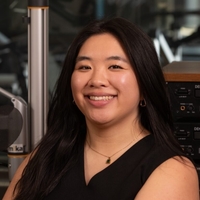


In Episode 55, Christopher Pearson, secretary of the advocacy group National Popular Vote, joins the podcast. He’ll address some misconceptions about the proposal, and why he thinks a popular vote for president could bolster voter turnout and make every vote equal.
You’ll also get a weekly news wrap-up from Evening Wrap newsletter writer Danielle Gaines and Daybreak newsletter writer Madyson Fitzgerald. They’ve got you covered with the latest on: measles in the states, infant and maternal mortality and data center moratoriums.
Episode produced and edited by Mallory Cheng. Music for Stories From The States composed by David Singer.
Got questions? An episode idea? Email us at [email protected].
Subscribe to Stories From The States on Apple Podcasts, Spotify or YouTube.
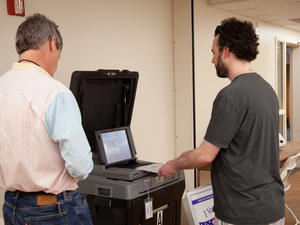
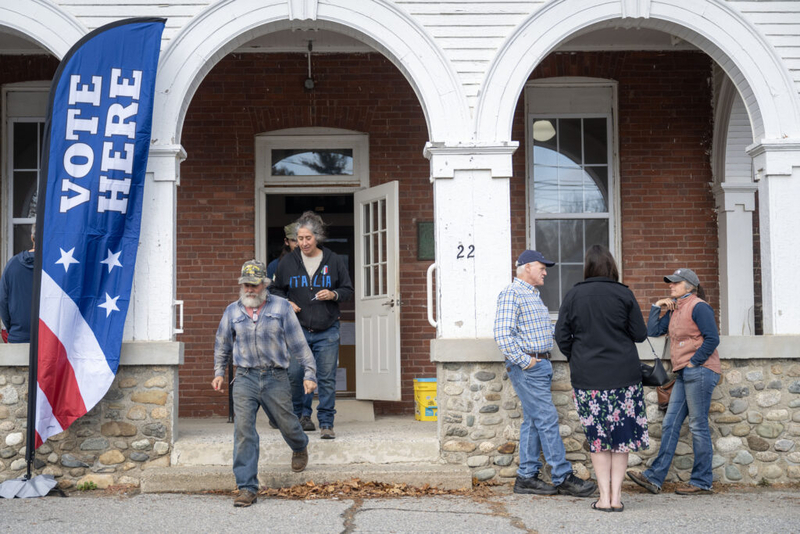
Photo: People emerge from the Besse Building after casting their ballots in Albion, Maine on Tuesday, November 5, 2024. (Photo by Michael G. Seamans/ Maine Morning Star)
Stories From The States is a production of States Newsroom, the nation’s largest state-focused nonprofit news organization, with reporting from every capital. At this pivotal moment in American democracy, our veteran journalists from all 50 states are reporting the consequences of government decision-making. By zooming in on one story each week, Stories From The States contextualizes and gives a human voice to what is happening now.
Transcript was created using an automated software.
Chris Fitzsimon
This is Stories from the States. I'm Chris Fitzsimon. Thanks for being here. As always, a lot to catch up on this week. First, the United States has lost its measles elimination status as we start heading into the winter months. States are trying to figure out how to mitigate the now deadly disease. Then we'll take a look on the l...
Transcript was created using an automated software.
Chris Fitzsimon
This is Stories from the States. I'm Chris Fitzsimon. Thanks for being here. As always, a lot to catch up on this week. First, the United States has lost its measles elimination status as we start heading into the winter months. States are trying to figure out how to mitigate the now deadly disease. Then we'll take a look on the latest on infant and maternal care, and more data center moratoriums are being passed in the states. Could a national one be next? But after Democrats' major midterm victories, there's a renewed interest in enacting the national popular vote in presidential elections.
Christopher Pearson
The current system shuts out a great majority of Americans because they happen to live in what we consider safe Republican or safe Democratic states, and really benefits the very small number of Americans.
Chris Fitzsimon
Later in the show, we'll chat with Christopher Pearson. He's a former Vermont state lawmaker, and he's now the Secretary of National Popular Vote. But first, as always, let's check in on the news with our States Newsroom newsletter authors Danielle Gaines and Madyson Fitzgerald. Well, hello, Danielle and Madyson. How are you guys?
Madyson Fitzgerald
Good. How are you?
Danielle Gaines
Doing good.
Chris Fitzsimon
Good. The the election almost finally settled. Now we're all thinking about the holidays and everything else going on. Is everybody ready for Thanksgiving?
Madyson Fitzgerald
I am. It's literally my favorite holiday. Forget the family. I'm just there for the food.
Danielle Gaines
We have our menu set as well.
Chris Fitzsimon
And their their big cranberry debate is going on. Where do you guys weigh in? Is it a fancy cranberry sauce, or do you get the can and see the ribbed part of the sauce on the pan when you take?
Madyson Fitzgerald
I personally love the can sauce. It's been like my guilty pleasure since I was like a child. Like I could, like actually just get a spoon and like that would be my meal. But because I'm an adult, I usually just eat with my stuffing and my turkey. But we've never tried to make a like the actual sauce, like you know, from scratch. So maybe one year, but I'm just usually
Danielle Gaines
I make mine. Ooh, I make mine. I have it's it's a multi-year recipe, has lots of special hidden ingredients, but the one that I think really knocks it out of the park is you add some Mexican chocolate.
Madyson Fitzgerald
Ooh, delicious!
Chris Fitzsimon
I never heard of that. Yeah, that's new. I confess that usually the table I am at has both. We want to be sophisticated, and then half the people still eat the one out of the can, including me. Well, let's jump in. A lot of health stuff in the news this week. Not some great news to start off with. I can't believe we're having this conversation in the year 2026, but measles is back.
Danielle Gaines
Yeah, so measles are back, and you know, I I'm sure people have seen that everywhere. But one of the stories I saw that was really interesting to me is that kind of the scale of the measles outbreak is a little bit up for debate between the feds and state public health officials. So Pennsylvania reported its eighth measles-related death in the state this year. This week, they released very little details, saying only that it was an unvaccinated person in the north central part of the state, Pennsylvania is the epicenter of this outbreak in the U.S. They have nearly 1,600 cases reported by public health officials, but the federal government goes with different numbers. So the federal government has the Centers for Disease Control and Prevention have recognized only six measles deaths in the country this year. Pennsylvania says they have eight. There have been two reported by Wisconsin's health department and one by New York's. So that's a big discrepancy. And you might remember we kind of had this going on during COVID as well, where the federal government was kind of undercounting COVID deaths compared to state health officials. So the federal government recently decided to report on deaths only recorded by the National Center for Health Statistics. So this is an important dataset, a long-running dataset, but it's generally regarded as a source for retrospective, like research data, rather than like real-time public health news. One of the key issues is defining measles as the underlying cause of death. So Pennsylvania, for example, will report measles-associated deaths, and this is one of the things we talked about in COVID as well. Where if you're a person who's already sick with something, and then you contract measles, and measles hastens your death, for example, that would be counted as a measles-associated death. The federal government doesn't see it that way, which I always thought was bizarre, but this person wouldn't likely wouldn't have died if not for measles or the COVID or whatever. Right, exactly. And then it also gets confused. You know, folks say like, "Oh, they just had measles and died in a car wreck." That's not true. That does not get recorded as a measles-associated death. Only if the measles had an exacerbating effect on a different underlying health issue, you know. The feds say that they are doing this because they want precise data, but public health experts say that it's really undercutting and upending decades of best practice in providing the public information.
Chris Fitzsimon
And Madyson, so it sort of also leads to a conclusion that happened this week that measles is endemic again in the U.S. What do what do we mean by that?
Madyson Fitzgerald
Yeah, well, after 12 months of continuous measles outbreaks across the country, unfortunately, the Pan American Health Organization basically designated that the United States is no longer a country that has eliminated measles, and so now it's spreading and it hasn't really it hasn't really slowed down. It's only seemed to speed up, and so it's a little scary, I will say. But I'm hoping that it's really scary. We'll see some changes soon because it is very, very. I think it reminds me a lot of COVID as well. And when I think about that time, you know, I was I was in college. I was not. That was a scary time. So
Chris Fitzsimon
yeah. Also, I mean, the Danielle was was talking about the the first story in Pennsylvania, unvaccinated seems to be an important word that a lot of people are. I don't know, maybe not talking about as much. But let's move on to another another healthcare topic: infant and maternal care. Madyson, what's happening?
Madyson Fitzgerald
Yeah, there's been a lot of news across the network about infant and maternal care after the release of several new reports from national health organizations, but one of the the main ones that a lot of our states have been looking at was the March of Dimes state by state report card. And March of Dimes is a national nonprofit organization aimed at improving the health of caregivers and babies. So this organization has a bunch of key indicators that tell about the health of maternal, or excuse me, tell about maternal and infant health in the U.S. and preterm birth rates is one of those key indicators. And so the organization gave the entire United States a D plus in preterm births, which includes babies born before 37 weeks gestation. And half of all U.S. states received a D or an F from the organization. So very very very low numbers. Those are grades you don't want to see. But preterm births are more common in Mississippi than anywhere else in the country, leading the state to receive a failing grade for the 19th year in a row. And in Louisiana, the preterm birth rate for every racial and ethnic group is higher than the national average. Another key indicator that the group thought was important was mortality rates, and so that can be kind of complex in certain states, like in New Jersey, where they have like the nation's lowest infant mortality rates, and preterm births are very very rare. But maternal mortality rates, and specifically the racial disparities within those deaths, remains higher than the nationwide average. And so, if you go to the website in the organization, you can see some of the other indicators that show how maternal and infant care is really kind of becoming an important something that I think more organizations and more agencies need to pay attention to.
Chris Fitzsimon
Yeah, it felt like we were making progress. I might be wrong about that, but I felt like in the in not too distant past, things are on still dangerous and still scary, but on the upswing. And now, especially, especially among certain racial groups or people below the poverty level, just feels like there's we're retrenching in that area. Danielle.
Danielle Gaines
Yeah, I mean, I feel like like Mady said, this is a really important issue to keep talking about because it's it's a multi generational, decades running issue from even you know the birth of OB/GYN as a as a course of study for doctors, and so I definitely want to take a minute to highlight the excellent reporting from all of our reporters across the network, but especially our reproductive rights team. They do a lot of reporting, and so they had something this week that kind of ties into this, which is about a new survey of of Black mothers, and it found that the majority of them find that they lacked continuous access to comprehensive reproductive health care before, during, and after pregnancy, and that they also felt ignored or discriminated by medical professionals during various points of time in their care, and that was, you know, something that was brought to light by a partnership of several groups: the National Partnership for Women and Families, Black Mamas Matter, and Moms Rising.
Chris Fitzsimon
And I remember at the beginning of this second Trump term in 2025, a lot of publicity about some studies trying to figure out why Black women were, or Black mothers, or black parents were struggling more, and the research into that was halted because it was halted by the Trump administration under some bizarre DEI anti-DEI effort. But yeah, let's hope things change. All right, let's. Here's a topic we haven't talked about in a couple weeks. Miraculously, data centers.
Madyson Fitzgerald
I was I was trying to stay away from the data centers because I had a feeling we were it was getting to a point, but it's it's back and especially as we get closer to you know January and the new year, a lot of lawmakers, both at the state and national level, are starting to plan out legislation to address a lot of the concerns. Earlier this week, leading and incoming U.S. House Democrats called for a national moratorium on the development of new AI data centers, and at the state level, there's been a lot of conversations, not just about moratoriums, but also other restrictive measures that could be on the docket as these states' legislative sessions come back. And so, one example that I thought was was really really notable was actually in Ohio, where voter voters sharply rejected data centers in this year's election, I think that every single county that had a data center proposal on their ballot, it was they all voted in favor for more restrictions. And so, after all this, of course, legislative leaders are coming together and they're commenting on the possibility of more regulations in the next year. In Maine, another very very popular example. Lawmakers have already resubmitted a proposal for a moratorium on data centers after last year's legislation, which was passed by the legislature, was vetoed by Governor Janet Mills, which I know got a lot of attention because I think it hit a lot of momentum, a lot of steam behind it. But I think that governors are trying to once again balance between, you know, addressing the environmental concerns, addressing some of the you know noise complaints and things of that nature, but also economic development, jobs, that kind of thing. Environmentalists in Pennsylvania and energy advocates in Wisconsin are also looking forward to more data center changes in the new year. I think that this Democratic you know blue wave is really going to change how some of these bills play out over the next year, so it'll be interesting to see.
Chris Fitzsimon
I was really struck during the election. Governor Greg Abbott of Texas, who for a long time people thought was safe, ended up losing to Gina Hinjosa. He used to be pro data center, and it felt like he shifted halfway through the campaign. Danielle, it feels like that this momentum sort of swept across the country.
Danielle Gaines
Yeah, I think you absolutely saw like a huge shift in rhetoric all around. Another Ohio story that caught my eye this week. It was from one of our partners, but it caught my eye because it didn't seem to kind of grasp that idea that there's a leaked bill from some Republicans who want to allow data centers to qualify for public utilities and be able to use eminent domain and seize private property. In addition to the new legislative dynamic they're going to have there, I just thought that wasn't really reading the room.
Chris Fitzsimon
Yes, speaking of things that are controversial, our one last thing has to do with a merger of sorts.
Danielle Gaines
I know. I I love. I think Mady does too. We love finding our little one last thing, one more thing stories to end the newsletters with, and sometimes they're heartwarming. Sometimes they're cuddly. Sometimes it's just something that I didn't know anything about. So this week I wrote about a big fight over a merger of the two largest veterinary supply distributors. So I don't think a lot about veterinary supply distribution. So this was interesting to me, but it's actually attracted a huge blowback. So the Federal Trade Commission in 12 states, bipartisan group of 12 states, which always makes it more interesting, are pushing back against this merger of Covetrus and MWI Animal Health, they argue that it will lead to higher prices for vets, and they won't be able to kind of bargain for lower prices between the two companies if they merge. And then that would also increase bills for pet owners. The company says that it would make their animal healthcare more affordable and more accessible. And then you know what caught my eye also in that story is just how much folks are paying for veterinary care each year. I have to say, this says that dog owners spend nearly $600 a year on vet care, and cat owners spend about 530. I will say, my very very needy dog, you should add at least one 0...
Chris Fitzsimon
Me too. I was thinking $600?!
Madyson Fitzgerald
I was about to say that might be a little bit more than that.
Danielle Gaines
There's years it might have been two zeros, maybe.
Chris Fitzsimon
Yeah, exactly right. Plus, and then you think about the story we talked about the vaccine hesitancy and the rabies vaccine. We did a interview not too long ago about private equity firms. Just in general, they're buying up vet practices. It really feels like it's all becoming harder to be a pet owner. I mean, no way I'm giving that up, but it really is staggering.
Danielle Gaines
Yeah, I think all the issues of the American human healthcare system are starting to filter down into the animal healthcare system, which is already, I think, less regulated. So it'll be really interesting to see if more stuff like this keeps coming out.
Chris Fitzsimon
Well, it's great to see you guys and have a wonderful Thanksgiving holiday. Thanks again. Yeah, thank you, thank you. To stay up to date on the latest news happening in all the states, subscribe to Daybreak and Evening Wrap. You can subscribe at newsfromthestates.com/subscribe.
Chris Fitzsimon
In how elections work right now, presidents are chosen by the Electoral College. States decide how to award their share of 538 electors. Most states use a winner-take-all method that awards all of their electors to one candidate, even if the races are tight. Five of the nation's 47 presidents took office without winning a majority of votes nationally. After Democrats' big major midterm victories, there's now renewed interest in shifting to a national popular vote in presidential elections. The National Popular Vote Interstate Compact has advocated for that reform since 2006. It's an agreement among states who are participating and the District of Columbia to award all of their electoral college votes to the presidential candidate who wins the overall national popular vote. This doesn't abolish the electoral college and would only take effect once states with at least 270 electoral votes sign on. 18 states and the District of Columbia have already joined the compact, but more states could opt in soon to get to that majority. And with Democrats now holding trifectas, that is, unified control of the governor's office and both state legislative chambers in 22 states next year, the possibility is at an all-time high. In a moment, we'll chat with Christopher Pearson. He's the Secretary of National Popular Vote about whether or not it can be done. We'll be right back.
Chris Fitzsimon
Well, thank you very much for being with us to talk about this fascinating topic. It's my pleasure. Thanks for having me. Okay, first, the obvious question: Why is this such? Why is getting away from the Electoral College so important to our democracy, in your view?
Christopher Pearson
Well, fixing the Electoral College has long been a goal for reformers who are interested in a strong democracy, believe in one person, one vote, and this radical concept that when you get the most votes in an election, you should win. And and the way we elect the president is is very damaging. You know, we've watched five of our presidents come into office without getting the most votes in the country, five out of 47. I mean, that's a pretty bad error rate. It's just that our presidential elections are spread out over every four years, so not always top of mind. And and that's happened twice in our lifetimes. Then you have the problem that because of the winner-take-all system, which is the current state law used in just about every state for awarding electoral votes. Winner take all really drives the campaigns to to focus on a tiny subset of the country. So, in the 2024 election, for instance, a huge majority of the public events in the campaign, when you look at September and October of the general election, 94% of that campaign took place in seven states. 43 states, 80-plus percent of American voters are very effectively sidelined in the current process for electing the president. It just discourages people. It erodes faith in our democracy. Voter turnout is 11% higher in the battleground states, so it depresses voter turnout elsewhere. That has an impact down ballot. You know, so off the top of my head, those are a couple of the reasons.
Chris Fitzsimon
Well, just a couple of questions about that. One is, wouldn't presidential candidates be just as likely to go to areas with the largest population if the popular vote was a deciding factor?
Christopher Pearson
I don't think there's much evidence to that. We do hear this objection a lot, but when you look at what happens inside a given battleground state today, and and there's loads of data on this, and and for listeners, you can think of a governor's race or a U.S. Senate race, which happens you know inside a boundary where every vote is equal, and when you get the most votes, you win. You don't see a lot of evidence in in those races of of an intense concentration on urban areas. When when you look at presidential elections, let's say inside of Pennsylvania, it's been a battleground state for the last several cycles. Donald Trump won Pennsylvania in 2016, and again in 2024, he never won the most votes in Philadelphia and Pittsburgh, and I use Pennsylvania as an example because those two metropolitan areas make up about half of the the population across Pennsylvania. So he never won the most votes in those cities; still won in the state, when you go back a little further, George W. Bush won in Ohio. He never won any of the cities in Ohio, so he clearly was focused on on earning votes in in rural parts of the state. When you look at the country as a whole, the 100 biggest cities in our country make up 19 percent of the population, and actually, rural America makes up 20 percent of the population. So we're quite balanced. And and by the way, the 100th biggest city is a population of 230,000. We only have, I think, it's. 10 cities with more than a million people. So the 100 largest cities population equals rural America's population. Nobody would come forward and say, if you have a popular vote for president, you're going to ignore the 100 largest cities, right? That would be preposterous. And it's the same argument. It's the same number of votes as lives in rural America. What what it's important to understand, I think, today is that the current system shuts out a great majority of Americans because they happen to live in what we consider safe Republican or safe Democratic states, and really benefits the very small number of Americans that live in the battleground states, and of course, the battleground states are shifting. It's not a fixed thing, but the point is, every four years you're shutting out the great, great majority of Americans.
Chris Fitzsimon
I want to ask you about how this process works, but one more sort of just not criticism, but question about this process. I'm sure you've seen emerging from maybe what I thought was unlikely circles, maybe from more progressive folks about given our current constitutional struggles with the branches of government, are we giving up the power, a receding power to a federal government who oversees elections in a way that now now we have sort of the safeguard, the federal government can't tell states what to do. There's no decision-making process for the national popular vote. I'm sure you've read some of these recent critiques by people who think we think of us more on the progressive side of the spectrum, and wondered what your thoughts were.
Christopher Pearson
Yeah, well, I think they they're you know I guess to be blunt, lazy takes. National popular vote doesn't change any of the dynamics you've just outlined. The states have under our federalist system states control elections, despite some attempts from Washington recently. That has held and that will hold under national popular vote, and and I think that's a great strength, actually. Particularly as you see, you know, we maybe should be cautious of Congress stepping in to try to control elections and then having it vacillate back and forth as as partisan control changes. So national popular vote doesn't interrupt that at all. National popular vote and the the way the electoral college works is a bedrock power of the states. It's it's outlined plainly in the Constitution, Article Two, Section One reads: Each state shall appoint in such manner as the legislature thereof may direct a number of electors. The case law on this is crystal clear. It's it's been described as a plenary power belonging to the states. In other words, it's only up to the states how the electoral college works, and it's not been fixed. You know, this is not well understood, but states have used this power over awarding electoral votes differently throughout our history, three three states used the winner take all, which is now very dominant. Three states used winner take all in the very first presidential election. They all repealed it by 1800. It wasn't until 1880 that it was winner take all was really the dominant method of awarding electoral votes, but even today, Maine and Nebraska award electoral votes based on the congressional district system. Just a reminder that this is a straightforward state power, and national popular vote therefore can change the system using state power, and that's what we've been doing for 20 years. Is is slowly getting more and more states to agree that collectively we should fix the electoral college so that it's a one person one vote system.
Chris Fitzsimon
Let's talk about where we are in the process. How many states have signed on to the compact? How this will work? What's left to do?
Christopher Pearson
Sure. So the first state was Maryland in 2007. A brand new state senator named Jamie Raskin filed his first bill ever, which was the National Popular Vote Compact, and Maryland passed it in 2007, giving us 10 electoral votes towards our goal of states with a majority of the presidential electors, 270 or more, we're now up to 18 states plus the District of Columbia. They together have 222 electoral votes, so we are 48 shy from reaching a majority states with a majority of the presidential electors, and we think we can do that maybe even in 2027 in time for the 2028 presidential election. So the short answer is we're 48 electoral votes shy. We can do that with as few as four states, but you know if if Texas wanted to pass this we would do it even faster. We do think that there's great promise in a handful of states, in five states that just had a good midterm election for the for the Democrats, and and I would say this has historically not been a partisan issue, but recently it's been very difficult for us to get floor votes in chambers that are state chambers that are controlled by Republicans. So, in Arizona, you have 11 electoral votes. Strong support there. We're we're bullish that Arizona will pass this bill. And by the way, as a footnote, Arizona in 2016, controlled by the Republicans, the Arizona House passed this bill. Two thirds of the Republican caucus there had sponsored and voted for this bill in 2016. So now it's going to be up to the Democrats, it would seem, to pass Arizona. Nevada is another state, six electoral votes, strong support in the legislature. We believe the Speaker of the House is going to carry our bill, and incoming governor Aaron Ford, governor-elect Aaron Ford, was in the media the other day saying he was supportive. Then you have Wisconsin with 10 electoral votes, Michigan 15 electoral votes, and Pennsylvania with 19. In all three cases, you have incoming governors, or in the case of Governor Shapiro in Pennsylvania re-elected, who are vocally supportive of national popular vote in Michigan, Governor-elect Jocelyn Benson, and in those all of those states we have strong support from legislative leaders, and are you know have been working really hard to build strong grassroots coalitions to help us get across the finish line.
Chris Fitzsimon
So let's assume we're sitting here in nine months or a year, and all those enough of those states has passed have passed this legislation. Then what happens?
Christopher Pearson
What what happens under the national popular vote law is that all of the states that have passed the compact by law are required to award their electoral votes to whichever candidate gets the most popular votes in all 50 states plus D.C., so suddenly every vote's equal, every voter matters across the country, and the person with the most votes is guaranteed enough electoral votes thanks to the compacting states to go to the White House. There will be undoubtedly there will be lawsuits, and and you know those are hard to predict where they'll show up and what the nature will be. But they will have a hard time arguing against the very basic fundamentals that this is an inherent state power, exclusive state power to award electoral votes. And of course, the public is with us on this. Two out of three voters likes this, and it is not a partisan issue in voters' minds, not at all. So we're we're quite excited to reach that threshold, and think there's a good chance we can do that in the next, certainly in the next year.
Chris Fitzsimon
Well, fascinating. Thank you very much for being with us.
Christopher Pearson
Well, thanks for having me, Chris. Take care.
Unknown Speaker
And that's our show. Thanks for listening to Stories From The States. I'm Chris Fitzsimon. Mallory Cheng produces and edits the podcast. David Singer produced our theme music. To stay up to date on the latest episode, subscribe now to Stories From The States, a podcast from States Newsroom, available wherever you listen to podcasts. Thanks for listening, and we'll talk to you next week.