How states can alleviate residents’ headaches over services
There are many experiences that a lot of Americans find frustrating or annoying: going to the DMV, figuring out an online portal to pay for a parking ticket, applying for unemployment benefits. Some states are looking at how they can make accessing government services less aggravating.
A recent study from McKinsey, a global strategy and management consulting firm, examined how residents experience state government services across the country, why some states are outperforming others and what matters most to residents when interacting with the government. The study authors say the results come at an opportune time, as 21 states prepare for new governors and at least 24% of state legislators will be new to the job.




In Episode 56, Ashka Dave, a partner in McKinsey’s Tech & AI Practice, joins the podcast to discuss what her team found and how incoming state leaders can make a difference.
Episode produced and edited by Mallory Cheng. Music for Stories From The States composed by David Singer.
Got questions? An episode idea? Email us at [email protected].
Subscribe to Stories From The States on Apple Podcasts, Spotify or YouTube.
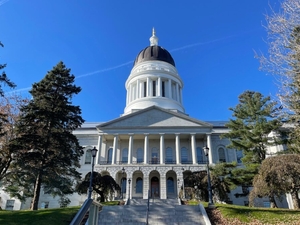
Photo: The Idaho State Capitol is reflected in the Joe R. Williams building on March 21, 2021. (File photo by Otto Kitsinger for Idaho Capital Sun)
Stories From The States is a production of States Newsroom, the nation’s largest state-focused nonprofit news organization, with reporting from every capital. At this pivotal moment in American democracy, our veteran journalists from all 50 states are reporting the consequences of government decision-making. By zooming in on one story each week, Stories From The States contextualizes and gives a human voice to what is happening now.

Transcript was created using an automated software.
Chris Fitzsimon
This is Stories from the States. I'm Chris Fitzsimon. There's a lot of news around the states and around the country to keep up with, and we're glad you could spend some time with us on this holiday week. Thank you for being here. So there are a few things that most of us find collectively annoying, like going to the DMV, trying t...
Transcript was created using an automated software.
Chris Fitzsimon
This is Stories from the States. I'm Chris Fitzsimon. There's a lot of news around the states and around the country to keep up with, and we're glad you could spend some time with us on this holiday week. Thank you for being here. So there are a few things that most of us find collectively annoying, like going to the DMV, trying to figure out that online portal to pay for a parking ticket, or where to go to apply for social security benefits, but some states are trying to make it less frustrating and potentially less confusing, a tad bit less. On the show today, we're diving into some research on how satisfied constituents are with their state services and some recommendations to states on how they could improve.
Ashka Dave
The number one driver for satisfaction was what we call reliability, and that means that I'm able to get the same information whether I'm coming into a field office, calling into the call center, or filling something out online.
Chris Fitzsimon
Joining us on the show is one of the researchers, Ashka Dave. She's a partner in McKinsey's tech and AI practice. Well, Ashka, thank you very much for being with us.
Ashka Dave
Hey, Chris, it's lovely to be here. Thanks so much for having me.
Chris Fitzsimon
Sure, fascinating study. I guess we'll just jump right in first. What was the genesis of this? What was what were you trying to find out?
Ashka Dave
Yeah, I'm I'm so glad you asked. My colleagues and I spend a lot of time with public servants, and they're constantly trying to figure out ways in which they can use public service to actually serve their residents better. But, gosh, like four or five years ago, there was really no way to measure that. We had no way of really understanding what the performance of any government service was through the eyes of the residents, and so we sought out to actually just build that benchmark. And so we started this about four years ago to really understand across all of the services that a state government provides, how is it viewed through the eyes of the residents? How effective is it? How satisfied are they with how they are receiving those services, and when we did this a handful of years ago, I think the thing that was most exciting was that we found that there were stacked wins. Every single time you improve satisfaction, you also improve trust. You also improved employee satisfaction, and so we had a big motivation to do it again this year, given that there were so many gubernatorial transitions happening.
Chris Fitzsimon
Right, there's a lot of services that state governments provide. I was, if we could, before we get into sort of the findings and and what you think they mean, can you help us understand what I know? You've broken it down in many categories: benefits, licensing, direct. Give us an example, maybe in each one of those, so people know what the services are we're discussing.
Ashka Dave
Oh, absolutely. Okay, so let's talk about each of those three segments. So the first segment we have are benefits-related services. So think about these as an individual has some kind of life event. They've lost a job. They've gotten hurt, and now they're going to rely on the government to give them that safety net that they need for a short period of time. So these are things like, hey, I need food benefits, I need unemployment insurance, and from the perspective of a department, this requires some sort of application, some sort of view of like, hey, do you meet the eligibility requirements, and then an ability to actually disperse the necessary benefits, so that's kind of the benefit category, and there's a handful of services in there. Then we have kind of the licensing pieces of it. So think about this as one of the roles that our state government has is to ensure that we all as consumers are kept safe, and so a lot of the work that they do is to make sure that some of our service providers are actually compliant with state laws. So think about when you go to get your haircut. Perhaps you see that barber's license.
Chris Fitzsimon
I don't do that often, by the way. But go ahead.
Ashka Dave
Fair. When I go get my haircut, my stylist has her little state licensure certificate. You know, hanging up at her booth. Somebody has to provide those right, and that's giving somebody the right to work in the state or the right to provide the kinds of services that they're providing, and so those end up being kind of the types of call it licensing type services. So hey, I need a professional license, I need a business license, and from a state agency standpoint, again, it requires some sort of application and some sort of view of whether or not you meet the requirements, and then we have a set of kind of like direct benefits, right? So these are things that all of us just kind of I almost want to say take for granted. It is part of the beauty of living in America is that these are services that the government provides for us that are open to anybody regardless of eligibility, so this can be our state parks. This can be transit, things that anyone can use regardless of eligibility. And there's really not a compliance angle to it.
Chris Fitzsimon
One of the licensing services that most often comes under criticism and that we hear the most about, and that we all have to do, is DMV. Where in those three? Is that a license or is that a direct interaction?
Ashka Dave
That's a that's a license, right? It's a compliance type function that the state provides for us. Are we licensed to drive a car in the state? Have we met the minimum requirements? And I'm so glad you brought it up. They're our favorite agency to work with, and we have lots of great stories of what they're doing to improve customer experience.
Chris Fitzsimon
Do you do you find that residents understand which services are provided by which level of government, state government, which is what states newsroom focus on? But I'm always interested when talking to people. Some people are confused and they believe it's a state service when it might be their city or county.
Ashka Dave
Yeah, or even the federal right. One of the services that we tested for was the operations around collecting and paying taxes, and I work with a lot of state tax agencies that say, "Hey, you know, I'm getting the the Twitter feeds or the phone calls with folks that are confused, but they're confused actually about their federal tax return, not about their state tax return." And so it is. I we did find in our research that most residents are not really able to separate that out, and when I speak with a lot of my clients that are the directors of these agencies, they're like, "Gosh, like that's really not that's that's really frustrating. Like that's not something we're doing. It's the city or the municipality or the feds." But what we're seeing in the data is that ultimately the response, unfortunately, that is the perception that people have is that they just kind of bundle all governmental services together, and they're looking for support with whatever channel they are engaging in, and so it is it does become kind of incumbent on state governments to be able to answer some of those questions for residents, even if they might be touching the federal or local parts of the work.
Chris Fitzsimon
And what sort of gap did you find in the in the scores? Like, how how much range is there out there? I know it depends on geography. It probably depends on other factors.
Ashka Dave
Yeah. So my favorite way my favorite way to looked at the data was what's kind of changed over the last four years in terms of this gap and range. So when we look at we call it resident satisfaction scores, right? What percentage of residents are satisfied with the services that they're receiving with the state? We did see that between 2022 when we ran this and today, four years later, the gap between the highest performing states and the lowest performing states has widened. Now there's something to celebrate, which is that the top performing states are now outperforming private sector benchmarks. That means that folks in these states are more satisfied with their with the services that they're receiving from their government, than they are in you know engaging with their bank, right? But then we also saw that gap widen, and that was because so many states took what I call big swings four years ago in the post COVID timeframe to really improve resident experience. They brought on digital services. They put in place these like statewide customer experience officers. They took these like really big swings, and as a result, they kind of leapfrogged. They jumped forward so aggressively in the last four years that we're seeing kind of that chasm widen. So when I'm talking to when I'm talking to a lot of states, my my takeaway on that is that it's no longer good enough to be good enough. Every state has to continuously improve in order to keep up with you know residents' expectations of what services look like and the rate of improvement that we're seeing across all of their states.
Chris Fitzsimon
How do we assess without getting into specific states? What are the characteristics of the states that are doing well versus the states that maybe aren't scoring quite as high?
Ashka Dave
Yeah, I'm glad you asked. When we looked at those top performing states, there were a few practices that all of them had in place that we find correlative to being high performing. So the first one I mentioned was that they seem to have somebody at the kind of top level of government that is responsible for resident experience. And so, for example, it can be a cabinet secretary. Often, it's just an offshoot from the governor's office. So the most recent that I spoke with is Jesse Jones, for example, in Washington. He is the statewide customer experience officer. He is a dotted line to the governor's office, and so they put forth these leaders that are responsible for thinking about what performance looks like through the eyes of their residents. So that's kind of one habit that I thought that was very apparent amongst the top performers. The second habit, or the second kind of trend we saw, was that as I mentioned, we have all those different kinds of services that we're looking for in the state, and the top performing states. Didn't have just one service that folks were highly satisfied with. Pretty much all of their services were ones that folks were highly satisfied with, and so it it leads me to believe that those top performing states aren't just focusing on one or two agencies or departments. They are really focused on all the services that their government provides and ensuring that all of them are performing at par. Yeah, and then the third thing I would say is that in our research we really strive to understand where is the friction as any resident is engaging with these services, and we find that the most important part of a resident's journey is actually at the very beginning when they're trying to look for and search for services, and the top performing states all did things to make that front door really accessible. So they have kind of uniform branding, really simplified language, a one stop shop. Michigan does this really well. Utah has some some great portals that are out there, and so they really focus on that front door as kind of a third habit.
Chris Fitzsimon
Did you find anything in the data? And you may not have looked for this. And I wonder, just sociologically, are if people are optimistic, are looking forward, if they feel like things are going well, are they more likely to be happy with the services the government is providing, or does that you think that that is not a factor in when you're surveying?
Ashka Dave
Yeah, in in our research, we really focused on the operations to deliver a service, and so we tried our best to actually strip out sentiment, right? Like, how do I think things are going? What do I think it's like to live in this state? And really get to the brass tacks of what does it take for you to receive this, to understand that these services exist, receive them, and to connect with the agency should you need any questions answered.
Chris Fitzsimon
The other question I was wondering about. You mentioned that in some places that it it is equal or exceeds the offerings, or that how they deal with private business, private services like banking. Is there a difference between states that choose to privatize some of the state functions, or is this are you just surveying direct state services, and how does that how does that factor in?
Ashka Dave
Oh, that's a really great question. We did not unpack that in the in the research. We were just kind of looking at hey, generally the state services that are provided, regardless of whether they were privatized or run by.
Chris Fitzsimon
Or how they're provided. Right, right. Because I wonder, you know, often we go through periods in this country, obviously, where public services or public service, but in this case, public services are sort of attacked, and people believe government is too big and shouldn't be doing these things at all. And I wonder how that factors in. I guess it doesn't if you're if you're not looking at who's actually providing them.
Ashka Dave
Exactly. Like we didn't see any difference in states from a political, demographic, socioeconomic standpoint. It was really these practices that I laid out that made folks different. And when I'm looking at the kinds of services that we, you know, were analyzing, it's a good question. But these, you know, we weren't looking at corrections or some of these things that are typically hot button privatization items, and so you know I'm I'm led to believe that it doesn't make that much of a difference right now. It's really just a function of how well those services are managed, regardless of who's delivering them.
Chris Fitzsimon
Yeah, I want to talk about technology and AI in a minute, obviously, it's a big undercurrent in everything that's happening, including this. I think this this information. Can you talk more about comparing this to the first time you did it? I'm really fascinated by 2022 to think back to that. I think we were all still, if not fully recovered from COVID, certainly had PTSD about just how life was and what services used. What are the dramatic, or are there dramatic differences between now and 2022?
Ashka Dave
Well, I mean, I think that the the thing that I'm celebrating most with the states I work with is just the dramatic improvement, right? So satisfaction with state services has jumped by almost 30 points across the board, and so just that improvement is, I think, something really worth celebrating. There's one agency, and we started talking about it a little bit at the beginning of of our conversation, which is the Department of Motor Vehicles. Vehicle services agencies jumped the most between over the last four years, and I think that the trend that you're picking up on of hey, it was kind of like this post COVID, what are we doing normalization period the last time that we ran it, and I actually saw departments of motor vehicles and vehicle services actually take some of the biggest swings in bringing. Their services online the fastest. So we were working with the state of California, and they stood up a virtual field office within a month or two of us being into the pandemic, which allowed folks to actually continue their business with the state without needing to leave their home. It was a massive acceleration in digitization that COVID was kind of the catalyst for. In 2022, though, most states were still working out the kinks of those investments that they were making, and I think now in 2026, four years later, we're actually seeing the payoff of those investments. And vehicle services is the greatest example of it. They've seen the biggest improvement over those last four years.
Chris Fitzsimon
One last question about: Did it surprise you? I was going to ask you about surprises at the end, but that that there are some places where people are more satisfied with the state services than they are their private services. I think that might cut across some of some people's idea of how government functions.
Ashka Dave
I was not personally surprised because I get a chance to work, you know, every single day with the folks that are trying to figure out how to deliver these services in the most effective and efficient manner. And I was seeing everything from policy being leaned out. Right? How do we think about the policy and actually implementing it through investments that were happening in technology, through kind of job aids and how do we upskill people so that they can better service our residents. I was seeing that happen over the last four years, and so I'm in a lot of ways not surprised that government caught up. But I agree with you. I think it it does. If you don't spend all day kind of working in this space, that feels very surprising. That hey, I expect my private sector experiences to actually be best in class and government to be kind of that second class. And the data is now proving that that's no longer the point.
Chris Fitzsimon
We're going to take a quick break here, and when we come back, we'll talk a bit more on how Ashka and her team's research recommends states can use AI to improve their state services. We'll be right back.
Nelle Dunlap
At a time when so many communities are losing their local news outlets, States Newsroom is filling a gap. We are now the nation's largest state-focused nonprofit news organization, with reporters based in every state capital and Washington D.C. But we can't do it without your support. Your contributions allow us to produce award-winning journalism and deliver it to you for free, no pop-ups, no paywalls. This is a crucial time to support local journalism, and every bit helps. To give, go to statesnewsroom.com/donate.
Chris Fitzsimon
Daily news, especially these days, can get overwhelming. At times, it's hard to keep up with how it all could impact you, your family, and your community. Hi, I'm Chris Fitzsimon. I host a podcast called Stories from the States to help make the top stories a bit more digestible. It's a weekly news podcast that explores one issue happening in the states that could shape the entire country with the help of local journalists,
Sherman Smith
There's no evidence that anybody can find really where somebody was really bothered by who was in the bathroom with them.
Chris Fitzsimon
Experts,
Sherman Smith
They had an ultrasound picture of what they were told was their pregnancy, but what it actually was was a full bladder.
Chris Fitzsimon
And community members.
Max Moran
Money isn't everything, and the real value when it comes to the land is being able to pass it down.
Chris Fitzsimon
We've got you covered. Subscribe now to Stories From The States, a podcast from States Newsroom.
Chris Fitzsimon
Let's talk. You mentioned technology. Let's talk about. I guess there's two things. One is the digitalization or digitization.
Ashka Dave
Either or, yeah.
Chris Fitzsimon
And then and and then and then AI and how that breaks down across in the survey. I think most of us obviously have gotten used to or getting used to a lot of services being online. So that's one segment. And then the leap to possibly AI is another level. I guess.
Ashka Dave
Yeah. So we did seek to understand what are the channels that residents want to use when engaging with government, right? Do they want to use digital channels? Do they still want to call in? Do they want to come into a field office? And what we saw is that regardless of age, socioeconomics, any other demographics, folks are actually more likely to want to use digital channels to complete the work with government than in-person or phone channels, with the exception of situations where they have experienced a life event. So. When you lose a job, right, or all of a sudden your income drops, and you now need those benefit services that we were talking about.
Chris Fitzsimon
When you have the most at stake, it sounds like.
Ashka Dave
When you have the most at stake, exactly. When you have the most at stake is when that human interaction is still very, very important. So it was for those subset of services that touch that most at stake moment that folks were more likely to want to come in person or talk to someone on the phone. Now, the other thing that we didn't write in the report but might be interesting to listeners is that when we try to understand, okay, what would it take to actually improve services overall, the number one driver for satisfaction was what we call reliability, and that means that I'm able to get the same information whether I'm coming into a field office, calling into the call center, or filling something out online. And so that reliability and consistency is the number one thing that was coming out in the data to actually improve satisfaction overall. So what I'm talking to a lot of our states about is, hey, most of you all are running multi-channel ways in which you are engaging with your residents, including even social media. How are you ensuring that you're getting the same information, the same kind of response, regardless of what channel you're in, because folks are seem depending on what their life situation is, seem to prefer one channel over the other. But we know that regardless of that channel, ensuring that that information is consistent is is absolutely paramount.
Chris Fitzsimon
I'm interested that you said it was across all demographics, because I think the the first thing people would think is that people my age and older might prefer a human at all times, but it didn't seems like the the data bears that out.
Ashka Dave
That's totally right, and and so we dug into it, and even for some of our aging populations, they're they are managing a lot of their life online on their iPads, which is I think just a a movement of the time. One of the folks that we spoke with, they're like, "Hey, I refill my prescriptions on my pharmacy app with one button, and then you know I know to pick them up." And so I think even even our more elderly residents are becoming more and more digitally savvy, and the digital interface is actually allowing them to engage in ways that is in at times more comfortable for them. They're able to go at their own pace. They do not have like hearing or auditory limitations; they do not need to worry about rides to get places to have the meeting. So it actually opens up an incredible access point.
Chris Fitzsimon
Well, let's talk about the future. It's hard to have any conversation about any subject these days without AI coming up. What are the implications of this study, or what did you find that states can do better, and what role can AI play?
Ashka Dave
Yeah. So I was working with the state of Texas, and a research shows very clearly that how a resident, the journey that a resident takes to engage with a service, the very early parts of that journey is super super important, right? How do I figure out where I go to get the services I need? And so I mentioned earlier that like a lot of the top performing states have really cleaned up their front door, but this ends up being an incredible place actually for AI applications. And so I was working with the state of Texas, and they were picking up on the trend that we are, that most people now, instead of kind of googling a question that they have, are you know Chat GPTing a question that they may have, or even on Google, you're getting kind of the AI synopsis of what to do, and and what those kind of interfaces are doing is they're scraping your websites, and they're scraping your websites to then provide information to a resident. And so, if your website is not simple, machine readable, and accurate, it is likely that the information that a resident's getting is actually incorrect, and they're going kind of on a wild goose chase. And so, we know that the beginning of the journey is super, super important, and so I think that there's an incredible application for AI and helping to clean up the websites. We're seeing Texas do this. I think there's an incredible application of AI to be able to then synthesize what's out there on your websites, and we're seeing again Texas stood up efficiency. Gov as a way to share to put out this kind of AI interface for folks to be able to search and find information more effectively. So I think that's one very positive application of AI and one that would definitely improve resident experience when we do. Survey on what are the other applications of AI that residents would actually want to use, and we asked for we asked things like, "Hey, would you want to speak with an agent if it meant that you could actually get your answers quicker and you could get a response that was correct faster?" Most folks were like, I think I would be okay with it as long as it is not in those what we described as those like really intense life events or those moments that matter. And so, so that was kind of that was enlightening for us. And I would say like a medium application of AI. If you're a state that's wondering where to invest, it's probably a medium ROI, whereas using it to clean up your front door is a high ROI.
Chris Fitzsimon
But there still is a vital need for human interaction when people are in a crisis. It sounds like
Ashka Dave
1,000%.
Chris Fitzsimon
What are the if you the takeaways of this? If if I was a governor, a new governor, or the governor's chief of staff in a state, and I called you and said, "What's your what's the top line of this for me as running a state? What do what do I need to know to serve my people, my residents better?"
Ashka Dave
Yes, my favorite was four years ago. We had a governor, and we brought him the two by two graph of his state that is in the report, or at least we show the national version in the report, but we brought him his state's version of it. And what that graph showed was across all of the services that we were looking at, which services are most important to their residents, and what is the resident satisfaction with them. And he looked at it and he said, "Oh, like the services that are most important to my residents are actually amongst the poorest performing in the state, and he stood up a strike team and he said, "Hey, my goal is to turn around these three services within the first 90 days," and just in taking that action, he was able to increase his overall satisfaction with government performance by 10 points in 90 days, and so my top line to incoming governors is figure out what your two by two looks like. We have this data, and we're happy to share it, and use that as a way with limited time, limited resources to actually lay out where do you want to invest the turnaround energy, what are the agencies that could use the most support and invest focused and heavily on them for a short period of time?
Chris Fitzsimon
Okay, and in the 30 seconds we have left, what I hinted at this before, what was the biggest surprise for you as a researcher and and a person who studies this in the findings?
Ashka Dave
I think my my biggest surprise was that change is possible at a really accelerated rate. I was delighted to see that 30 point jump in states that were performing, call it mediocre sub par four years ago, to now be amongst the top performing in the nation.
Chris Fitzsimon
Well, it's fascinating, Ashka. Thank you so much for well, thanks for doing the work, and thanks for being with us to talk about it.
Ashka Dave
Wonderful, thank you, Chris. This was great.
Chris Fitzsimon
And that's our show for this week. Thanks for listening to Stories From The States. I'm Chris Fitzsimon. Mallory Cheng produces and edits the podcast. David Singer produced our theme music. To stay up to date on all the latest episodes, subscribe now to Stories From The States, a podcast from States Newsroom, available wherever you listen to podcasts. Thanks for listening, and we'll talk to you next week.