Colorado ranchers join fight against fossil fuel companies
In Colorado, officials in the city of Boulder and Boulder County have filed a lawsuit against Suncor Energy and Exxon Mobil. They are seeking monetary damages for costs incurred responding to wildfires, repairing transportation infrastructure, restoring watersheds and other devastation caused by climate change.
The officials are not seeking to regulate emissions or fossil fuel production, but they want the companies to help pay for harms Boulder contends were caused by their industry.
Some counties, however, have filed court records in support of Suncor and Exxon Mobil at taxpayers’ expense. When Deirdre Macnab learned hers was one of them, she rallied her fellow ranchers in support of Boulder’s cause.





In Episode 44, you’ll meet Macnab and Kathleen Sullivan Kelley, both ranchers in Rio Blanco County, Colorado. They’ll discuss their firsthand experiences of how climate change is taking a toll on their lands and why they decided to get involved.
You’ll also get a weekly news wrap-up from Evening Wrap newsletter writer Danielle Gaines and Daybreak newsletter writer Madyson Fitzgerald. They’ve got you covered on the latest about: the death of a Ohio Haitian college student who lost temporary protected status, the growing interest from tech developers and data center companies to expand their efforts on tribal land in the Southwest and the future of e-scooters in Pennsylvania.
Episode produced and edited by Mallory Cheng. Music for Stories From The States composed by David Singer. A special thank you to Sharon Sullivan from Colorado Newsline.
Got questions? An episode idea? Email us at [email protected].
Subscribe to Stories From The States on Apple Podcasts, Spotify or YouTube.
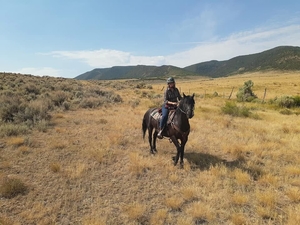
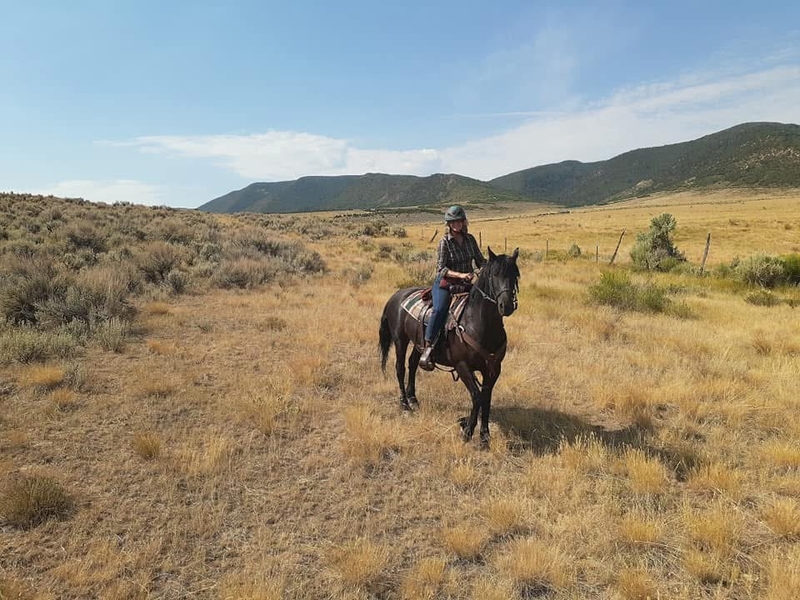
Photo: Kathleen Sullivan Kelley rides one of her horses at her Rio Blanco County, Colorado ranch. (Photo courtesy of Kathleen Sullivan Kelley)
Stories From The States is a production of States Newsroom, the nation’s largest state-focused nonprofit news organization, with reporting from every capital. At this pivotal moment in American democracy, our veteran journalists from all 50 states are reporting the consequences of government decision-making. By zooming in on one story each week, Stories From The States contextualizes and gives a human voice to what is happening now.
Transcript was created using an automated software.
Chris Fitzsimon
This is Stories From The States. I'm Chris Fitzsimon. Here at States Newsroom, we know there's a lot going on around the country in every state capital. So thank you for being here. As always, we're going to first jump in with the news of the week from around the country. This week, a handful of heartbreaking stories from the stat...
Transcript was created using an automated software.
Chris Fitzsimon
This is Stories From The States. I'm Chris Fitzsimon. Here at States Newsroom, we know there's a lot going on around the country in every state capital. So thank you for being here. As always, we're going to first jump in with the news of the week from around the country. This week, a handful of heartbreaking stories from the states on how the Trump administration's aggressive immigration enforcement is impacting young people in our country. Also, tech developers and the ever-present data center companies are showing a growing interest in expanding to tribal lands. We'll also hear about e-scooters. You might have seen them scattered throughout your community's sidewalks and roads by kids and adults alike. Over in Pennsylvania, they're trying to put new rules and regulations on who can actually use e-scooters. In Colorado, a group of ranchers are joining a lawsuit against major fossil fuel companies Suncor and Exxon Mobil. Later in the show, we'll chat with two of those ranchers about why they're fighting against big oil. But first, our check on the news with our States Newsroom newsletter authors Madyson Fitzgerald and Danielle Gaines. Hi, Danielle and Madyson. How are you guys?
Madyson Fitzgerald
Doing well.
Danielle Gaines
Hey, Chris.
Chris Fitzsimon
Well, the summer-I don't know. I guess summer doesn't officially end. I always thought that was weird. I always felt like Labor Day's the end of the summer, but we have a few more weeks to go. And if it stays like this where I am, we've had heat indexes above 100 degrees. It doesn't feel like fall is anywhere near coming. What about you guys?
Danielle Gaines
It is so hot, and I am traveling to New York City this weekend with my kids. So we'll see how they can handle it on the subway and with the city heat. Wish me luck.
Chris Fitzsimon
And that also means that soon we'll be all watching the NFL. I guess.
Madyson Fitzgerald
Yes, finally, I'm a huge Steelers fan, which I don't talk about much because, like, I'm living in Philly. But I'm very, very excited for the season to start.
Chris Fitzsimon
Before you know it..
Danielle Gaines
I'm excited for football. I I like to segment my sports. Like, I really I get more into football once baseball's over. I get more into baseball once basketball's over. We'll see.
Chris Fitzsimon
That's a good idea. The overlap is sometimes too much. Speaking of too much, there is a lot of news out there. I feel like we say this every week, and an issue that has been around since really Trump took office again. Now a year and whatever it is eight months ago, immigration is back in the news.
Madyson Fitzgerald
Yeah, and this week there was a pretty sad story out of Ohio, and I remember the reports dropping, and I read it, and my heart kind of dropped a little bit. But earlier this week, there was a 20-year-old Haitian college student in Ohio who died of an apparent suicide, which his father said came after the student was forced to wear an ankle monitor by U.S. Immigration and Customs Enforcement. Pierre Damas Bel was a student at Wright State University, and he reportedly walked in front of a semi truck on Interstate 70 on Monday. And after this came after being bullied by his classmates for wearing the ankle monitor, according to his family. And so, if you've been following the news, you've probably seen that Haitians living in Springfield have been required to report to ICE offices in the area to accept these ankle monitors. This started after the U.S. Supreme Court allowed President Donald Trump to end temporary protected status for about 330,000 Haitians who have fled violence in their home country, and so legal protected status for Haitians officially ended at the end of July.
Chris Fitzsimon
Yeah, I guess we've seen stories of some pastors who are Haitian being detained and deported, and then I think we had a story this week also in Indiana about which I didn't realize has a fairly large Haitian population, and they're obviously incredibly concerned. What a what a sad day we're living in. It's really something, Danielle.
Danielle Gaines
Well, we had like a related story. I just wanted to chime in with it from Stateline this week, and it was from the perspective of healthcare providers talking about the effect of immigration enforcement and how that's affecting young children. And so it's several ways. So many healthcare providers in surveys have said that they've seen their young patients missing pediatric appointments, delaying preventative care, so coming in with more serious issues when they do come in, and this is because their parents are fearful of immigration actions. So we've seen, we've covered at States Newsroom immigration enforcement outside of medical facilities, and aside from the physical health, healthcare workers are also reporting a lot of mental healthcare fallout, increase in depression, anxiety, and and post trauma symptoms for kids who are living in some of these communities.
Chris Fitzsimon
Well, if there's another thing in the news every week other than immigration, it has to be data centers. I feel like every time we talk about the news States Newsroom, every. Everybody has a data center story.
Danielle Gaines
Yes, well, I wasn't sure I wanted to bring data centers to the podcast again, but it's a topic that never ceases to surprise. Honestly, there's always something new going on, and so there was this interesting story out of Nevada this week, and a major data center developer there wants to build a data center. However, the utility can't keep up and provide enough power. So their solution is that they would build two private gas-powered plants to support their operations.
Chris Fitzsimon
Their own power plants, right? In effect.
Danielle Gaines
Their own power plants. Yeah, burning methane. Their big proposals, if approved, they would generate more power than would be required by hundreds of 1000s of homes. And critics basically say that this is effectively skirts the state's goals of requiring their utilities to produce energy with more renewable sources. So the state law applies to utilities, not to a privately owned, privately run power plant, but the construction of these would effectively take back all the space that the utilities might be gaining on renewable energy, and this is a national trend. I learned so. Since January, there has been a doubling of the amount of gas-powered energy electricity under development, and it's primarily for data centers.
Chris Fitzsimon
Yeah, it's really something. Well, Mady, you're working on a story about this, right?
Madyson Fitzgerald
Yeah, my first story in a while, which I'm super excited about. But the story that I'm working on is actually about tech developers and data center companies that are showing a growing interest in expanding to Indian country, and so developers are taking an interest in tribal land because a lot of these areas, like specifically think Arizona, Oklahoma, Nevada, the land is a lot less developed, and there's a lot less buildings, there's a lot more space, and so that means that developers are like, oh, there's tons of space for these massive facilities that we need to put down. So, as sovereign nations, tribes are not required to follow regulations passed by local and state governments, and so now, Native nations are grappling with what to do with the growing interest in their land. And earlier this year, one nation, the Seminole Nation of Oklahoma, became one of the first to implement a moratorium on data center development. So several tribes are considering similar methods or looking into task forces so they can just study the impacts of data centers. But it's a really interesting aspect that I think is going to be seen a lot more over the next couple of years as these you know local communities are like, well, we don't want it here, and some states are like, well, we're getting rid of our tax breaks, and so these Native nations are really going to be seeing the next wave of data center push.
Danielle Gaines
Yeah, I'll say I edited Mady's story, and one of the interesting things in there is this community is pushing back against the data center. The the city leaders are saying, well, we only approved a land sale, but the land sale says this land is being sold for the purpose of a permit being submitted for a data center. And so, if the people who approve the land sale know it's going to be for a data center, how much faith do you have that they might then vote differently on the data center permit?
Chris Fitzsimon
The other, yeah, the other sorry, the other story in the news, which I think is related in a way, in terms of people's frustration and anger and just worrying about technology, is the the sort of emergence of Flock cameras everywhere, recording where everybody goes.
Danielle Gaines
Yeah, I was I I was just following this kind of cascade of information out of Florida with their Flock cameras this week. I was really taken aback by how quickly Florida has reversed course on having Flock cameras around. So last week, Governor Ron DeSantis, a Republican, he expressed concern about a growing surveillance state. He came out and he said that only police officers should issue tickets, and that you know people shouldn't be being surveilled and tracked where they're going when they're just law-abiding citizens. Then at the start of this week, he said he wanted the state to remove Flock cameras from state rights of way, and then the Florida Department of Transportation put out a memo that said it revoked the active permits for automated license plate readers, and then one by one, sheriff after sheriff announced that they were going to discontinue Flock within their counties. It all happened really fast. Perhaps it was coordinated. I don't know, but it you know it kind of came one beat after another, and it is a pretty. Significant shift. So there are 7169 cameras at last count in Florida. The state ranks 10th. They're 10th in the number per capita, sixth in the number per road mile. I think that's because there's a lot of interstates in Florida. So this is a lot of cameras potentially coming offline all at the same time. And then, on top of that, I started seeing more of this kind of government action in our coverage. So, in Milwaukee County, the county executive issued an executive order saying that Flock cameras shouldn't be used on county property, and that there should be more restrictions put in place. In Texas, the Republican governor, you know, blocked state agencies from spending money on Flock cameras. So, really, kind of gaining momentum. On the flip side, I will say that just this week, California, a very progressive state, the most progressive state, failed for the fifth year in a row to pass regulation on Flock cameras. So, there's a lot up in the air.
Chris Fitzsimon
Definitely is. It just-I feel like we're in this era where people are just frustrated and angry and want their privacy, want their their sort of soul back from all this new technology, whether it's good or bad. What about one last thing or one more thing?
Madyson Fitzgerald
I'm very excited about this week's story simply because this is something that I have been dealing with a lot over the last couple of months, especially once it gets warm outside, advances in battery technology and other innovations have made small, lightweight e-scooters designed to travel short distances cheaper and faster than ever. But in Pennsylvania, legal code and safety regulations have not kept up, and so the the popular devices aren't legal to operate on the public streets in the state, and critics say that car and truck drivers may be unprepared to share the road with their smaller car counterparts. Well, I will say I'm not a bad driver. I think I'm a pretty decent driver. I've been driving for now since like junior year of college. That's about what five six years, and so I think that I'm a great driver. But I will say the streets in Philadelphia are already so thin, and then there's cars parked on both sides. That then having to share it with not just cyclists, but now e-bikes, it is so so frustrating. And so some lawmakers are have proposed limiting who can drive these e-scooters and where they can ride them, similar to laws that have been passed in over two dozen states, actually.
Chris Fitzsimon
Yeah, scooters are everywhere. I actually have almost been hit several times for some reason. When I was in Atlanta a couple years ago, on the sidewalk, just there were so I don't know if it was a a battalion of scooters or not, but it was it's a little crazy.
Madyson Fitzgerald
Very.
Danielle Gaines
Yeah, the regulation of e-scooters is really interesting because you know people can grab them from anywhere and drop them anywhere, and then you know the company might just let it sit there for days, weeks. I saw. I was telling Mady. I saw a group of four high school kids. I live near the high school by me. Four of them on one scooter going down the street the other day, and I was like, "Oh my god! Children walk.
Chris Fitzsimon
You remember the old thing, the old days, way back, even before my time. The whole thing was how many people you could get in a phone booth. Now it must be how many people you can get on a scooter.
Danielle Gaines
I guess so.
Chris Fitzsimon
Well, Mady and Danielle, thank you as always for keeping us up to date with what's happening. Yeah, thank you.
Danielle Gaines
Thank you.
Chris Fitzsimon
To stay up to date on the latest news happening in all the states, subscribe to Daybreak and Evening Wrap to get those newsletters in your inbox. Go to newsfrofromthestates.com/subscribe. In Colorado, the city of Boulder and Boulder County filed a lawsuit against three Suncor Energy entities and Exxon Mobil. Boulder is seeking monetary damages for cost incurred responding to wildfires, repairing transportation infrastructure, restoring watersheds, and other harm related to climate change, the county is not seeking to regulate emissions or fossil fuel production. It only wants the fossil fuel companies to help pay for harms the county says were caused in part by the activities of Suncor and Exxon. However, some Colorado counties where Suncor and Exxon operate have filed in support of those companies. One rancher, Deirdre Mcnab, was shocked when she found out that her county was one of them from reading the Herald Times, a weekly newspaper serving Rio Blanco County. She found out her county has spent $7,500 of taxpayer money toward the legal fees to file a brief in support of Suncor and Exxon Mobil. After experiencing firsthand how climate change is taking a toll on her land, Deidre decided to reach out to other ranchers who've been affected by a changing climate about support for Boulder's cause. In a moment, we'll hear from Deidre and Kathleen Sullivan Kelly, both are ranchers located in Rio Blanco County, Colorado. We'll be right back.
Nelle Dunlap
Hi, it's Nelle Dunlap, Product and Engineering Director at States Newsroom. At States Newsroom, we believe journalism should be fair, fearless, and free. With reporters working on the ground in all 50 states and Washington D.C. we provide nonpartisan coverage of the. Issues that matter most to you. You can subscribe to our work by going to statesnewsroom.com/subscribe.
Chris Fitzsimon
Well, Deidre and Kathleen, thank you very much for being with us. We appreciate your time.
Kathleen Sullivan Kelley
Chris, thank you for inviting us. We appreciate the opportunity.
Chris Fitzsimon
Well, let's start, Deidre. Let's start with you. What is it like to be a rancher these days?
Deirdre Macnab
Well, it's been kind of a seesaw lately. We were at the top of the market not too long ago, and the administration has been, I think, I guess I would say, sending out a lot of mixed messages. And so the cost of cattle right now is on a slide. We'll see what's going to happen with that. There are more cow. There are less cows now that there have been in history for several decades. So, and the demand I believe is increasing. So, we'll see what happens. But the biggest challenge, not just to cattle but agriculture, is these higher temperatures that continue to climb into very dangerous territories, and drought, which has put enormous burden on cattle ranchers as well as other farmers. And then finally, we see the cost of critical supplies for many people. We don't use fertilizer, but of course, many people do, and that's a growing cost, along with the climbing cost of fuel.
Chris Fitzsimon
Kathleen, what does the weather mean to your to you as a rancher?
Kathleen Sullivan Kelley
Well, for us, it's for us, it's a huge problem. We're seeing temperatures that we've never seen before. This morning, for example, I was down working with my neighbors on rebuilding fence that was destroyed by the Lee Fire, we were hit very hard in that fire. We lost 98% of the ranch, and so replacing those fences is a huge issue. And we're looking at between 20 to 33, $34,000 a mile. But in the meantime, we're also looking at a situation where the West itself is being de-watered by these expansive droughts. In the last 20 years, we have lost all live surface water on the ranch, and it's getting more and more difficult to tap into groundwater for wells and and other resources, so it's becoming increasingly difficult. Many of us are forced with the decision: do we stay in cattle ranching, or do we sell out? Do we try and get a data center? Do we try for other types of of development on ranching property? And and that just increases the spiral of many people going out of ranching.
Chris Fitzsimon
Yeah, tell me. I guess we'll go back to you, Deirdre, about the the lawsuit against Suncor and Exxon Mobil. Tell us why you think they share some of this responsibility for what's happening.
Deirdre Macnab
Well, it's pretty clear there's been an enormous amount of research and scientific agreement that fossil fuels are a very critical contributor to our warming planet and our less reliable weather systems. Not that weather ever is that reliable, but at you know at the end of the day, it's all about the families and the people who need food, and when the fossil fuel companies hide the impact, which they have known about for many decades, it causes a big hardship on communities. And Boulder is one of them. They had an enormous fire with many, many homes destroyed and a huge cost to the community. This is being played out in many other places, and not the expense to a community to do repair. Kathleen just talked about her ranch. It's also food. We, you know, that's one of the most food and water is what we all depend on, and with more and more people having to get out of agriculture because of these challenges, it is going to create a food crisis in addition to a water crisis, which we're already seeing in the West.
Chris Fitzsimon
Kathleen, what are your thoughts about this lawsuit? Tell tell us why you're part of it and and what you hope comes from this.
Kathleen Sullivan Kelley
Well, I think the lawsuit itself is extremely important. Every time I put a nozzle in a in a tractor to fill up with diesel fuel, I'm reminded that 15% of that is excessive profit going to the energy companies. So it's not just that we're getting money back from the energy companies-that's ours. That profit that they're taking, which has been huge, is part of ours. And I look at the impacts that we've had from the Lee Fire. We're looking at a million and a half dollars in expenses just trying to cope with rebuilding 100 years of infrastructure that was destroyed by the fire.
Chris Fitzsimon
Do you think that there was such a? It felt like we were on track, maybe as a culture, a society, a country, in acknowledging the the impacts of climate change, warming, temperatures. But it feels like that is not the case anymore. That there's a lot of acrimony about that. How do you respond as as ranchers when folks sort of express those doubts to you guys?
Kathleen Sullivan Kelley
Well, I think the only thing we can respond with are the facts. To me, that's the most important. That when I stand there and talk to fellow ranchers and they say we've never seen this before, we've never seen 102 degrees on the ranch before, at what is 6,800 feet in altitude. We've never seen floods of this size coming through the center of the ranch before, and and I think the way we have to talk about it is not so much a political issue, but a very deeply personal environmental issue that every one of us deals with every day.
Chris Fitzsimon
Deidre, what would be the ideal outcome of this lawsuit from your perspective?
Deirdre Macnab
Well, the and I'd like to go back to the question you just asked, but the the ideal outcome would be for the U.S. Supreme Court to send it back to the state of Colorado. This is an issue to me. It's very similar to the lawsuit against the tobacco companies, where it was clear from records that were seen that the tobacco companies knew the harm that their product was causing, and they needed to be part of the solution. And that's what we're hoping for from this lawsuit, most of all. Not just that it goes back to Colorado, but we begin to see some unity and collaboration on how do we solve this problem. Obviously, we've needed fossil fuels. They've been an important part of the civilization that we have, they're used heavily in farming and agriculture. You know, they they're part of putting food on our plate and lights in our houses. But we also have to understand that we need to make rapid progress in this energy transition. And the fossil fuel companies, along with many other companies, both political parties, we need to come together and find the solutions and work quickly so that we can begin to ameliorate some of the challenges that the human race across the globe is seeing. We are seeing it firsthand right down the road from me. We had a cattle rancher. He lost about 60 cows. They got burned in last year's fire, that is absolutely terrible. Nobody wants to see wildlife or livestock or humans harmed in these things. But we are going to see as the temperatures continue to increase and wildfires increase in their intensity and size, and the drought. This is going to cause enormous hardship, and it's preventable if we come together. The parties stop, you know, dividing us. Just the bottom line is the human race. If we come together, we can accomplish anything. This is surmountable, but we've got to stop the fighting and enlist everybody in this challenge.
Chris Fitzsimon
Kathleen, what do you? What about your fellow ranchers? Have we gotten to a point of polarization in the country where it's hard to get folks on the same page, or what are what are your fellow ranchers thinking?
Kathleen Sullivan Kelley
I think in many respects that polarization is manufactured. I don't think it's real. Every time I'm out discussing with friends and neighbors, we all come down to the the same issues. And many of us have friends and family that work for the energy industry. And I would absolutely second and third and fourth what Deirdre says that we can through collaboration, achieve so much, and it's tragic that we have been divided the way we are. I think a lot of people understand in this neck of the woods that, in dealing with the energy industry, that there's a tremendous amount of innovation and potential there that will give us a very sound transition from here into our next energy future, and we can have a dynamic future. We can have a dynamic economy if we let go of some of these so-called traditions that are holding us captive.
Chris Fitzsimon
And what do you hope that the that government will do, both the federal government and the local government there in Colorado? What role should they play in ameliorating these things?
Kathleen Sullivan Kelley
Well, I think there's a two part role that that needs to be played. One is coming together and and providing some kind of framework or. Through a consent decree that can kind of throw the door open and say, let's achieve some of these very important reversals in climate change through things like carbon credits, through working to pull carbon out of the atmosphere, through better water resource retention and usage on farms and ranches, making sure that that we are effectively and efficiently utilizing those resources that we have, there's a lot of tremendous solutions that are out there. But the solutions get drowned in the hyperbole and and the conflict.
Chris Fitzsimon
Deidre, what's your take?
Deirdre Macnab
So I think there are things that all of us can do, starting with the consumer. I would urge people listening today who live in cities and suburbs to try very hard to buy and support their local farmers and ranchers, buy local food and try to buy food that is grown as much as possible without pesticides, without fertilizer. By what's called the regenerative movement, and this is an exciting movement in agriculture. It's moving very fast. It's very close to organic, and basically, it's ranchers working with nature, farmers working with nature using cover crops, grazing their animals in concentrated groups, and keeping them moving like the buffalo herds used to move, and this has the end result of building up our organic matter in our soil, which retains moisture and cools our atmosphere. So these are things that we can do each of us as a consumer, the consumers have a lot of power. Secondly, those who are able to do it utilize some of these new renewable energy options like solar panels. This plug-in solar is going to take off fast. These are ways people can relieve some of the pressure on our power systems, and to make sure you're registered to vote and support candidates who are saying things that make sense to you as far as addressing some of these challenges, I think the key thing is to be aware that there are many elected officials and people running for office who want to divide us. That is to nobody's benefit. The farmers and the ranchers. We need the consumers. The consumers, they need the ranchers and the farmers. We all want the same things, but we are being challenged right now. The solutions, like Kathleen said, they're out there, but we need to come together and stop feeling divided and and blaming, and I think that's what the American public wants, and that's what this group of ranchers wants. We're saying we are people. We're trying to produce healthy food for people, and we understand the science behind the connection between fossil fuels and a warming climate and a less stable weather system, and we believe that the the fossil fuel companies and and all companies need to be part of the solution. And there are many companies that are stepping forward. There is a movement where companies are paying into carbon funds, and they're paying ranchers and farmers to utilize these new, more nature-based solutions. That is a very good thing, and it's something the consumers should look for. It's called regenerative farming and ranching, and this is something people should be excited and feel hopeful about. These problems are solvable, but we've all got to be active. We've got to be informed, and we've got to work together as a human race.
Chris Fitzsimon
Well, let's leave it there on that hopeful note. Deidre, Kathleen, thank you very much for speaking out, and thanks for being with us.
Deirdre Macnab
Thank you, Chris.
Kathleen Sullivan Kelley
Chris, thank you very much.
Deirdre Macnab
Have a great day. Bye.
Chris Fitzsimon
Well, that's our show for this week. Thank you for listening to Stories From The States. I'm Chris Fitzsimon. Mallory Cheng produced and edited the podcast. David Singer produced our theme music. A special thank you to Sharon Sullivan from Colorado Newsline. If you liked what you've heard today, please share it with somebody you think might enjoy it, and leave a rating and review. It means a lot to know what you think about the podcast, and it helps other people find us. To stay up to date on all the latest episodes, subscribe now to Stories From The States, a podcast from States Newsroom, available wherever you listen to podcasts. We'll talk to you next week.