Wyoming AG asks high court to rebuff ruling on 3 abortion laws
Nov 23, 2026 | 7:22 pm ET
Description
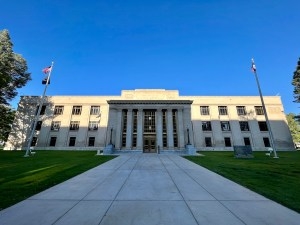
Photo courtesy of WyoFile
A Wyoming district judge erred when he struck down an ultrasound requirement and two other anti-abortion laws in June, lawyers for the state argue in a recently filed appeal.
Judge Thomas T.C. Campbell incorrectly applied a more strenuous legal standard to decide the constitutionality of two laws passed by legislators in 2025, state lawyers argue in their appeal to the Wyoming Supreme Court. One of those laws enacted a mandatory ultrasound requirement and 48-hour waiting period for patients seeking abortions. The second required abortion clinics in Wyoming to operate under a more stringent set of regulations — rules that reproductive rights advocates maintain are really intended to make running such a facility unfeasible.

The appeal from Wyoming Attorney General Keith Kautz and two other lawyers in his office further asserts Campbell erred when he blocked a 2025 law governing the prescription of off-label medications, which critics say would indirectly ban common abortion medications. The state’s lawyers maintain the law does not “impose any restrictions at all” on abortion providers.
The appeal is the latest in a series of legal battles over abortion in Wyoming that began when the U.S. Supreme Court overturned Roe v. Wade in 2022, finding the U.S. Constitution did not protect the right to an abortion.
In the years since, the Wyoming Legislature has repeatedly passed new restrictions on abortions, including attempts to ban the practice in most circumstances. The Wyoming courts, including the state’s high court, have repeatedly batted down those laws, concluding they violated a 2012 amendment to the state constitution that protects a competent adult’s “right to make his or her own health care decisions.” At the same time, it allows the Wyoming Legislature to set “reasonable and necessary restrictions” on that right in order to protect health and general welfare.
The amendment was enacted amid conservative backlash to the passage of the Affordable Care Act, also known as Obamacare.
In striking down the three abortion-related laws passed in 2025, Campbell used a legal standard called strict scrutiny, typically the most strenuous standard of review that courts employ when they weigh whether a law is constitutional. (A 2025 U.S. Supreme Court decision noted it was “the most demanding test known to constitutional law.”) The standard requires the government to clear a challenging hurdle: showing restrictions are “necessary to achieve a compelling state interest” and that less restrictive alternatives weren’t an option.
In January, a divided Wyoming Supreme Court used the same strict scrutiny standard in State v. Johnson, when it struck down Wyoming’s two previously passed abortion bans as unconstitutional. “The majority determined the State did not present enough evidence to show the restrictions (and exceptions) on performing abortions and the ban on medications (and exceptions) are no more restrictive than necessary to serve the State’s interest in protecting prenatal life. Therefore, the majority held that those laws are unconstitutional,” the court explained in a summary released along with its decision.

Campbell’s ruling “illustrates the incongruity” of the Johnson case, Kautz and his attorneys wrote. The Johnson decision recognized that the same constitutional amendment that protected Wyomingites’ right to make their own healthcare decisions also provides the Legislature with the authority to restrict those rights in some circumstances.
However, “it effectively negated that authority by holding such laws are subject to strict scrutiny review,” the appeal states. “As a result, even modest regulations like those in the laws here cannot pass constitutional muster.”
Kautz, a former Wyoming Supreme Court Justice, asked the high court to require Campbell to reevaluate the ultrasound and surgical center laws based on the rational basis test, a lower hurdle for the government to overcome. As for the off-label medication law, Kautz argued it was constitutional regardless of what legal standard it was assessed under.
Abortion remains legal in Wyoming as this latest case winds through the system. The state is home to only one clinic that provides procedural abortions: Wellspring Health Access in Casper.
A University of Wyoming survey released last month found the state’s residents broadly divided on abortion access. About 36% of Wyomingites believe abortion should always be available as a matter of personal choice. The same percentage supported restricting abortion except for cases involving rape, incest or when a woman’s life is in danger. About 15% said it should be permitted for other reasons, but only after the need had been clearly established. Roughly 14% backed a total ban.
Cheyenne, WY