A Witness’s Unsolved Killing Hangs Over a Rockland County Murder Trial
Oct 27, 2026 | 5:00 am ET
Description
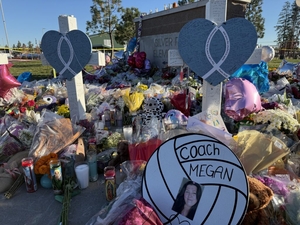
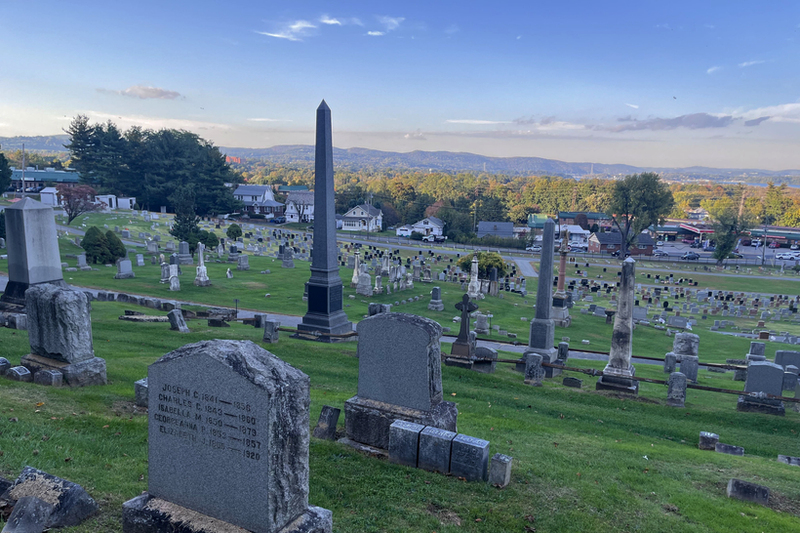
Mount Repose Cemetery in Haverstraw, NY, a couple minutes' drive from where Muhssia King was murdered. / Chris Bragg / New York Focus
Muhssia King, 22, had just returned from work when masked men approached and fired multiple gunshots into his vehicle, killing him outside his family’s home in the Rockland County town of Haverstraw.
In the immediate aftermath of the September 2025 murder, Haverstraw police said they had not determined a motive. And in the year since, no one has been arrested.
But New York Focus has learned that before he was gunned down, King was poised to be a key prosecution witness in a Rockland County murder trial.
Years before his death, prosecutors had warned that King was in danger. King’s father told the district attorney’s office that he and his family had been approached by unnamed individuals and warned of “consequences” if King cooperated with law enforcement, according to court papers filed by the Rockland County District Attorney’s Office.
But a Rockland County judge denied their request to shield his identity, and it’s unclear whether prosecutors offered King any other witness protection while he waited to testify.
King’s death has quietly hung over the murder trial, which began earlier this month and is now reaching its conclusion. It raises troubling questions about what consequences his killing had on the case, and what steps authorities took to protect a witness they knew was at risk.
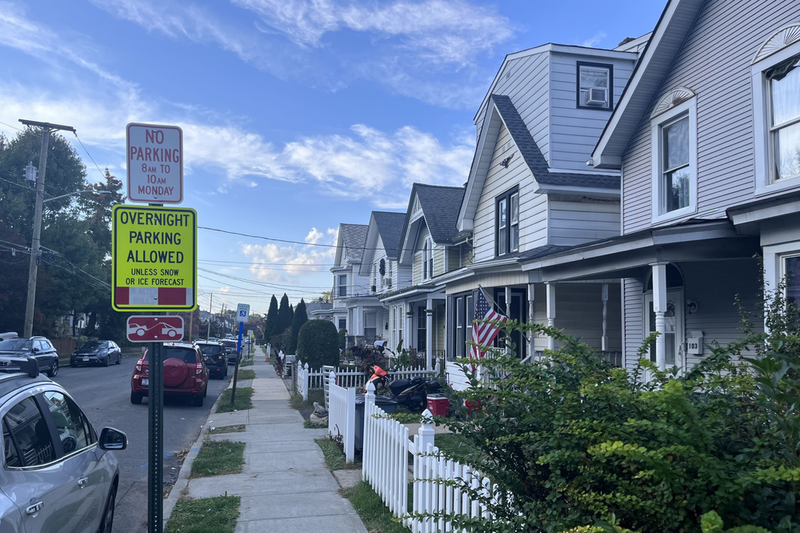
The murder trial stems from what prosecutors describe as an ongoing gang war between young men in Haverstraw, a town of 40,000 in northeastern Rockland County set amid hills overlooking the Hudson River, and Spring Valley, a village of 33,000 roughly 20 minutes southwest.
King was associated with the Haverstraw faction, known as “HaviWorld,” according to a police detective’s summary of King’s account.
In the early morning hours of July 8, 2022, King said, he observed a “growing presence of individuals from Spring Valley” outside a crowded party in Nanuet, a Rockland County hamlet. King, who was then 19 years old, sent a message saying he felt threatened and outnumbered to a group chat including several individuals alleged to be part of HaviWorld. Among them were Anthony “Slice” Mitchell, Ahmad “Boogie” Williams, and Brian “BT” Thomas.
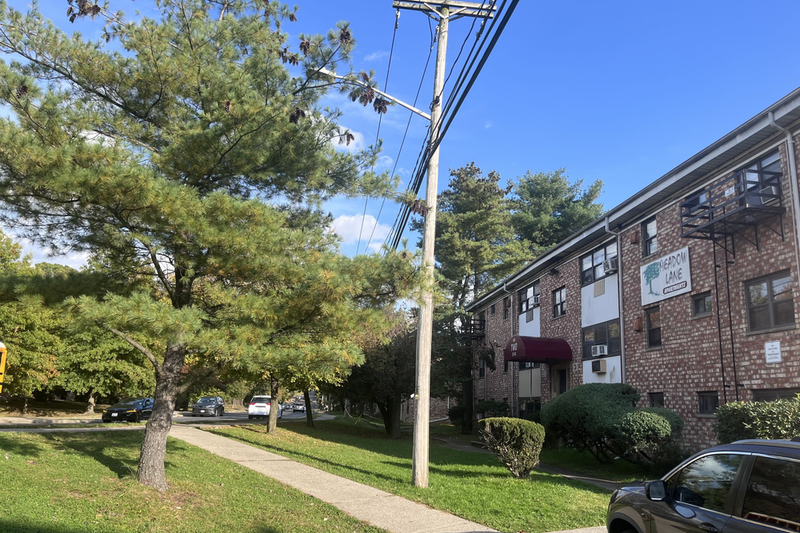
King told police that he picked up the three men with the intention of returning to the party, where they could show their own “presence.” Instead, according to King’s statement to police, Mitchell directed King to drive to Meadow Lane, an apartment complex in Spring Valley.
Outside the complex, 17-year-old Treynahel Cineus, who had also attended a party in Nanuet that night, was being dropped off at the Meadow Lane complex by his aunt, Rose Cineus.
According to police, King, who was driving a Toyota Camry, crept up beside their car. The men inside allegedly rolled down the passenger-side windows and opened fire at close range.
Rose Cineus ducked for safety. Her nephew yelled for help before collapsing to the ground. When police and emergency medical services arrived, Treyhanel was unconscious, bleeding from a gunshot wound to his chest. He was taken to a nearby hospital and pronounced dead about an hour later. He would have been a senior the following year at Ramapo High School.
According to King’s account, the three other men in the car were the shooters — and argued boastfully on the escape home about who had fired the most shots.
One of the alleged shooters later testified at trial that they didn’t know the identity of the person who was being dropped off. Members of Haviworld were “beefing” with people in the Spring Valley apartment complex, he said, and they simply hoped the person they were shooting was among them.
A Rockland County prosecutor has argued that Treynahel Cineus’s “mere existence” at the apartment complex motivated the shooting. “He existed in a place that was embroiled in a feud with [Mitchell] and individuals from Haverstraw,” he said.
Rockland County District Attorney Thomas Walsh described Treynahel Cineus as an honor student who worked two jobs in high school, played basketball and was “an exceptional brother to his siblings.”
Cineus’s mother described her son as “kind, caring, loving. The best kid anyone could ever ask for.”
By tracking video surveillance showing the Camry’s movements, Spring Valley police were quickly able to identify King as the driver. Police interviewed him over the next two days and said he provided a detailed account of the night’s events. He agreed to cooperate with prosecutors and testified before a Rockland County grand jury, which indicted the three other men allegedly in the vehicle for second-degree murder and the attempted murder of Rose Cineus.
King’s cooperation likely put him in danger, prosecutors have alleged. About two months after Cineus’s murder, King’s father reported the alleged threat against his family.
To lower the risk of retaliation, prosecutors sought a protective order withholding information about King’s identity and cooperation from the defendants. But two of the defendants objected, and the Rockland County Court judge overseeing the case, Kevin Russo, denied the request. He issued an amended order allowing the defendants to view documents recounting King’s statements to authorities.

“There are no protective orders in place at this time,” Russo said during the November 2022 court appearance. “Any discovery may be shared with the defendants.” Russo’s rationale is not spelled out in public records. He declined to answer questions about the ruling from New York Focus, citing the ongoing case.
Prosecutors sought an appellate court review of Russo’s order. But it’s not clear if the prosecutors filed the review within two business days, as required by law, and what information, if any, was provided to defendants in the meantime.
An attorney for Mitchell from the Rockland County Public Defender’s Office, Walter Sakowski, told New York Focus he could not comment on whether any information about King was shared with his client before prosecutors sought the review.
The public defender’s office did not return an email seeking comment, and the attorney who represented King, Jeffrey Schonbrun, declined to answer questions.
Sixteen days after Russo issued his order, the appellate court found that Russo’s decision to deny the protective order was an “improvident exercise of discretion” that did not adequately balance the defense’s need to prepare for trial with concern for witness safety and protection.
Under that ruling, the defendants’ lawyers would continue to be privy to information about King’s identity and cooperation — but it would not be shared with the defendants until a month before trial.
New York has long struggled with the question of how to balance the need to protect witnesses with the need to offer criminal defendants a fair trial. For decades, prosecutors were largely allowed to withhold written and recorded witness statements until the beginning of trial. After Democrats took full control of the state legislature in 2019, the party pushed through sweeping discovery reforms, including much earlier access to such statements.
But some feel that push has gone too far. Senator Patricia Canzoneri-Fitzpatrick, a Republican, has sought legislation that would make it easier for prosecutors to withhold eyewitnesses’ identities, contact information, and statements when there’s a reasonable belief a defendant is involved with a criminal street gang. The bill has failed to gain traction in the Democratic-controlled state Senate.
“While we may not yet know for certain who is responsible for [King’s] murder,” she told New York Focus, “I believe my legislation would be a critical step in improving public safety by not only helping to ensure that witnesses are able to safely testify, but by helping prosecutors convince potential witnesses to come forward by bolstering their protections.”
Apart from their request to the judge, it’s not clear what prosecutors did to protect King. Under state regulations, a “primary agency” — often a district attorney — is required to notify a cooperating witness who has received such threats of “appropriate protective measures which are available in the jurisdiction,” including relocation and moving assistance.
But compared with federal prosecutors, local district attorneys have relatively scant resources to help protect witnesses.
“In general, witness protection is the stuff of movies,” said Babe Howell, a criminal law professor at City University of New York Law School. “I’ve never seen a local prosecutor provide witness protection.”
“Witness protection seems to be limited to the highest of high-profile mafia cases and the like,” she said.
The New York Prosecutors Training Institute, a nonprofit, receives an average of $287,000 a year through the state budget for witness protection, which is meant to support 62 county district attorneys.
Sean Smith, the nonprofit’s executive director, said the limited funding allows the nonprofit to help district attorneys pay to put a witness in imminent danger in a hotel. It sometimes also pays for meals or moving expenses and is available when a DA “has exhausted other channels.”
“More funding is needed for witness protection. It’s a serious problem,” Smith said. “The discovery laws in 2019 were a cascading change where I think that this witness issue is one of the unforeseen consequences.”
A bill introduced by Republican Assemblymember Michael Novakhov, the “Criminal Street Gang Abatement Act,” would allocate $5 million from the state budget for a new witness protection fund supporting local governments.
The Rockland County District Attorney’s office declined to comment on whether it helped King relocate or whether it had funding to do so. County budget documents available online and dating back five years do not include a line item earmarked for witness protection.
Two people with knowledge of King during this period told New York Focus they did not believe King received such assistance.
For three years, the case faced a series of delays while King waited to testify. For a time, King did move to Pennsylvania to attend college. But he eventually returned to his family home on Clove Avenue in Haverstraw, not far from his old friends and gang activity.
In September 2025, Judge Russo said at a court conference that if no new plea agreements were reached, hearings would begin ahead of trial. No new plea deals were reached.
Six days later, on Sept. 9, 2025, masked men ambushed King outside his family home and killed him.
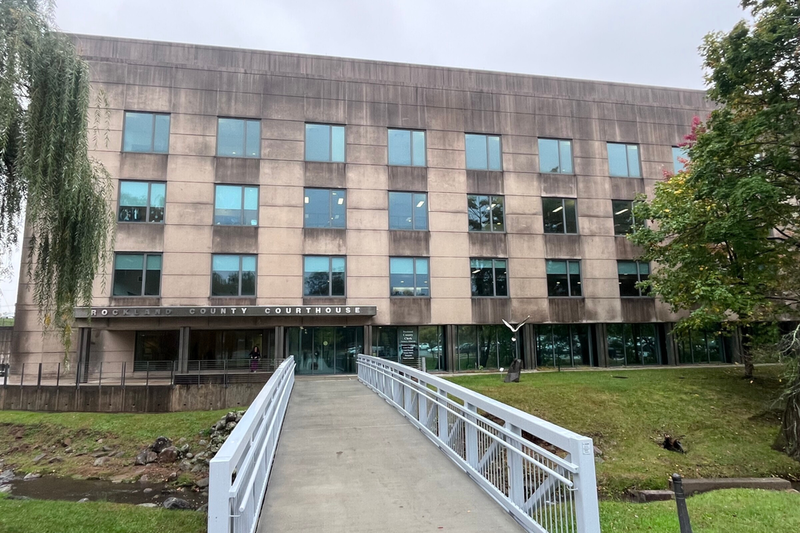
Earlier this month, Anthony Mitchell’s trial for the murder of Treynahel Cineus began. The young man once expected to be the prosecution’s star witness was barely mentioned during opening statements before the Rockland County jury. The prosecution did not mention King’s death.
In a special hearing on the admissibility of King’s grand jury testimony last month, prosecutors sought to present proof that Mitchell, who was imprisoned at the time of King’s killing, played a role in preventing him from testifying.
According to a motion filed in July, prosecutors planned to discuss the intricacies of the alleged gang feud and evidence that the “close temporal relationship between the disclosure of King’s anticipated testimony and his subsequent homicide” provided more than a “speculative” basis to believe that “King’s unavailability may have been procured through wrongdoing.”
After New York Focus sought a hearing transcript, Russo retroactively issued a sealing order, rendering the proceedings secret. Russo also sealed his ruling on whether King’s testimony could be presented to a jury.
Regardless of the trial’s outcome, Mitchell faces substantial prison time: In April, he was sentenced to more than 11 years in prison on an unrelated federal charge, sexual enticement of a minor. In the murder case, he is the lone defendant who opted to take the case to a jury.
A second alleged shooter in the car that night, Ahmad Williams, pleaded guilty in April to a reduced charge of first-degree manslaughter and was sentenced to 10 years in state prison. He did not testify in Mitchell’s trial.
The third alleged shooter, Brian Thomas, has become a cooperating witness, striking a deal with prosecutors in mid-2025. In exchange for testifying truthfully at a trial, Thomas, who is already serving a concurrent three-year sentence in federal prison on an unrelated charge, received a maximum of 12 years for pleading guilty to first-degree manslaughter in Cineus’s killing. But at the trial, his testimony presented problems for the prosecution that King’s may not have.
During cross-examination, Sakowski pressed Thomas on “four different versions” he’d provided of the night Cineus was killed.
After Thomas was indicted for murder, he at one point wrote a letter apologizing to Mitchell’s mother, stating that Mitchell was “innocent” and that his prior statements to police admitting to his and Mitchell’s involvement were a “string of lies.”
On the witness stand, Thomas testified that he wrote the letter out of “fear.” Following a court appearance in the murder case, while both were in a Rockland County holding cell, he said Mitchell had pressured him to write the letter. At the time, Thomas was being housed in a Westchester County jail where Mitchell’s alleged Bloods gang set, “Sex Money Murder,” was prevalent, Thomas said.
“I was frightened at the defendant’s reach,” he told the jury.

Albany