Why Ohio politicians are suddenly pushing cryptocurrency
Oct 20, 2025 | 4:55 am ET
Description
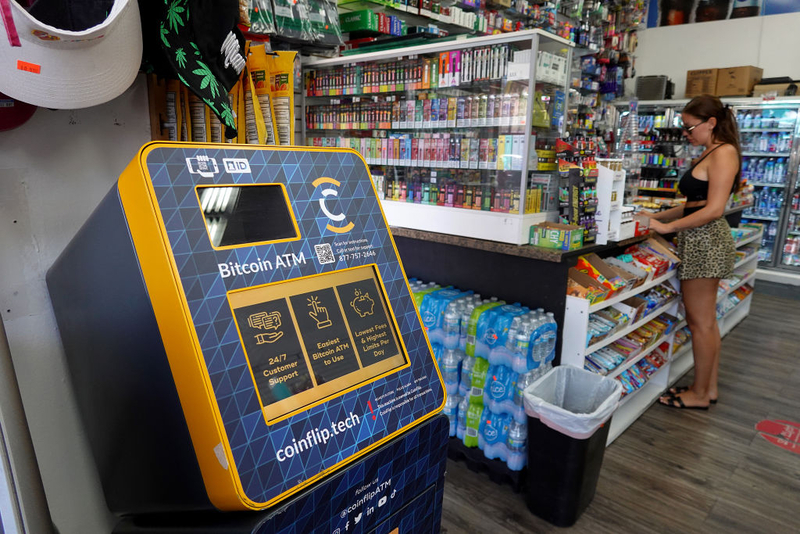
A cryptocurrency ATM is shown in a convenience store. (Photo by Joe Raedle/Getty Images)
Ohio Republicans have recently ramped up a push to make cryptocurrency more mainstream, coinciding with specific GOP leaders’ wishes.
Mining for new topics to make policy on, many Ohio politicians think they struck gold.
“We chose to lead instead of follow,” Ohio Treasurer Robert Sprague said in an interview.
Numerous bills have been introduced to make crypto more accessible, with lawmakers eventually wanting Ohioans to be able to pay their taxes with it.
These online “coins” are stored in a digital database known as a blockchain. Like stocks, they can be traded and sold. One Bitcoin, the largest cryptocurrency, fluctuates and is worth about $108,000 as of Thursday.
Ohio Senate Bill 57 would create a Bitcoin reserve fund, allowing Ohioans to pay taxes and fees in Bitcoin. It would also allow residents to donate Bitcoin to the fund.
Ohio House Bill 116 would ensure that crypto owners can use their digital assets to pay for goods and services, as well as protect the currency from certain taxes.
Ohio House Bill 18 would allow the treasurer to invest in “high-value digital assets” in the general or reserve fund.
Ohio House Bill 426 puts regulations in place for “abandoned” currency.
Although digital currency bills were introduced in the last general assembly, the two main pieces of legislation were introduced in late 2024.
Sprague has been a leading voice in the crypto push. Just recently, the treasurer allowed state agencies to soon start collecting payments in digital coins.
“The world is moving rapidly toward digital payments, and we don’t want the state of Ohio to be left behind,” Sprague said.
It’s actually a topic that is bringing the top House Republican and Democratic leaders together.
“I think these kinds of risky things, we need to have a long, hard look at… I’m still scratching my head over cryptocurrency,” House Speaker Matt Huffman, R-Lima, said.
Both Huffman and Minority Leader Dani Isaacsohn, D-Cincinnati, raised red flags. Crypto spikes and falls rapidly, and bitcoin payments can be hard to calculate.
“We have to be very careful with the crypto industry,” Isaacsohn said. “We’ve seen a lot of abuse; Because of a lack of oversight, we’ve seen a lot of people losing their livelihoods.”
In 2024, the FBI reported $9.3 billion in losses due to cryptocurrency cybercrime.
When I asked the treasurer about possible fraud, Sprague said that the state system would immediately change the currency format once submitted. This is a thorough plan that has taken months to evaluate, he said.
But at one point, the process wasn’t as transparent.
In 2018, WEWS spoke with a Cleveland car salesman named Bernie Moreno — now Ohio’s U.S. senator — who advocated back then for the state to move on this emerging tech.
“By adopting a technology first, and being a leader, you really get an advantage in technology,” Moreno said.
At the time, Moreno became the first person, not only in Ohio, but in the U.S., to pay his taxes with crypto when the state became the first in the country to accept digital currency as payment.
In WEWS’ video of Moreno submitting his payment, then-Treasurer Josh Mandel stood beside him.
Mandel decided in 2018 that Ohioans could pay their taxes in crypto.
Within a year, the program was suspended because Attorney General Dave Yost issued an opinion that Mandel didn’t follow correct protocol in setting up the system.
For the years following, policy remained stagnant, and crypto was mainly ignored by the legislative leaders.
“I don’t know that it is a good idea,” Huffman said. “(A crypto bill) is not a priority.”
Both the House leaders continue to say there is more important policy to tackle — property taxes, education and the cost of living.
Asked who is asking for these changes, and if this should be the focus of the treasurer’s office and lawmakers right now, Sprague pointed to economic uncertainty.
“Actually, I think it’s really important because if we do dip into a recession, we want to be one of the states that is the most advanced,” the treasurer responded.
Businesses have been expressing more interest in crypto, he said, so Ohio accepting the coins could help boost the economy.
Timing
The Trump administration continues to push cryptocurrency, as the president’s own coin and his family’s companies have earned $1 billion from the digital asset.
But another high-profile politician is outspoken in his support.
“Bitcoin and what it represents, more than as a financial asset, also helps fill that void, fill that hunger for a symbol, a reminder of what American greatness was all about,” Vivek Ramaswamy said while speaking at the Bitcoin Policy Institute in March.
Ramaswamy, the GOP-endorsed candidate in the 2026 governor’s race, had long been an advocate for digital currency.
Sprague was asked about his potential as Ramaswamy’s lieutenant governor pick, given his work on the cryptocurrency issue.
“I don’t know about that,” he responded. “But I can say this: I think Vivek is a bold innovator, and he’s looking at the future of the state.”
Strategists believe Sprague is on the shortlist for Ramaswamy’s second in command.
Outside of his official role in government, the treasurer is running for secretary of state. He just announced that he would be the first candidate for a statewide seat to accept crypto.
“We want to be current and we want people to be able to participate in their political campaigns using all the new technology,” Sprague said.
He clarified that the cryptocurrency vendor chosen for state payments is not the same as the one chosen for his campaign.
“Is there any reasoning with crypto being harder to track?” we asked him.
“The way that we’re doing it is we would accept the crypto — we obviously have reporting requirements — we’re actually gonna convert it into United States dollars, and it’ll be put in the campaign and we’ll report everything just like we normally do,” he said.
Sprague said he doesn’t own any digital assets; however, some other politicians pushing for it have confirmed they invest.
Follow WEWS statehouse reporter Morgan Trau on X and Facebook.
This article was originally published on News5Cleveland.com and is published in the Ohio Capital Journal under a content-sharing agreement. Unlike other OCJ articles, it is not available for free republication by other news outlets as it is owned by WEWS in Cleveland.

Columbus, OH