While Portland’s economy has grown since 2001, the rest of the state has stagnated, report finds
Dec 17, 2025 | 3:55 pm ET
Description
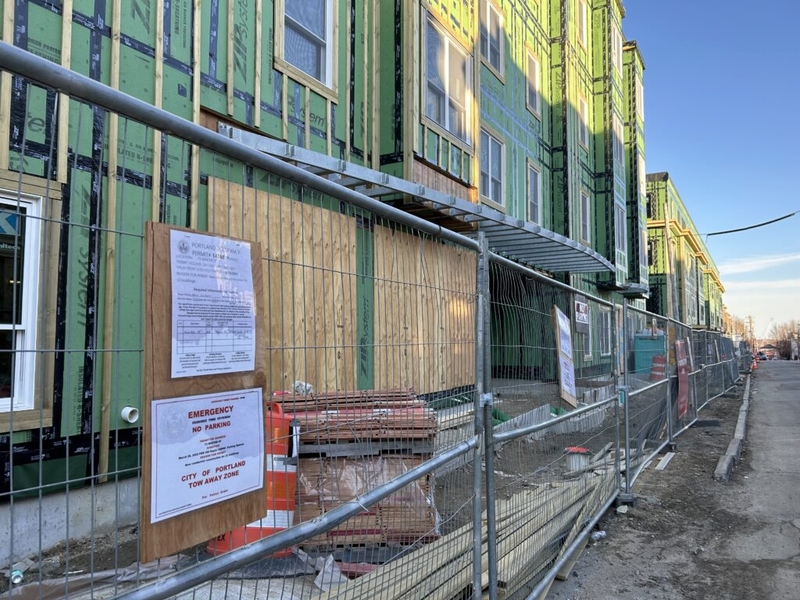
New housing construction in Portland, Maine. (Photo by AnnMarie Hilton/Maine Morning Star)
Rural parts of western and northeast Maine have had almost no economic gains since 2001, according to a new report looking at economic trends in the state.
Meanwhile, the Portland metropolitan area has seen steady and substantial growth for more than the past two decades, according to data compiled by the left-leaning Maine Center for Economic Policy.
Pointing to the way this trend has grown over several decades, the nonpartisan research and policy organization argues that the way the state and federal governments responded to recent economic downturns have driven that disparity.
Between 2001 and 2023, the per-capita gross domestic product in the Portland area grew by nearly 40%. During that same period, growth in western and northeastern Maine remained essentially flat, the report says.
The report compares the regional response to two major economic events in that time period: the Great Recession and the COVID-19 pandemic. Many rural communities saw a slow recovery from the 2008 recession because of certain policy decisions made at the time, including cuts to public services. In contrast, the report found that stronger public investments by the state and federal governments after the pandemic helped stabilize and strengthen rural economies.
However, the report makes clear that the economic disparity between the rural and urban parts of the state did not have to happen, nor continue.
Take, for example, unemployment rates throughout the state. In 2024, the Portland metro area had an average unemployment rate of 2.6%, compared to 4.5% in northeastern Maine. According to policy analyst James Myall, that difference could be improved if policies were put in place to lower the barriers rural Mainers face when finding work, such as limited child care, health challenges and seasonally limited opportunities.
Beyond that, the report laid out a series of actions lawmakers could take to support economic opportunities statewide, including expanding access to child care and elder care to increase labor force participation and modernizing unemployment insurance for part-time and seasonal workers.
The full report is available on the MECEP website.
Augusta, ME