West Susitna’s tab won’t leave office with the governor
Oct 24, 2026 | 4:00 pm ET

Description
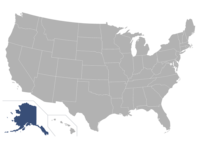
This screenshot from a January 2022 Matanuska-Susitna Borough document shows the route of the proposed West Susitna Access Road. (Mat-Su Borough screenshot)
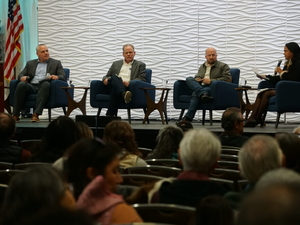
At an October 6 public meeting about Alaska’s next transportation plan, a Chilkat Valley resident asked why she couldn’t find projects for the Haines area over the next four years, despite road problems there. A state transportation official acknowledged that funding is limited. Not every community can get what it needs.
Yet the same plan includes nearly $245 million for the first 22 miles of the West Susitna Access Road and a connector. That doesn’t include Alaska Industrial Development and Export Authority proposed 78.5-mile industrial road farther west.
I attended the meeting because I wanted to understand why the state was prioritizing a speculative road through an intact watershed I’ve worked for years to protect as an environmental policy and community advocate, and what that decision could mean for other communities.
The document at issue is Alaska’s four-year plan for federal transportation spending, technically the draft 2027–2030 Statewide Transportation Improvement Program, or STIP. It comes just weeks before a new governor takes office.
The West Susitna project raises two questions: How was it chosen, and how will Alaska pay for it?
Many community road projects are nominated publicly and scored against established criteria. West Susitna entered as a departmental priority. When Transportation Commissioner Ryan Anderson announced it in July 2023, an agency email written three weeks earlier said DOT&PF had “not yet committed” to the project and was in “a very early brain-storming stage.” The Susitna River Coalition obtained that email through a public records request.
But at this price, the public should be able to see why it took priority over other needs. Its forecasted cost has risen from roughly $89.6 million in the previous plan to $227.6 million for the 22-mile road and bridge, plus $17.25 million for the connector.
Steve Perrins, owner of Rainy Pass Lodge, Alaska’s oldest hunting lodge, established in 1937, questioned the cost at the October meeting. His wilderness tourism business lies near the proposed industrial road’s western end, amid extensive mining claims and exploration plans. Anderson said the road would open millions of acres of state land for recreation, but residents and businesses along the proposed corridor continue to question its real purpose.
During the presentation, I spotted a footnote about Advance Construction, a financing tool that lets Alaska start projects with nonfederal money and seek federal reimbursement later. The slides didn’t include new Advance Construction funding, which caught my attention. After years of squinting at DOT&PF’s project documents, I knew to look closer. West Susitna was scheduled for construction, but its federal reimbursement was pushed beyond 2030.
Advance Construction allows Alaska to pay for work with state or other nonfederal money, hoping to be reimbursed through future federal highway allocations. But reimbursement isn’t guaranteed. If federal funding falls short, Alaska bears the cost.
What concerns me is how heavily Alaska is relying on this financing tool. The draft programs approximately $770 million in Advance Construction in 2027 alone, nearly an entire year’s worth of Alaska’s expected federal highway funding. Over four years, planned Advance Construction adds up to more than $2.1 billion forcing the state to front vast treasury cash upfront while tying up future federal reimbursement capacity.
For West Susitna, roughly $204 million is programmed this way, with no conversion to federal funding scheduled before 2031. That’s beyond the plan the public is being asked to review.
I asked Deputy Commissioner Katherine Keith what keeps commitments that large from squeezing out other community projects if federal funding falls short.
Keith said the department aims to keep its outstanding Advance Construction balance within about one year of federal highway revenue, roughly $800 million. She said DOT&PF uses the tool “judiciously.” But that guideline doesn’t tell us which projects might have to wait if future federal funding falls short.
Federal regulators have raised similar concerns. In July 2025, the Federal Highway Administration and Federal Transit Administration identified about $783 million in planned Advance Construction conversions after 2027, equal to 87% of Alaska’s anticipated annual federal highway program. They warned that unrealistic funding assumptions could put project delivery at risk.
Advance Construction can keep projects moving. Using it to finance a major new road, years before any planned federal conversion, calls for a fuller explanation of the risks.
Federal fiscal year 2031 begins in October 2030, near the end of the next governor’s term. Legislators elected years from now could be sorting through the consequences of these choices. Meanwhile, Alaska will still have bridges to repair, dangerous roads to improve and emergencies no one can predict.
When communities consider bonds for public investments, people expect to know the price and how repayment will work. Why shouldn’t the same standard apply here?
Alaska has more transportation needs than money. Public comments on the four year transportation plan are due October 29. What’s planned for your community, and just as importantly, what’s missing?
Juneau