Voters Said Yes To Food Security Fund. How Will Honolulu Spend It?
Nov 09, 2026 | 5:01 am ET
Description
Photo courtesy of Honolulu Civil Beat
After a decisive victory at the polls Tuesday, architects and supporters of a Honolulu charter amendment that authorized a special fund to tackle hunger say the city must seize the opportunity to measurably reduce Oʻahu’s widespread food insecurity.
“Our food insecure neighbors, our farmers, the wide range of organizations and people that wanted to make their voice heard, the voters said, ‘This is how we want our tax dollars spent,’” said Amy Miller, president and CEO of Hawaiʻi Foodbank.
The food bank submitted the charter amendment proposal to create a food security fund, which three in four voters embraced. Now the city must determine how to spend about $8 million a year pulled from existing property tax revenues — nearly as much as the food bank’s annual budget for buying food.
It faces a fundamental question: How much should the new money build on existing efforts versus pursuing new initiatives?
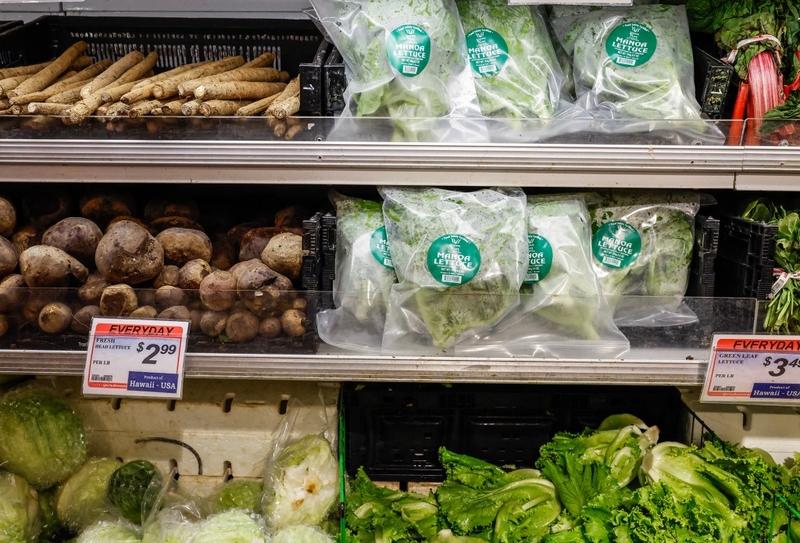
It is meant to funnel support to programs that connect people in need with locally produced foods. It is also to be used to plan for and meet food needs during emergencies such as the major storms that recently hit the state.
Oʻahu's hunger problem is massive: One in four of the roughly 1 million residents are food insecure, meaning they lack access to enough food to live an active healthy life, according to data from the Hawaiʻi Foodbank. Two-thirds of those — about 165,000 people — are skipping meals because they can't afford food.
As the city just begins to prepare to determine where and how to spend its funds, different ideas about how to do that are already being floated.
Deciding Where To Focus
“Eight million dollars is obviously meaningful, but in the full scheme of things, it's just not a lot of money to solve food insecurity.” That's the perspective of Ruben Juarez, a health economist at the University of Hawaiʻi Economic Research Organization.
But it could make a real impact over time — if it is managed correctly and the results are closely monitored. The fact that the amendment “is very vague,” Juarez added, also offers an opportunity to be creative.

The biggest impact, Juarez believes, would come from targeting the most food insecure and vulnerable households, such as kūpuna and families with children, with assistance that makes their dollars go further. They could be identified through the federal Supplemental Nutrition Assistance Program — formerly known as food stamps — and health care clinics, he said.
Also critical to the initiative’s long-term success will be tracking whether people being assisted by the fund are reporting fewer skipped meals and less food hardship, and how reliable the assistance is, Juarez said. Likewise, whether and how much of the food involved is coming from local farmers will be an important measure of whether it is working as intended.
Working partly through existing programs and nonprofits could minimize how much bureaucracy is created to administer the fund, Juarez said, and valuable lessons can be drawn from current successful food assistance programs.
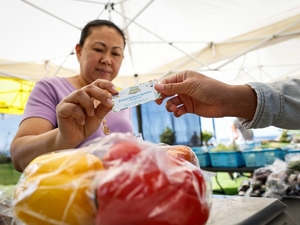
“A beautiful example,” he said, is Da Bux: The state initiative offers people shopping with food stamps a 50% discount on qualifying produce grown locally and sold at participating retailers, who are then reimbursed by the program.
A New Plan As Guide
The fund’s approval on Tuesday coincides with the recent release of the Oʻahu Food Systems Action Plan, a 154-page document four years in the making and put out by the city’s Office of Climate Change, Sustainability and Resiliency.
Billed as “a strategic, implementation-focused action plan that defines the City’s role in O‘ahu’s food system over the next five years,” it outlines strategies to meet goals including increasing access to food, reducing food and helping local food producers and businesses thrive. City officials said this week that it will guide how the new fund is allocated.
Food policy advocates have given the ambitious new plan — which the council is expected to approve this year — high marks.
“It's an amazing foundation,” said Amanda Shaw, statewide food systems coordinator at Agriculture Stewardship Hawaii, a nonprofit that supports farmers with technical and financial assistance.

The timing is also ideal, said Daniela Spoto, director of food equity at Hawaiʻi Appleseed, an advocacy and policy nonprofit. She noted the plan acknowledges the city lacked the resources to carry out all it aims to do.
“Voters just helped change that,” Spoto said. “Although the new funds can’t pay for the entire plan, several sections of it line up perfectly, giving city officials a great roadmap.”
From the perspective of farmers, the fund is promising, Shaw said.
“To see some actual resources flowing into not just addressing food access, but addressing the production and distribution of food from local farms, that's potentially really exciting,” Shaw said.
But it will be important, she said, for whoever runs the fund to lay out a clear process so that farmers and others who are directly affected can contribute their views, experiences and expertise.
“This is just the very beginning and opening,” said Shaw, who also urged that equity be taken into account.
“Look at how different producers, whether it's in terms of scale or the language they speak or whether they're lineal descendants of a particular ʻāina,” she said, “there's lots of dimensions to be able to assess and understand how they might require different forms of support.”
'An Ongoing Conversation'
Decisions about how to allocate the money will be made through the city’s existing budget and grantmaking process and overseen by the budget and finance department. Kealoha Fox, executive director of the resiliency office and chief resilience officer, said in an email that the office will make recommendations based on the action plan’s priorities.
Previously, 1.5% of Honolulu’s annual property tax revenue, or about $24 million, went to three special funds: for affordable housing, clean water and natural lands, and climate resiliency. Under the amendment, the tax revenue set aside will increase to 2%, or $32 million, and it will be divided between those three and the food security fund. That way each of the existing funds would receive the same amount.
Council member Tyler Dos Santos-Tam — who was elected by his peers last week to be the council's future chair — said setting up a framework to guide how the fund operates and what it supports “is going to be an ongoing conversation” similar to those that have taken place over the years about the other special funds.
“The food systems action plan is really going to help inform what the initial strokes of this program look like,” he said. “But I think as we go along, we're going to find other needs in the community and other ways that the city can respond.”

He said the fund could be used to expand on existing initiatives, including the city’s People’s Open Market program, which offers low-cost produce at 13 markets in public parks around the island, and the city’s summer meals program for students.
At the same time, Dos Santos-Tam said, “What I think the voters asked us to do is something bigger and grander.”
That could take the form of partnering with the state or with federal programs, he said, or creating new programs and avenues to deliver assistance.
“The question is what can the city bring to the table that doesn’t duplicate?” he said. “I just don't want us to be in the business of fully duplicating something and creating inefficiencies rather than moving the ball forward.”
For now, he said: “It's about setting up the structure for the first year and the second year and third year to at least effectuate what the voters told us to do.”
Fox, of the resiliency office, said the city first “anticipates building on and strengthening existing programs, partnerships, and initiatives wherever possible to maximize impact and efficiency.”
As to new initiatives, she said the city might consider them later, “if gaps are identified that cannot be addressed through existing programs.”
No decisions have been made about whether new staff will be added to administer the fund, she said.
Miller, of Hawaiʻi Foodbank, said that as the city makes its spending decisions, those who advocated successfully first for the amendment to be placed on the ballot, and then for its passage, need to continue to speak up.
“Oftentimes the people that are most vulnerable don't have voice, and they don't have time to come testify,” she said. “The more we can do to make sure that their voices are heard and their ideas are uplifted, the better decisions will be made … because they're more inclusive.”
Honolulu, HI