Virginia’s 2026 report calls for expanded college access, improved postsecondary planning
Oct 22, 2026 | 5:27 am ET
Description
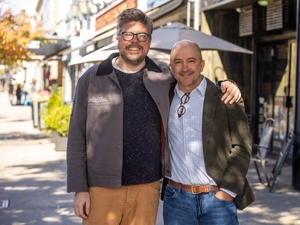
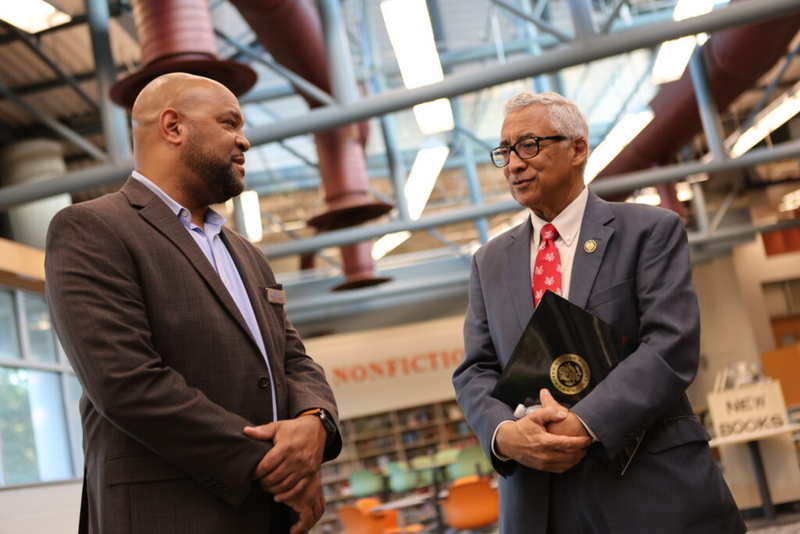
Damon Jiggetts, president and CEO of ACCESS College Foundation, and U.S. House Committee on Education and the Workforce Ranking Member Bobby Scott at an October 2026 financial aid workshop in Portsmouth. (Photo by Nathaniel Cline/Virginia Mercury)
Virginia is increasingly using statewide postsecondary planning resources to sustain and increase higher education enrollment and expand workforce opportunities, a new report found.
In 2022, lawmakers directed the Virginia Department of Education and the State Council of Higher Education to conduct annual studies on how the commonwealth maintains and updates statewide postsecondary planning resources for students, families, educators and school divisions.
In the 2026 report, the two agencies recommended that Virginia keep updating scholarships and education-cost guidance to help students and families — including the Dorvals in Chesapeake — compare college, training, military and career pathways.
“This is our first kid, so we’re just trying to make sure that we tick all the boxes off and set her on the right path, and make sure that we’re doing the things that we can do to set her up for success,” said Rebecca Dorval, parent of a Virginia high school senior, at a recent FAFSA application workshop in Portsmouth.
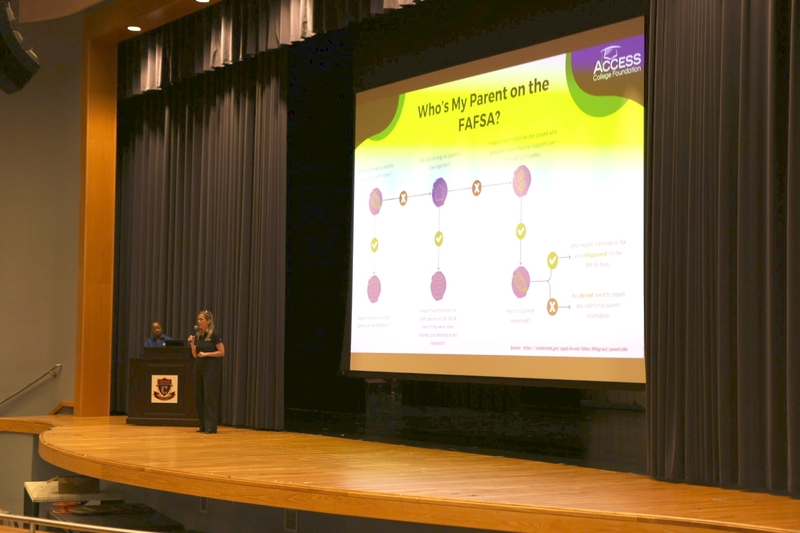
On Oct. 14, Rebecca and her husband, Jason Dorval, attended an evening financial aid workshop at Churchland High School hosted by the ACCESS College Foundation, which helps make college more affordable and easier to navigate for students. Families and students from Portsmouth, Norfolk and Chesapeake were invited.
The couple said they are navigating higher education costs for the first time after Jason’s retirement from the Coast Guard in July. He said he and his wife were “lucky” to have no debt from the Coast Guard Academy and to land a good-paying job.
Now, their goal is to give their children similar benefits.
“For both of our kids, to be able to go to college as debt-free as possible is what we’re looking for,” Rebecca said. “We’re just trying to figure out what we can do to make it a little bit easier for them, because everything is more expensive right now, and it’s going to be expensive for them while they’re there, too.”
Findings
The agencies’ report also found that Virginia has a coordinated system for distributing postsecondary planning information, with broad resource coverage, multiple distribution channels and ongoing needs around scholarships and education costs.
The agencies also found that website engagement increased in late summer 2026, with visits rising from 638 in August to 719 in September. Page views also grew from 716 to 821.
In addition, the report detailed challenges students and families face in navigating postsecondary education.
Applying for financial aid is one of the key challenges.
In September 2025, the U.S. Department of Education published a new Free Application for Federal Student Aid, or FAFSA, after a lengthy overhaul. The agency said the changes “simplify” and “modernize” the application process, and it also changed the formulas used to determine aid eligibility.
U.S. House Committee on Education and the Workforce Ranking Member Bobby Scott, a Democrat from Newport News, works with ACCESS to offer financial aid workshops in his district.
“College education is still the primary way for upward social mobility in the United States,” Scott said in a recent interview.
Amid changes to federal aid that limit borrowing, he argued that college affordability means helping students access and afford the education they choose, not simply pressuring colleges to lower prices.
While the event attracted a few people, Damon Jiggetts, president and CEO of ACCESS College Foundation, said the organization’s goal is to help students and parents make informed decisions about postsecondary paths, whether one or a hundred show up.
“We want to make sure that our students and parents are making informed decisions about their post-secondary path,” Jiggetts said.
He said ACCESS advisors start engaging with students as early as 7th grade, helping with the FAFSA application, guiding scholarships and grants to bridge gaps between aid packages and loans and offering internal scholarships to help prevent excessive debt.
Further recommendations
The agencies’ report advised the state to continue annual updates and interagency coordination, improve scholarship and cost guidance and strengthen access to workforce and postsecondary information.
One policy suggestion called for the state to consider tracking whether students use these resources to complete financial aid applications, select affordable education or training pathways, enroll in postsecondary programs and achieve successful employment outcomes.
State lawmakers will return in January to discuss further education legislation.
Richmond, VA