Virginia provides White House with sixth National Christmas Tree
Nov 27, 2026 | 5:26 am ET
Description
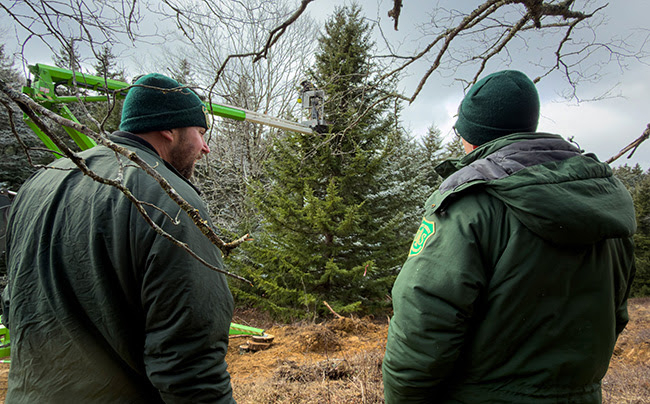
Forest Service employees make final preparations before harvesting a 36-foot red spruce in Highland County, Virginia, selected as this year's National Christmas Tree. (USDA Forest Service photo by Preston Keres)
Virginia is once again at the heart of the century-long tradition of lighting a national Christmas tree at the White House. For the third year in a row, the George Washington and Jefferson National Forest supplied a red spruce that will be displayed at the Ellipses at the White House throughout the season.
The tradition of erecting a Christmas tree on the grounds of the nation’s capital began back in 1923 when First Lady Grace Coolidge allowed local schools to put up a tree on the Ellipses. President Calvin Coolidge pushed the button to light up the tree in front of a crowd of thousands.
Virginia has provided the tree in 1939, 1940, 2012, 2024, 2025, and now in 2026. The 36-foot tree was picked from the mountains of Highland County and has been taken to Washington for the Dec. 3 lighting ceremony in President’s Park.
“Our farmers, our producers, and our forests are truly the pride of the Commonwealth, and I’m so glad they’re being celebrated,” Sen. Mark Warner posted on X.
In the past, trees were cut to be put on display. Now, the tree is kept alive and planted on the grounds and sometimes used for multiple years. The tree from Virginia in 2012 was kept through 2018.
“We are honored to share this magnificent red spruce with the nation as the National Christmas Tree and to showcase the natural beauty and heritage of Virginia on a national stage,” said Acting Forest Supervisor Troy Morris.
Red spruces are found in the high elevation and cold parts of the Southern Blue Ridge. There have been efforts to restore these trees and the surrounding ecosystems after extensive logging between the 1880s and 1930s, as well as wildfires.
Groups like the Southern Appalachian Sprue Restoration Initiative and the U.S. Forest Service have worked to plant seedlings – with up to 8,000 red spruce seedlings to be planted in 2027 near Mount Rogers.
The spruces rely on cold weather for survival, so the warming climate puts these unique forests at risk.
The restoration initiative reports that the forests provide habitat for a number of species that are only found in these types of environments and have been listed as species of concern, such as the spruce-fir moss spider, Carolina northern flying squirrel, as well as other birds and salamanders.
The tree will be on display on the White House grounds starting on Dec. 5.
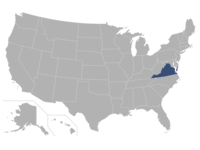
Richmond, VA