UD seeks voluntary retirements amid financial turbulence
Oct 28, 2026 | 8:09 am ET
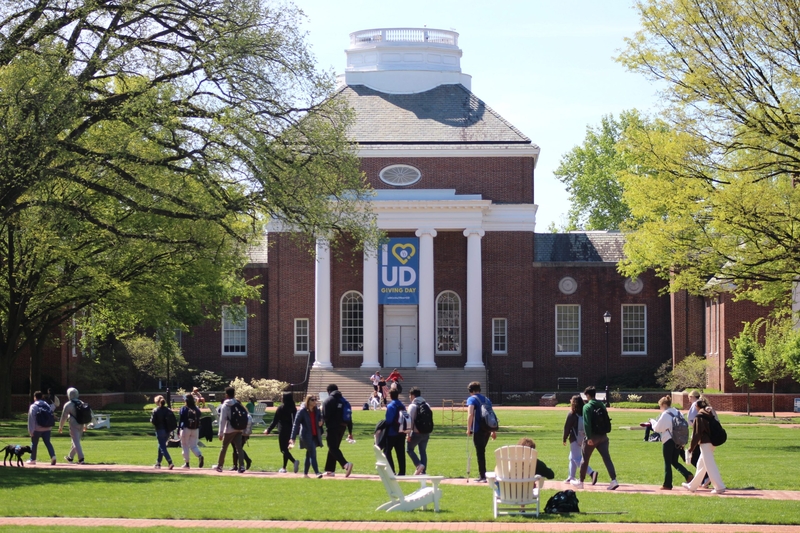
Description
Photo courtesy of Spotlight Delaware
Why Should Delaware Care?
The University of Delaware is the largest higher education institution in the state, enrolling more than 20,000 students and employing more than 9,000. It has weathered several years of operating budget deficits coming out of COVID that present risks to its operations though.
The University of Delaware has launched a voluntary retirement incentive program for staff who are eligible for retirement next year as it seeks to slim its budget “to strengthen long-term financial sustainability.”
The program is entirely voluntary, according to the school’s announcement, but comes amid turbulent financial times for the university. Employees who are eligible for the program are being notified by the school’s human resources staff and informational meetings will be held in the coming weeks.
The specific incentive package being offered to employees is not clear. One of the letters sent by the university and shared with Spotlight Delaware states that eligible employees have until Nov. 11 to notify the university of their decision.
If they choose the retirement option, the university holds the final decision to accept the employee’s choice or delay their retirement date “depending upon the operational needs of [their] unit.” If accepted without changes, the employee is then presented with a retirement agreement that is due back signed to the university by Jan. 4, 2027, with their retirement starting Jan. 1, 2027.
After a weeklong revocation period, the new retirees are eligible to receive their program payment, according to the letter, though the amount was not specified in the letter shared with Spotlight.
It is unclear how many workers were offered the voluntary retirement option. The university had roughly 3,000 non-faculty staff members as of 2025.
The public announcement came two days after a separate letter was distributed detailing the difficult financial status the university says it is facing — part of an overall downturn in the fiscal health of higher education institutions across the nation.
Last month, university officials reported that the 2026 fiscal year that ended in June with a roughly $19 million operating budget deficit, extending a pattern of losses in its day-to-day operations that have to be subsidized by investment income and distributions from its nearly $2 billion endowment.
“Over the last decade, we have managed these pressures and preserved our overall financial strength,” reads the letter from President Laura Carlson, Interim Provost Bill Farquhar and Ellen Herbst, head of finance and administration. “However, our core operating expenses have grown faster than our core revenues, and reliance on other revenue sources and reserves is not a long-term solution; our current trajectory is not sustainable.”
The letter promised an analysis of current structures at the school to determine opportunities to make them more efficient and develop better practices, if necessary.
“Acting now lets us be strategic, work together, and be intentional and proactive about the changes we make, identifying approaches of our choosing,” the officials wrote. “But we must start now.”
Top leaders detail financial challenges
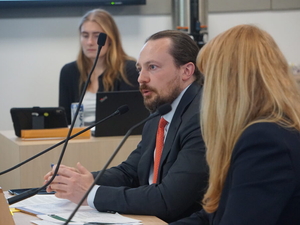
Ellen Herbst, executive vice president for finance and administration, delivered a presentation on Sept. 30 during the Board of Trustees’ annual retreat detailing the overall financial landscape in higher education and how it has impacted UD specifically.
Herbst said after an unusually high enrollment last year, the school fell short of its projections for new students this year.
In May, when UD’s budget was passed, the school anticipated 4,510 new full-time students starting at the school, but ended up with 3,889 — or about 14% fewer than expected. Herbst attributed this to increased competition for students in and out of the state, as well as universities making additional financial aid offers to students later than in previous years.
Total student enrollment at the university is 17,623, according to Herbst, compared to a projection of 18,104. The school’s enrollment has grown 7% since 2017. Rising employee costs, particularly healthcare benefits, have largely fueled the university’s growing expenses over the last few years though.
Herbst concluded with a 30-point plan of strategies the university should employ moving forward to stabilize its finances, divided into categories of growth in enrollment and research, reallocation of resources to higher-value uses and optimization and improvement, the latter of which will deal with the goal of “increase productivity and reduce the cost of delivering existing activity.”
“We are a relatively healthy, wealthy university compared to our peers,” Herbst said. “That buys us time to make the changes we need to make, which will take time, if we start today.”
Staffing trims just last personnel move
Over the summer, the university initiated a return-to-work program that will become a campus-wide mandate in June 2027, which will require significantly more in-person work from staff members.
Some employees interviewed by Spotlight Delaware worried at the time that the decision was one way the university could cut expenses by shedding employees who chose to leave their jobs instead of working more frequently on campus after six years of a heavier emphasis on hybrid and remote work for non-student-facing staff jobs.
One of those employees, contacted after the voluntary retirement program was announced, said it only amplified staff’s fears of further job cuts despite reassurances from the school’s leadership that no layoffs are currently planned.
When asked if the university wanted to address employees who interpreted the voluntary retirement offer as another potential signal of impending layoffs, given the recent talk of the university’s current financial position, a university spokesperson said the school had nothing to add beyond the content of its announcement at this time.
UD is also facing federal lawsuits over its in-state tuition policy for undocumented immigrants who reside in the state, cuts to federal research grants and an ongoing contract renegotiation with unionized faculty.
The union, the American Association of University Professors, is seeking a new multi-year contract after its last contract expired earlier this summer. University and union leaders have been at loggerheads for months over the proposed scale of salary increases, benefit protections and academic freedom statements.
The university is reportedly seeking a four-year contract, while union leaders only want a three-year agreement, as has been the norm.
Union negotiators said the university has sought to not honor any raises retroactively that would have occurred in the months following the last contract’s expiration – something the Assanis administration agreed to three years ago when negotiations dragged on.
“The AAUP-UD bargaining team believes that the current administration has taken this unusual position in an attempt to gain concessions from us, and we will steadfastly resist their attempts to do so and insist that raises be retroactive,” leaders wrote in a September update letter.
Dover