Trump administration looks to tap childcare funds to pay stay-at-home parents
Sep 18, 2026 | 5:00 am ET
Description
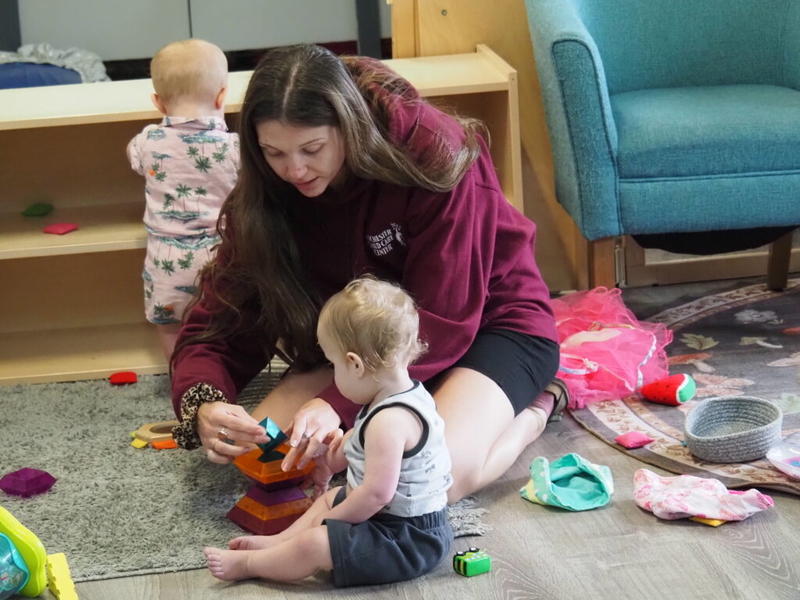
A teacher plays with baby at Rochester Child Care Center on July 14, 2026. The Trump administration is working on a proposal to redirect childcare funding to married, stay-at-home parents. (Photo by Maya Mitchell/New Hampshire Bulletin)
Earlier this month, The New York Times reported that the Trump administration is drafting a plan to pay stay-at-home parents using funds currently aimed at helping working parents with childcare costs. While the rule change has not been proposed yet, New Hampshire childcare providers and family advocates worry about its impact.
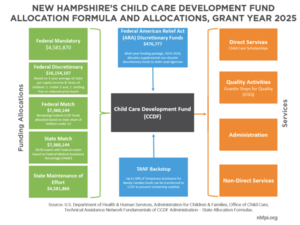
The proposal would change rules for the Child Care and Development Fund, or CCDF, the primary funding source for childcare subsidies in most states. It includes dollars from both the federal and state governments, and in New Hampshire, the fund pays for the Child Care Scholarship Program, childcare quality initiatives, administrative services, and more.
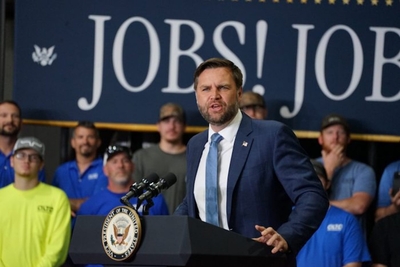
The proposal would allow married couples with a stay-at-home spouse to collect money from the subsidy program, the first of its kind. The Times reported it was a “top priority” for Vice President J.D. Vance and a formal change to the fund could happen without congressional approval.
The majority of CCDF dollars in New Hampshire go to the scholarship program, which around 70-80% of New Hampshire’s childcare programs participate in. The scholarship program assists families by paying a portion of their childcare tuition directly to programs. More than 5,800 children were enrolled in the program as of July 2026.
The program has strict income and work eligibility requirements and does not extend to stay-at-home parents. To qualify, parents must be working, looking for work, or in school or a training program and making less than 85% of the state median income. Earlier this year, the state Legislature adjusted eligibility to extend to retirees who needed help paying for childcare for children in their custody.
Trina Ingelfinger, early care and education policy director at New Futures, said the proposal is “out of touch” with what Granite State families want.
“It would be devastating to our fragile childcare sector, which really is a backbone of support for the workforce and for the broader economy,” she said. “The stated purpose of helping stay-at-home parents for this policy is really at odds with other federal policy developments that the administration is supporting.”
She said that if the federal government wanted to support stay-at-home parents, there would be universal paid parental leave and not new work requirements for Medicaid and SNAP. She also said the proposal is an issue of “fairness.”
“I don’t think the federal government has ever implemented a subsidy program that is accessible to only married people,” Ingelfinger said. “And I think there are people who are concerned that the policy is built on stereotypes about gender roles and raising concerns about that as well.”
MacKenzie Nicholson, senior director of Moms Rising, an advocacy group for women and families, said that while caregivers should be valued for their work, the proposal is a “non-solution.”
“Taking limited (CCDF) resources away from moms who are in the labor force who need it created a new problem instead of that solution they’re looking for,” she said. “No matter whether you’re a stay-at-home mom, whether it’s done by paid professionals, all of that is real work and should be paid in our economy and that does need to be recognized. But this thing, where we pit moms against each other, has got to stop.”
The potential rule change could also have widespread fiscal implications on the scholarship program. By taking funds away from working families, some are worried that it will hurt an already-struggling funding system.
A new report from the New Hampshire Fiscal Policy Institute found that state investment in the childcare scholarship program has decreased, resulting in higher reliance on extra federal funds to prevent a waitlist for the program as enrollment has increased.
Under current eligibility requirements and spending trends, the N.H. Department of Health and Human Services has said there is a “potential need” in the future to increase funding to avoid a waitlist for the program. By expanding eligibility to include non-working parents, the risk of a waitlist due to lack of funding for the program would increase.
“We already need stronger state support for the existing program, and if funds are siphoned away from childcare, that is going to put enormous pressure on our state to try to backfill that need and address that need,” Ingelfinger said.
Additionally, the Times reported that national experts are worried that redirecting away from working families and childcare providers could cause increased tuition rates and more program closures.
According to the Fiscal Policy Institute, the average cost for having both an infant and toddler in center-based childcare in New Hampshire in 2025 was over $31,000. For married couples, it can account for up to 25% of a married couple earning the median income if they have two children under age 5.
The draft rule proposal changes come as, across the nation, there is a broader conservative effort to push for more traditional family roles and more women out of the workforce. In New Hampshire, that might not be feasible for most families due to the high cost of living and the need for dual incomes.
Shannon McGinley is the executive director of Cornerstone Action, a conservative Christian advocacy group based in New Hampshire. She said she wants government policy that supports “the enormous value of the care a mother or father provides at home” and does not financially disadvantage parents.
“We welcome efforts to give parents greater freedom to choose the arrangement that is best for their children, including making it more financially possible for a parent to stay home,” McGinley said. “As the details of this proposal develop, we would want to ensure that it strengthens families without unnecessarily pitting one group of parents against another.”
Nicholson shared a similar sentiment.
“Finding a way to help stay-at-home moms become economically safe themselves, so they have real choice, is definitely a part of the solution, and not one that comes at risk of every other part of the childcare problem,” she said. “But they are choosing to do it this way because they want to define who are the haves and have nots, and so we can have both. They just choose not to.”
Concord, NH