Tribal consortium achieves long-desired ownership of Alaska Native Medical Center
Sep 08, 2026 | 6:07 pm ET
Description
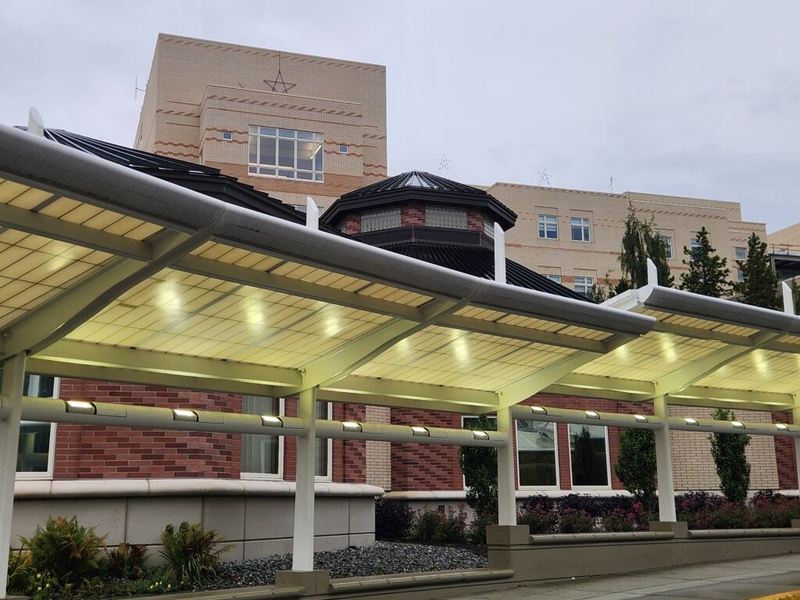
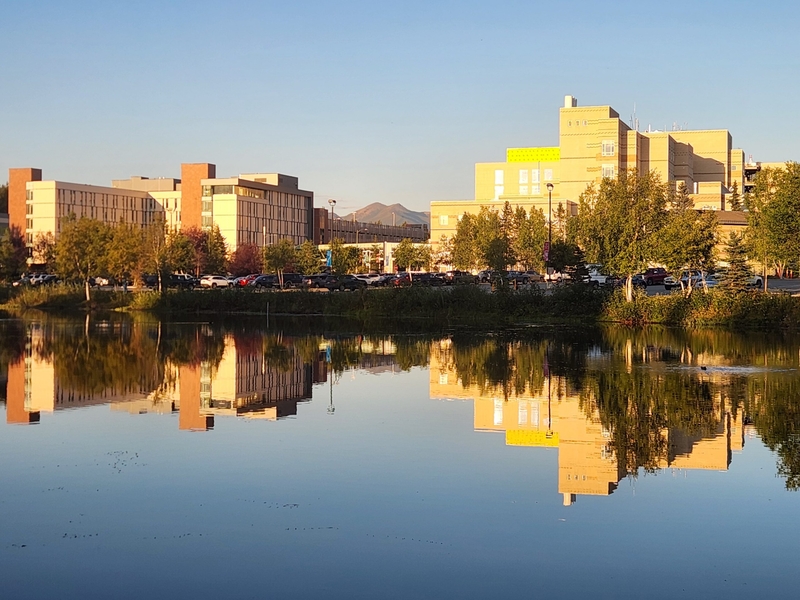
The main entrance to the Alaska Native Medical Center is on Sept. 6, 2026. The building's design incorporates elements of Alaska's Indigenous cultures, and has been recognized by professional architecture and design organizations. The hospital was previously owned by the Indian Health Service. A transfer made effective in late August gave ownership to the Alaska Native Tribal Health Consortium. (Photo by Yereth Rosen/Alaska Beacon)
The nation’s biggest tribal health organization now owns the Anchorage hospital it has long operated.
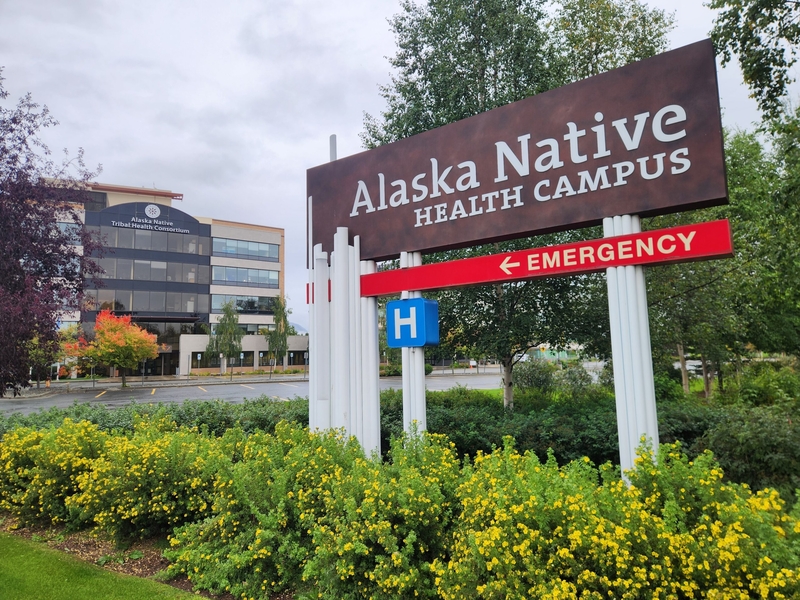
The Alaska Native Tribal Health Consortium gained title to the Alaska Native Medical Center, the hospital at the center of the organization’s 140-acre campus in Midtown Anchorage. Ownership was officially transferred from the Indian Health Service last month.
The long-sought acquisition was an important milestone, said ANTHC President Natasha Singh.
“Alaska Native people have done a great job operating the Alaska Native Medical Center. The hospital is truly the heart of our system and now we officially own it. This gives us more control over our own future,” she said in an interview.
The hospital, the second largest in Alaska after Providence Alaska Medical Center, opened in 1997, the same year that ANTHC was founded. Until now, the Indian Health Service was the facility owner. Through a compact with the Indian Health Service, ANTHC operated most of the services at the hospital, while Southcentral Foundation, the Tribal health provider for the local region, operated some of the primary care services.
Federal ownership had some downsides, Singh said. Because of it, the consortium did not qualify for certain federal funds that it would have otherwise been able to use, she said. And investment in the facilities was too slow to meet patient needs, she said.
The hospital acquisition was preceded by several preliminary steps over the past several years.
“It’s been our longtime vision, but I think our federal partners acted quickly when we put in the request,” she said.
Even before the ownership changed, the board approved over $462 million in improvements, including an expansion of the emergency department, Singh said. It was the largest investment in the hospital’s history, intended to counter “decades of underinvestment,” she said.
“So half a billion dollars (was) essentially planned to go into a building the Tribes did not even own, but the ANTHC board knew how much it really matters,” she said.
The transfer also followed a $400 million settlement with the federal government for shortfalls in funding of administrative services, facilities maintenance and other functions.
The modern hospital evolved from historic services provided by the Indian Health Service, which began serving Alaska Natives in the 1940s, according to a summary on the hospital’s website. In 1953, the federal government opened a hospital in Anchorage, primarily to serve patients suffering from a tuberculosis epidemic, according to the summary. Despite impacts from the 1964 Great Alaska Earthquake, it continued to operate through the disaster, and even cared for patients evacuated from Providence Hospital. The modern hospital replaced that facility.
The modern hospital was designed with elements of Alaska Native cultures, and it and its adjacent facilities have won awards for their innovative architecture, including one in 2018 for patient housing and one from last year for the emergency department expansion.
With the transfer of ownership, ANTHC now owns most of the buildings on the campus. There is still a federally owned building that houses the U.S. Centers for Disease Control and Prevention’s Arctic Investigations Program, and Southcentral Foundation owns some other buildings.
Juneau