String of outbreaks tests US public health system amid funding cuts, vaccine resistance
Jul 30, 2026 | 12:43 pm ET
Description
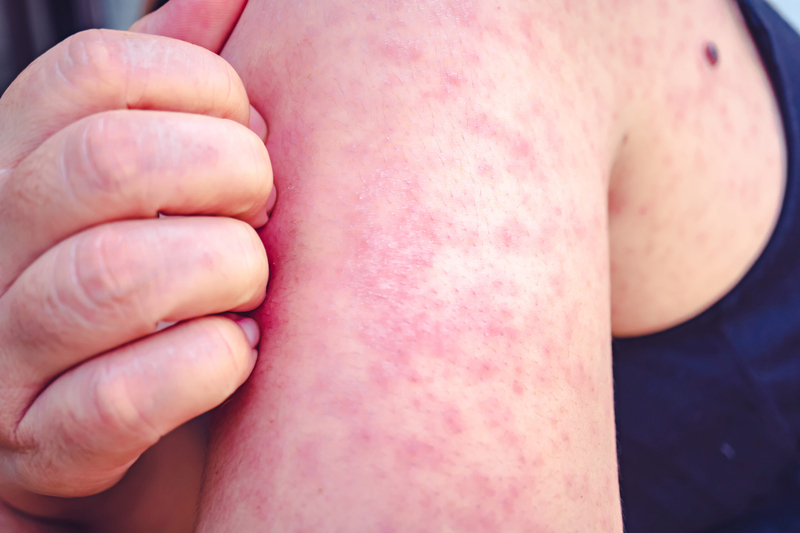
Diseases like measles have surged to the highest level in decades in the United States.(Photo by Getty Images Plus)
WASHINGTON — Health and Human Services Secretary Robert F. Kennedy Jr. pledged during his confirmation hearing to do everything in his “power to put the health of America back on track.”
Kennedy testified that when he worked as a lawyer he “learned that human health and environmental health are intertwined and inseparable.” He referred to the Make America Healthy Again agenda as “one of the most powerful and transcendent movements I've ever seen.”
“The nation is ready for change and recognizes that this is a unique inflection moment,” Kennedy said.
Less than two years into his tenure at the helm of the department responsible for the health of millions of Americans, a string of outbreaks has repeatedly made headlines. Public health experts interviewed by States Newsroom said the upswing is the result of several factors, but that Kennedy’s decision to cut back the country’s safety net while spreading misinformation about vaccines has aggravated the problem.
“We track serious infectious diseases, and over the last year and a half, the number of diseases we've had to put on the list has quadrupled,” said Jennifer B. Nuzzo, director of the Pandemic Center and professor of epidemiology at Brown University.
Old diseases like measles have surged to the highest level in decades after vaccine misinformation left entire communities vulnerable to a virus once eradicated in the United States.
Americans learned about an unfamiliar strain of hantavirus after cruise ship passengers were moved to a quarantine facility in Nebraska and public health officials raced to contact trace those who left the ship before the illness was detected.
Cases of West Nile virus reached the highest level seen in more than two decades as mosquitoes spread that virus as well as several others. Monthly emergency room visits for tick bites spiked in April to their highest level since 2017. And the cyclospora parasite sickened thousands as public health officials struggled to determine the cause.
Disease spread among animals, which could easily become a human health problem if not properly contained, has also cropped up, some more unexpected than others.
Bird flu continued to decimate poultry flocks and wreak havoc on dairy herds as well as some people, raising concerns about the possibility it would evolve into something more problematic. And New World screwworm reemerged in cattle after more than half a century without a case in this country.
HHS and the Centers for Disease Control and Prevention did not agree to interview requests or to send a statement on the cause of the myriad of disease outbreaks.
Outbreaks growing
Environmental changes like deforestation, people moving into new places that used to belong to wildlife and climate change have all contributed to more disease spread among people. But those factors have been exacerbated by cuts and other policy changes put in place during this administration, Nuzzo said.
“We don't have the protections against these outbreaks in place at the level that we used to, which allows them to continue,” she said. “We had bad measles before, but we managed to stop them before we got to the point where we'd lose measles elimination status. We're going to lose measles elimination status this year.”
The CDC has tried to keep track of it all but the agency has experienced both staffing and funding cuts under Kennedy’s leadership.
Complicating matters, the CDC had a Senate-confirmed director for just 29 days after Susan Monarez was fired for refusing to pre-approve vaccine recommendations or fire career officials for no reason.
“Most of the activity for public health exists at the state and local level,” Nuzzo explained. “But the CDC is really important for not just providing funding to those state and local health officials, but also to nudge them. To say, 'Yes, this is worth prioritizing. Or pay closer attention to this now, because what we see in one place might be happening in another place.’
“And the more we can collectively learn and act, the more likely it is to be able to stop it in its tracks.”
In addition to hollowing out certain domestic programs, the administration has cut how the U.S. government monitors and responds to disease outbreaks overseas, which are typically just one airplane flight away. That includes how U.S. officials have handled the outbreak of Ebola caused by the Bundibugyo virus in the Democratic Republic of the Congo.
“The fact that we didn't hear about this outbreak publicly until nearly 200 cases were identified means that normal checks and balances just weren't happening,” Nuzzo said. “So that's the kind of thing where when we contract our overseas presence and our overseas assistance, we lose a protection.
“Now, do I think Bundibugyo is going to come here? It could. Is it going to spread? No. It's not going to spread in the same way like a COVID would.”
States stuck with the burden
American Public Health Association CEO Dr. Georges C. Benjamin said public health officials faced severe burnout and “left in droves” following the global coronavirus pandemic.
That has left public health departments to track more disease circulating in their communities with less staff and funding.
“If you're in a local or state health department, the same people dealing with measles are the same people that are going to deal with cyclospora, are going to be the same people if you have a Legionella outbreak,” Benjamin said.
Those challenges were compounded by efforts under the Trump administration to shift more of the responsibility for preventing and containing outbreaks to state governments “without adequate planning,” he said.
“Half of both state and local health department budgets are from federal dollars. Some whole programs are almost 100% federally funded. Most immunization programs are pretty much federally funded,” Benjamin said. “So when the feds abruptly decide not to fund something, the money just goes out the door. And you just can't fill that hole overnight.”
The situation doesn’t seem likely to change anytime soon, he said, possibly leading more people to suffer from vaccine-preventable illnesses as well as those that spread from animals to people or from person to person.
“If we don't pay attention to this, we're going to be spending more money on the healthcare side of the ledger for people who will be sicker at a higher cost, because we're not paying attention to the prevention side of the house,” Benjamin said. “I mean, we have the knowledge and tools to mitigate a lot of this stuff. We really do. And the challenge I think we have here is that as a society we're pretty good at dealing with emergency stuff, but very poor at prevention.”
More infectious diseases expected
Dr. Amesh A. Adalja, senior scholar at Johns Hopkins Center for Health Security, said there has been progress in recent years on some vaccine-preventable diseases even as there’s been backsliding in others.
“Now we have RSV vaccines for the elderly, we have RSV vaccines for pregnant women and monoclonal antibodies for babies to protect them against RSV,” he said.
The American Lung Association writes on its website that respiratory syncytial virus, or RSV, “is a common virus that you have undoubtedly been sick with before.” But that it “has the potential to make you really sick.”
Measles, however, isn’t becoming less common as doctors and other healthcare professionals struggle against an undercurrent of misinformation about vaccine safety, including from Kennedy, as they’re trying to treat all the other illnesses circulating.
“In measles, it's less about public health burnout, rather, it's more about the anti-vaccine movement making inroads,” Adalja said. “For cyclospora, that's always been a threat. We always get cases every year. But the fact that the malaria and parasite division in CDC has basically been gutted does play a role.”
Overall, he said, the infectious disease trend in the United States has become worse since the coronavirus pandemic. And that’s not likely to change in the near future.
“If you're saying, 'How resilient is the U.S. or should we expect more infectious disease problems in the United States?' I would say yes,” Adalja said. “But it's not clear which ones they would be. I definitely would think the vaccine-preventable diseases, the control of them is going to slip. And it's not just going to be measles.”
Then there are the bugs
Director of the Center for Infectious Disease Research and Policy at the University of Minnesota Michael T. Osterholm said on his podcast the El Nino weather pattern that leads to warmer temperatures in some parts of the country and heavier rainfall in others can be a “perfect breeding ground for mosquitoes.”
“We talked about the El Nino in previous episodes in the context of hantavirus but it can actually play a large role in disease transmission for a number of viruses, West Nile included,” Osterholm said.
That could be one of the reasons the CDC reported in early July it observed “the earliest start to the West Nile virus (WNV) season in the United States with the highest number of human disease cases reported by this time of year since 2004.”
Osterholm said that is likely “a really major underestimation of the true number of infections.”
“Approximately 20% of West Nile infections in humans are symptomatic and less than 1% result in the severe neurologic symptoms for which testing would typically be sought by medical providers,” he said. “I say that not to undermine the public health importance of West Nile, but to highlight that this virus is likely much more widespread than our surveillance data might suggest.”
Ticks are also leading to more illness among Americans, including Lyme disease and Alpha-gal syndrome.
That second condition, caused by the Lone Star tick, can cause people to become allergic to red meat that contains Alpha-gal sugar. This includes beef, pork, lamb, venison, goat and rabbit, he said.
Michigan Department of Health and Human Services Public Information Officer Lynn Sutfin wrote in a statement that even though “infectious disease threats have been trending up in general, there are several practices and issues that are contributing to the increased awareness of outbreaks.”
“Outbreak definitions, modernized reporting, investigative capacity, improved diagnostics, genetic sequencing and even declining vaccination rates are all having an impact on disease spread and information about their spread,” Sutfin wrote. “Globally, additional considerations like climate change, antibiotic overuse, modern travel, industrialization and deforestation also need to be considered.”
All States Newsroom content is free to republish. Read our republishing policy for more information.