State universities see flat funding under House GOP budget bill
Apr 15, 2026 | 5:25 pm ET
Description
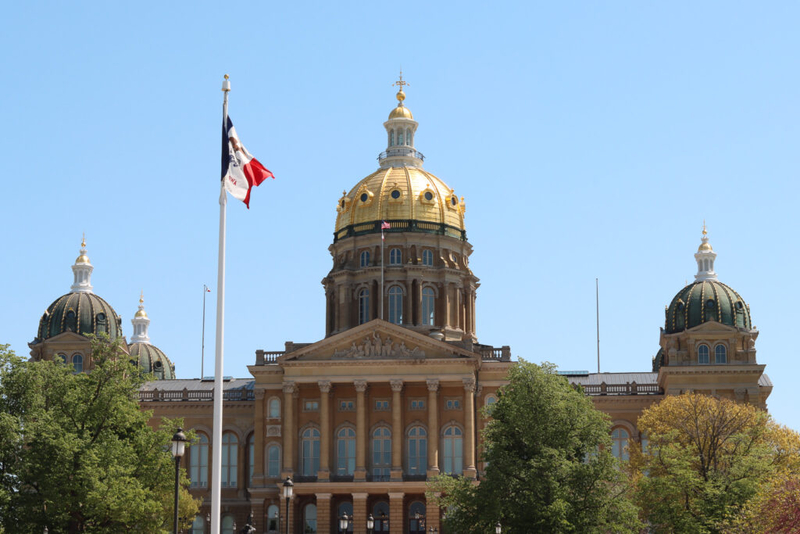
Despite concerns of policy attachments and status quo funding, an Iowa House subcommittee approved a bill setting state appropriations for education. (Photo by Cami Koons/Iowa Capital Dispatch)
Iowa House legislation setting state appropriations for different education systems and programs passed through subcommittee Wednesday, despite concerns from lawmakers of status quo funding and attached policy language.
House Study Bill 778 allocates state funding to the Iowa Department of Education, Iowa Workforce Development, the Iowa Board of Regents and the institutions it governs, as well as other agencies.
State universities would receive “status quo” funding through this bill, Rep. Dan Gehlbach, R-Urbandale, said during the meeting, differing from Iowa Gov. Kim Reynolds’ proposal of a 1.5% increase but aligning with the universities’ own request to keep general university funding flat this upcoming fiscal year.
If enacted, the University of Iowa would receive nearly $223.5 million in appropriations for general university purposes, Iowa State University would receive more than $229.8 million and the University of Northern Iowa would be allocated close to $101.9 million.
Rather than provide another allocation of $1 million to research into the drivers of cancer in Iowa, the bill would instead appropriate $3 million for pediatric cancer research at University of Iowa Hospitals and Clinics. Both the Center for Intellectual Freedom at the UI and the UNI Center for Civic Education would also receive $1 million each.
Community colleges would see a 1.5% increase in funding to more than $247 million, and the Future Ready Iowa Last-Dollar Scholarship Program would receive more than $23.9 million in funding.
Under the legislation, the Department for the Blind would receive more than $3.2 million and the Iowa School for the Deaf would receive more than $12.8 million, which Gelbach said both are a 2% increase over last year and are in line with State Supplemental Aid funding increases.
A $9.5 million allocation to Iowa Workforce Development included in the bill would only occur if legislation establishing a career training physical expansion program is signed into law, Gehlbach said.
Budget bill includes general education requirements, tuition policies
Some policies proposed in legislation that saw House approval but have yet to see Senate debate were attached to the education appropriations bill, Gehlbach said, including requirements for public college students to take American history and government courses as part of higher education requirements, review of general education requirements and core curricula at public universities, a tuition cap already in board of regents policy and an opt-in tuition guarantee program.
Rep. Elinor Levin, D-Iowa City, said she was unsurprised to see a lot of status quo funding in the legislation with the state budget being “not in a fantastic place,” but she was still disappointed in the lack of increased funding for state universities as they are being asked to implement new policies.
In reference to the civics education policy included in the bill, Levin said she doesn’t understand why the Legislature would “expect students to go to college if they’re going to have to take the same classes that they are required to take in ninth grade.” While a civics education is important, it won’t mean anything if students are forced to take the same courses over and over again instead of getting to choose what kinds of classes in the subject they wish to take.
“We would be imposing new requirements onto the … regents universities without any increase in funding,” Levin said. “I don’t know exactly how we expect them to carry on that administrative burden when we aren’t giving them new funds.”
Rep. Heather Matson, D-Ankeny, said the Legislature as a body needs to think about education and its return on investment for both taxpayers and students.
She agreed with Levin’s points and added that she was sad to see the Legislature wouldn’t be making a “more serious investment” in therapeutic classrooms through the bill, and that a $10 million standing appropriation for high-need schools will go another year without being funded.
“When I’m looking at this budget, while there are some things that I like and some things that concern me, I don’t think it’s an accurate reflection of how to operate and fund education at all levels in the state of Iowa,” Matson said.
While Rep. Tracy Ehlert, D-Cedar Rapids, agreed with her fellow Democrats on their concerns, she said two positive aspects of the bill she sees are the pediatric cancer research funding and the folding of barbering and cosmetology schools into the state’s vocational technical tuition grant.
Gelbach said he also would like to see the policy legislation leave this bill and be passed through the Senate on its own merit, but House Republicans want to make sure that the budget is aligned with Iowa’s workforce needs and that taxpayers are getting the best return on their investment.
The legislation was approved by the subcommittee with a 6-3 vote and will move to the full House Appropriations Committee for further consideration.
Des Moines, IA