State debt collection strategy includes hundreds of potential driver’s license suspensions per month
Sep 08, 2026 | 8:36 pm ET
Description
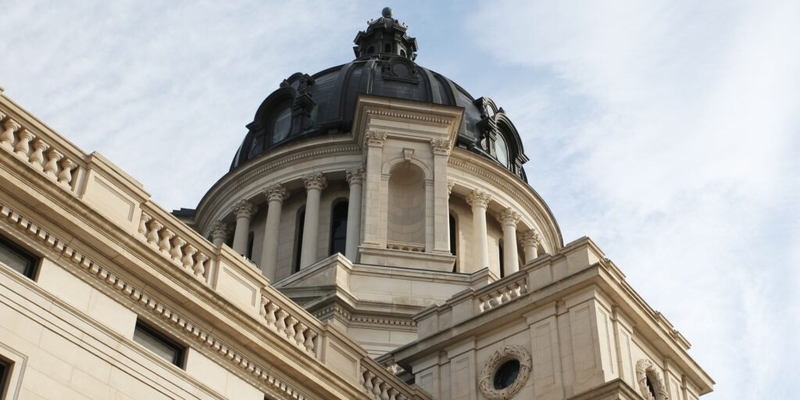
The South Dakota State Capitol in Pierre. (Photo by Makenzie Huber/South Dakota Searchlight)
A South Dakota state agency requests an average of 249 driver’s license suspensions per month as part of its efforts to collect debts owed to state government, a legislative oversight panel heard Tuesday.
The figure hasn’t changed much in recent years, and many of the debtors enter a payment plan before their license is suspended. It’s an effective way to push debtors who’ve ducked multiple attempts to collect unpaid fees, said Jason Kettwig, deputy director of the Bureau of Human Resources and Administration.
Kettwig’s agency oversees the state’s Obligation Recovery Center. Lawmakers created the debt collection clearinghouse 10 years ago for things like fines and court costs, unpaid fees or tuition at state institutions, or other fees owed to agencies such as the departments of Transportation, Revenue, or Game, Fish and Parks.
The center’s operators, a private company called Reliant Capital Solutions, can ask the state to suspend the driver’s licenses of debtors who owe more than $1,000. Reliant, which has held the contract to operate the center since 2020, is paid through a 20% surcharge added to debt.
License suspensions are “everybody’s least favorite thing to talk about,” Kettwig told the state’s Government Operations and Audit Committee on Tuesday at the Capitol in Pierre.
“We don’t collect money because we get their license taken away,” Kettwig said. “We collect money because we are able to talk to them and explain to them what they can do to make it right. But sometimes the only way we can talk to them is to have something that they feel.”
A report on the center’s performance is presented annually to lawmakers. This year’s report noted that the center has tallied $34.7 million in payments since it began operations 10 years ago.
The state’s court system represents the largest share of that 10-year total, at $15.7 million. That’s more than four times higher than the figure for the Department of Revenue, at $3.6 million.
About 45% of the center’s collections are tied to the court system, whose debtors owe more than $102 million, the report said. Of the $4 million recovered through the center last year, $1.8 million was court debt.
The center’s strategy has also leaned more heavily on payment plans for the last three years, Kettwig said. About 60% of the 15,062 accounts resolved last year belonged to people who paid off their debt in installments.
There were about 176,000 outstanding accounts at the center on June 30, the end of the state’s 2026 fiscal year.
A report from the state Obligation Recovery Center presented to a committee of legislators on Sept. 8, 2026.

Pierre, SD