Staffers at Nebraska economic development agency express low confidence in its leaders
Sep 21, 2026 | 6:30 am ET
Description
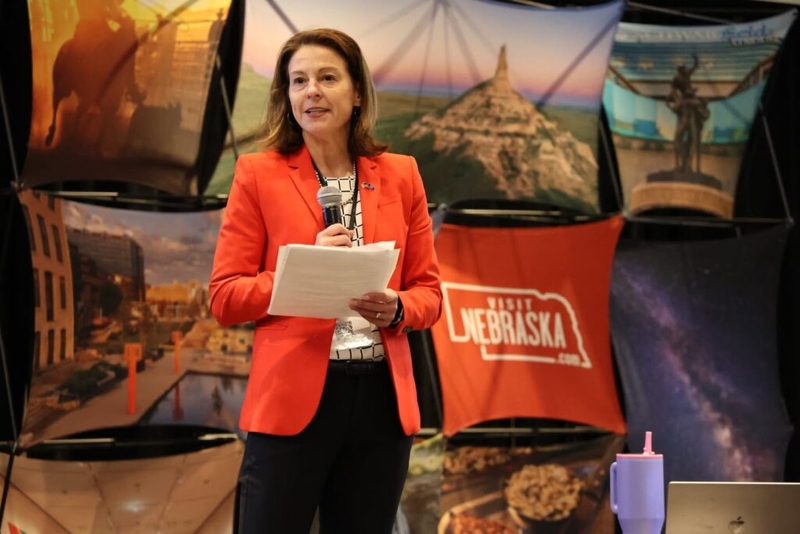
Maureen Larsen, director of the Nebraska Department of Economic Development. (Courtesy of the Nebraska Department of Economic Development)
LINCOLN — In a survey of Nebraska Economic Development staff, roughly half of the current workers heavily criticized the department’s leadership, claiming management cares more about budget cuts and downsizing than taking care of their employees.
“Some days I feel like I could write a 10-page paper on all the ways the agency/organization lack the basic components of an effective organization,” one respondent wrote. “I believe that if this organization was a private corporation, it would be bankrupt.”
The Nebraska Examiner obtained DED’s responses to the 2026 State of Nebraska Public Servant Engagement Survey via a public records request through the state Department of Administrative Services. DAS Director Lee Will said this is an optional annual survey of state employees, with responses provided anonymously to agency leaders as a tool to inform their management.
DED has seen unprecedented downsizing over the last year and a half under its latest director, Maureen Larsen, who was appointed by Gov. Jim Pillen in July 2025. Before her appointment, Larsen served as Pillen’s general counsel.
The number of full-time employees on DED’s staff has dropped from its peak of about 115 in May 2025 to 66 as of Sept. 18, according to department spokesman Justin Pinkerman.
Thirty-nine DED employees completed the survey. In an interview offered to the Examiner, DED Deputy Director Stacey Parr said DAS officials told them their agency’s participation rate was 54%.
Of the 39 participants, 32 said they either disagreed or strongly disagreed with the first prompt: “My agency prioritizes and takes care of its employees.”
“People are the least of their worries,” wrote one respondent. “They do not support employees — they question them. Fear is a real problem.”
When asked to share what reasons they had to believe the agency wasn’t supporting its employees, one respondent simply wrote: “Too many reasons to list.”
Several other responses detailed what workers claim to be a “toxic environment” and “culture of fear” within DED. Multiple staffers said they don’t feel comfortable speaking up about questions or concerns because they’re afraid of losing their jobs.
“Opinions are currently being withheld by employees for fear of retribution,” one respondent wrote. “The culture of my department is to keep your head down and churn out work without asking questions.”
“There is no clear leadership in this agency besides that of an authoritarian,” wrote another response.
At least 61 employees left Nebraska Department of Economic Development within 15 months
Larsen said she was disappointed to read some of the survey responses and was also disappointed by some of the survey’s language. She said she felt that most prompts were framed in a way that encouraged negative feedback.
Parr said she does not believe the survey is an accurate reflection of how the entire DED staff feels, but said she wants the respondents who expressed concerns to feel as confident about working in the department as those who did not participate in the survey.
“Any time you receive that type of feedback, it’s just an opportunity for growth or change,” Parr said. “I care about this place and I care about the people. I want them to be comfortable here and happy to be here.”
Larsen said she was concerned by the responses that claimed there was a fear of retaliation among DED employees. She said if staff members don’t feel comfortable bringing concerns to her or Parr, DED has contracted with a human resources representative from DAS.
This representative is the sole HR employee for DED, Larsen said, and also works for multiple other state agencies. Larsen said the representative works from the DED office on Wednesdays but is also reachable through the rest of the week.
Communication
One of the top criticisms expressed in the survey was poor intradepartment communication. One respondent noted a May 4 memo from DED leadership advised employees against participating in recorded meetings “so that a record was not created.”
“Instead of just training the staff on how to handle a recorded meeting, the advice was
just don’t leave a trail,” the response continued.
Larsen said that memo was in reference to concerns from staff about artificial-intelligence notetakers used in recorded meetings. She said those apps are not always accurate, and DED is still trying to manage the most effective way to use AI within the department.
Additionally, Larsen noted that her communication style differs from past DED directors. She said she maintains an open-door policy and dislikes mass staff emails. While Larsen said she thinks there are ways to improve DED’s internal communications, she’s not sure increasing mass emails is the way to do it.
“I’m more of a face-to-face person,” Larsen said.
One respondent noted that management has switched employee cellphones to landlines, which the person contended is ineffective as most of DED’s work happens in the field.
Larsen said this move was part of DED’s winding down of pandemic-era policies. During the COVID-19 pandemic, she said, most DED employees were provided cellphones as they worked remotely. Once many of those employees returned to the office, they had access to both cellphones and landlines, which increased the department’s spending on phone services.
Between June 25 and Aug. 26, Larsen said, DED spending on phone services dropped from over $14,200 to about $5,600 through the consolidation effort. She said DED staff who work in the field still have cellphones, and the switch to landlines only affected office employees.
Shrinking rural footprint?
Several survey responses claimed that DED’s recent downsizing was diminishing the department’s impact in rural Nebraska and hindering the state’s growth. One respondent said removing regional positions sends the message that those communities are not being represented.
“What better way to promote ‘Nebraska Values?’ in a primarily RURAL agriculture based state,” the respondent continued.
“If the goal is to make the Department as ineffective as possible and keep it from growing the state, they are succeeding,” wrote another respondent.
Larsen contended that DED’s impact in rural Nebraska is actually increasing through the “6 Regions, One Nebraska” initiative, which encourages communities within six areas of the state to work together to identify and address key shared economic development needs.
Burnout
Much of the survey’s responses touched on the long-term impacts of the downsizing within DED. Several respondents said the attrition effort appears to be leadership’s top priority.
“It feels as if employee downsizing is the main focus by making ‘public servants’ uncomfortable enough to resign,” wrote one respondent.
Pinkerman has said the staffing reductions are part of an intentional wind-down of pandemic-era programming, which has also significantly reduced the amount of federal funding going to DED.
But several respondents pointed out that losing employees and not filling most vacancies has shifted the leftover workloads to the employees who remain at DED. Multiple comments noted that most current staff are operating at burnout level.
“There is no way my workload is manageable for anyone. I feel like I am drowning every day,” one respondent wrote.
Larsen said they are trying to fill some vacant positions, noting that DED currently has five open job postings. However, she said, as some pandemic-era programs have completed, they have found that some of the workloads remaining from vacant positions do not warrant a replacement.
When an employee leaves DED, Larsen said, leadership talks with the position’s program manager to figure out how to divide the work the employee left behind. She said there are multiple options if an employee feels overworked, noting they can come to her, HR or their division head.
In regards to concerns that DED leadership hasn’t shown appreciation for its staff, Parr mentioned several efforts aimed at improving employee morale and engagement. She noted DED hosts staff potlucks on Fridays and said they launched a new “You Rock” award in June for employees who go above and beyond in their customer service to internal and external customers. According to an email shared with the Examiner, nominees for the award will be considered for “a small token of appreciation and internal recognition.”
Larsen acknowledged that DED has a high turnover rate, which she said is both good and bad. Though it’s difficult for the department to lose staff, she said, many of the people who have left have been “poached” by high-paying private-sector jobs that the state can’t compete with.
Is DED a good place to work?
Pinkerman said he finds it exciting to work for DED, as he gets to see all the impactful projects the department helps facilitate across the state. Larsen said she sees DED as one of the greatest state agencies and has found it to be a fun place to work.
“DED has an important role,” Pinkerman said. “The agency is doing a lot of great work, and so for me, it’s really been a joy to … help communicate that out to the state.”
Pinkerman and Larsen’s perspective differed from the vast majority of survey respondents. While many noted they enjoy working with their colleagues and take pride in their individual work, they said they have not enjoyed working with leadership or being connected to DED in its current state.
“I am happy to put my name on the thing I have done in my control,” one respondent wrote. “However, I don’t want my name associated with many things this agency has or is doing.”
Out of all the questions in the survey, the first prompt — “My agency prioritizes and takes care of its employees” — saw the most unfavorable responses. Just behind that, however, was the final prompt: “I would recommend my agency as a place to work and have a career.”
Out of 38 responses, 26 said they either disagreed or strongly disagreed with that statement. Many of the explanations for these answers indicated that DED’s high turnover rate reflects the quality of life within the department.
“When it is clear that management would prefer everyone leave, that is not a place to recommend applying,” wrote one respondent.
“We have lost at least 50% of our staff in a span of one year, I think that would say it all,” another wrote.
Larsen said she believes much of the criticism expressed in the survey is rooted in employees’ dissatisfaction with Pillen’s 2023 return-to-work order. She said it was a tough adjustment, especially given it wasn’t enforced at DED until Larsen was appointed in July 2025. But she said it’s not something she can change since it was enacted in an executive order.
“Change is difficult sometimes,” Larsen said.
Pillen spokesperson Laura Strimple did not respond to a request for comment about the survey results.
Lincoln, NE