School funding reform could prompt constitutional convention, Greenwald says
Nov 18, 2026 | 5:29 pm ET
Description
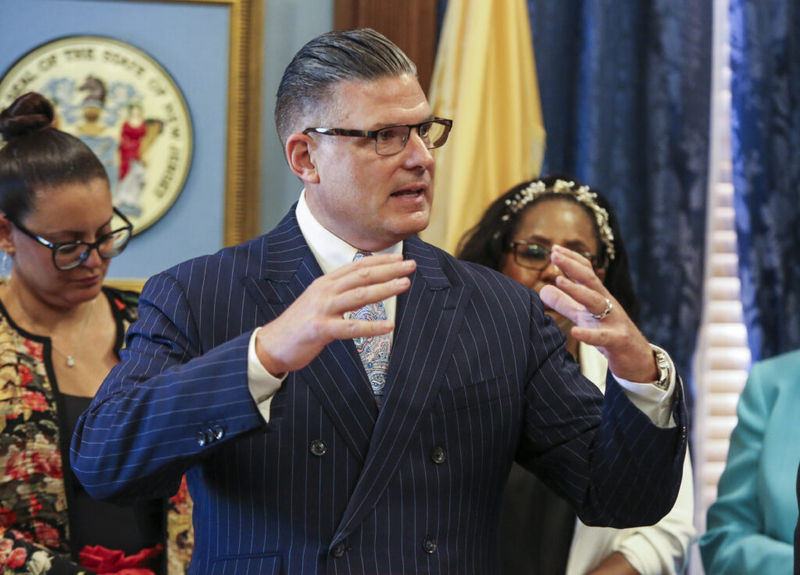
Assemblyman Lou Greenwald (D-Camden), pictured with Assemblywoman Eliana Pintor Marin (D-Essex), speaks about the $50.6 billion budget New Jersey lawmakers approved on June 29, 2022. (Photo by Dana DiFilippo/New Jersey Monitor)
New Jersey should call a constitutional convention to include voters in the approval of a new school funding formula once a proposal is finalized, Assembly Majority Leader Lou Greenwald (D-Camden) said.
Though legislators and Gov. Mikie Sherrill in August began soliciting input for changes to the state’s funding formula, officials have said little about how their eventual proposal would differ from the funding formula enacted in 2008, and it’s not clear whether or how a formula enshrined in the state’s constitution would affect court precedent that demands New Jersey students receive a thorough and efficient education.
“I think ultimately this is going to need to lead to a constitutional convention and then a question that will include the voters as part of the solution because I think, ultimately at the end of the day, this is an issue that New Jersey has struggled with for generations,” Greenwald said Wednesday during a panel discussion at the New Jersey League of Municipalities’ annual conference.
In New Jersey, the state calculates how much each municipality must spend to provide their students a constitutionally sound education and how much those districts can raise on their own based on their residents’ incomes and property values.
State aid fills the rest, though not all districts raise enough revenue to meet the local spending — called a local fair share — needed to fully fund schools after state aid is added.
Some cannot raise enough revenue locally because of the state’s 2% cap on annual property tax levies, and others have been hammered by steep swings in state aid as the state in 2018 moved to begin phasing out aid meant to keep districts whole after the enactment of the 2008 funding formula.
At present, local governments in New Jersey look to property taxes to fund their share of school expenses, and Greenwald suggested that could change as a result of the yet-to-be-determined reforms.
“We need to understand that we are fixing a fundamentally broken tax system that dates back to the origins of this state as one of the founding states of this country,” Greenwald said.
New Jersey in 2024 tied with Illinois for the highest property tax rate in the nation, according to the Tax Foundation, and the average property tax bill in the state rose to a record high $10,570 last year.
It’s unclear what changes to the state’s funding formula lawmakers will eventually propose. The Department of Education last week said it would continue soliciting feedback from stakeholders at least through December.
Senate Majority Leader Teresa Ruiz (D-Essex) earlier told the Monitor she does not expect a proposal to be ready before the end of the current July-to-June fiscal year.
Among some other things, the reforms aim to better fund school transportation and extraordinary special education.
Trenton, NJ