Rural hospitals in Missouri warn $50B grant funding won’t offset looming federal cuts
May 27, 2026 | 6:50 am ET

Description
(Getty Images).
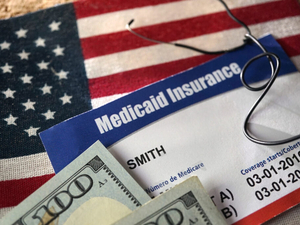
Rural hospitals in Missouri say a $50 billion federal investment in rural healthcare will be insufficient in offsetting upcoming reductions in federal Medicaid reimbursement that will put additional strain on already fragile rural healthcare systems across the state.
In December 2025, Missouri was awarded $216 million for its first year in the five year Rural Health Transformation Program, a federal initiative aimed at strengthening rural healthcare infrastructure that awarded a total of $50 billion for five years across the states. The funding is expected to be distributed beyond traditional healthcare providers, supporting a range of health-related and community-based initiatives.
In Missouri, the RHT Program is in its early rollout phase. The first application has just been released, and the state is expected to release additional applications in June. Providers and community organizations will apply this summer, with the first round of funding projected by the end of September.
However, healthcare providers nationwide are also expected to lose about $1.4 trillion in funding over the next decade, including roughly $1 trillion from Medicaid and $400 billion from Affordable Care Act marketplace coverage. The Rural Health Transformation Program represents only a fraction of that total.
Missouri hopes federal funds can ease strain on rural hospitals amid looming Medicaid cuts
Mercy Hospital System is one of the 15 largest U.S. health systems, serving patients across Arkansas, Illinois, Kansas, Missouri and Oklahoma. In Missouri, Mercy operates 11 hospitals in the rural parts of the state.
“I would quantify $1.4 trillion coming out of healthcare over 10 years through Medicaid and the Affordable Care Act and $50 billion coming back to us as a drop in the bucket, and it’s not all coming back to hospitals and physicians,” Kim Blanquart, Mercy’s vice president of revenue integrity and reimbursement, said.
The projected reductions come from provisions in the 2025 federal budget reconciliation package commonly referred to as the One Big Beautiful Bill Act, along with related changes to Medicaid eligibility and Affordable Care Act marketplace subsidies.
Medicaid cuts and compounding financial losses
Citizens Memorial Hospital, a rural hospital in Polk County, estimates the Medicaid reimbursement reductions will cost the hospital at least $4 million annually once fully implemented. The reductions come in phases over four to five years and are expected to take full effect by around 2031 or 2032. Tim Wolters, director of reimbursement at Citizens Memorial Hospital, said additional policy changes could further compound those losses, particularly as Medicaid eligibility changes next year.
“We also know that there will be individuals with Medicaid right now that will lose that coverage if they don’t meet the work requirements that are coming next year,” Wolters said. “And the other changes in how the eligibility will be determined, looking at twice a year rather than only once a year. So that’s the part that’s really hard to gauge in terms of how many patients will lose their Medicaid coverage, but that’ll even add to the cuts that we’re going to be seeing.”
In addition to reductions in reimbursement for patient care, the 340B Drug Pricing Program is a federal program that allows certain hospitals and clinics to buy outpatient prescription drugs at discounted prices. In return, providers are expected to use those savings to expand care for underserved patient populations.
“Frankly, the biggest concern I have with the Medicaid cuts is that 340B eligibility is primarily determined based on our Medicaid utilization,” Wolters said. “So as that utilization decreases, if patients lose their coverage, we might be in danger of losing our 340B eligibility. And that’s about $8 million a year if that happens. So, I mean, that would be virtually, just, unrecoverable for us to be able to withstand that kind of a cut, along with the Medicaid cuts that we know we’re going to be seeing.”
Rural urban divide
Rural hospitals tend to serve a higher share of patients covered by government programs like Medicare and Medicaid than urban facilities, making them more exposed to reimbursement cuts. With fewer patients covered by higher-paying commercial insurance, rural hospitals have a less favorable payer mix and are more financially sensitive to changes in public reimbursement rates.
About 15% of the patients at Citizens Memorial Hospital are Medicaid recipients, and when combined with Medicare, Veterans Affairs, and Civilian Health and Medical Program of the Uniformed Services, a large majority of the hospital’s patients rely on government-funded coverage.
“So that’s why we are very dependent on federal and state funding for our services,” Wolters said. “So it’s extremely important to us to try and get fairly paid for those services. That’s a lot higher in rural areas than it is in urban areas, which is why I think rural providers are so concerned about the Medicaid cuts in the (One Big Beautiful Bill Act).”
Rural Health Transformation Program targets structural barriers across Missouri
Additionally, Wolters warns that as hospitals take on more uncompensated care access for rural patients, regardless of insurance status, cost cutting measures will affect care.
“The problem is we’re going to be seeing those patients regardless of whether or not they have Medicaid,” Wolters said. “We’re going to be seeing them regardless of whether or not we’re paid for the cost of that care. I mean, we’re a hospital. That’s what we do. … So the problem is if we’re getting paid less for that, it just reduces that access to care, forces us to try and make some tough decisions that might restrict the availability of that care and force patients to travel further to get that care.”
“So it’s really just a matter of it’s just going to make it harder and harder for patients to access care, and not just Medicaid patients. If we have to close the service because we can’t afford it anymore, it’s going to be closed for all patients regardless of whether they have Medicaid or other coverage,” Wolters said.
In fiscal year 2025, Mercy provided more than half a billion dollars in free care and other community benefits, including traditional charity care and unreimbursed Medicaid services. Within its Missouri rural hospital footprint, about 16% of patients are covered by Medicaid, which accounts for roughly 12% of patient revenue in those rural hospitals.
Rural health systems turn to cost-cutting to respond to reimbursement reductions, often by cutting higher-cost services, reducing staffing and limiting hours, which can force patients to travel farther for care.
“I’ll say generally, OB services are very expensive to maintain and generally under reimbursed,” Kim Blanquart said. “So, I mean, that’s why OB services are so at risk in the rural communities and why many rural hospitals aren’t able to offer that service anymore. Another place that I can see challenges in the rural facilities is around surgical services.”
Rural hospital closures
Over the past decade, rural Missouri has lost 13% of its hospitals, and nearly half of those still operating are running at a loss. As a result, many residents now travel an additional 30 to 40 miles for emergency care. When a hospital closes, health outcomes in the surrounding region worsen, and inpatient mortality rates rise.
Blanquart believes that more rural hospital closures could be on the horizon as Medicaid cuts and rising uninsured patient numbers result in reduced net patient revenue.
“Even with hospitals that remain in place … what we’re going to see, again, is accelerating consolidation, reduction in services. Our costs are at the bedside and we’re going to see more retraction in some services. So less access, longer wait times. We’re just expecting to see that kind of across the board,” she said.
Fitzgibbon Hospital, a rural hospital in Marshall, filed for Chapter 11 bankruptcy protection in April while pursuing a private sale of the facility. The filing is intended to stabilize its finances and allow operations to continue without disruption as it works toward long-term sustainability.
The hospital cited ongoing financial pressures common among rural providers, including rising operating costs, workforce shortages and reimbursement rates that fall below the cost of care from Medicare and Medicaid.
RHT funding and offsetting cuts
The RHT Program is limited to five years while the reimbursement cuts are expected to continue well beyond that timeline, raising concerns about whether the funding can sustain rural hospitals once it expires.
“I hope it’s going to be a very good starting point,” Wolters. “By itself, I don’t think five years is going to be enough to withstand the cuts that are coming six, seven, eight years from now.”
RHT funding is intended to help states reshape rural healthcare by improving access, strengthening the workforce and building more sustainable, innovative care delivery models and has limitations on how it can be applied. RHT funding cannot be used for new construction, supplanting existing funds or paying for services already covered by insurance, Medicaid or Medicare.
Additionally, the RHT funding will be spread beyond hospitals and physicians, with some money directed toward social services like food access, transportation and community programs, rather than traditional healthcare delivery.
“The other piece of it is that the rural health transformation dollars are not for funding normal operations. So we’re going to see this big growth in uninsured, for example, it does not cover growth operations or uninsured compensation,” Blanquart said. “It’s really intended to be transformational. Again, something that we’re grateful for and we will certainly compete for, but it just doesn’t begin to supplement the operation process.”
This story originally appeared in the Columbia Missourian. It can be republished in print or online.
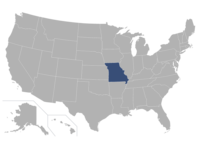
Jefferson City, MO