The Roadless Rule rollback is an opportunity not a threat
Sep 17, 2026 | 9:01 pm ET
Description
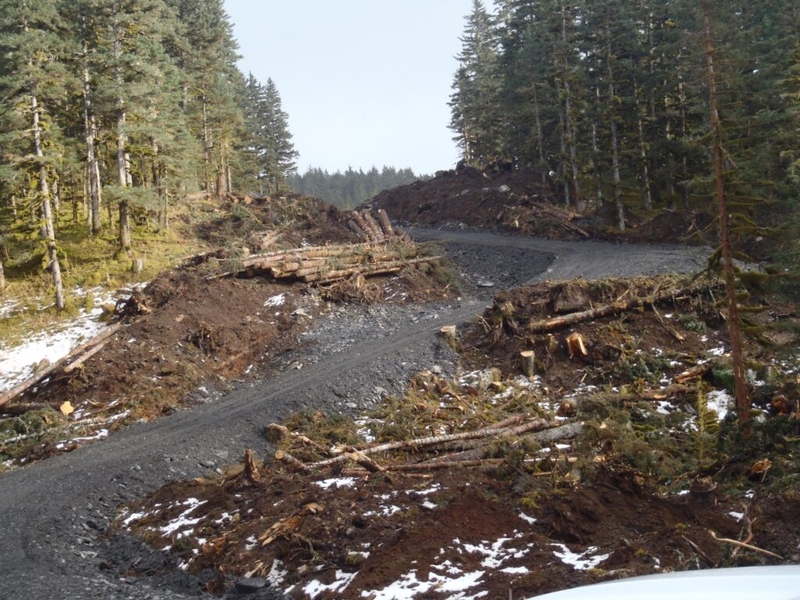
An Alaska Forest Practices Act compliant forest road is seen in what was previously an unroaded forest setting. (Photo courtesy of Keith Coulter)
While environmentalists oppose the Trump administration’s proposed rollback of the Roadless Rule, which would remove prohibitions on road construction and logging on nearly 59 million acres of national forest, I see this as an opportunity for professional foresters to manage federal land, reduce wildfire risk and boost the economy.
I’ve spent 30 years in the industrial logging sector of the Western U.S. in states such as Idaho, Washington, Oregon and Alaska. Environmental rhetoric is nothing new to those of us who have chosen to make working in western forests their career.
Recently, I read a commentary in the Alaska Beacon that argued for maintaining the Roadless Rule and I was not surprised to view the typical laundry list of doom from one side of the debate. Words like “threatened” and “imperiled” come up as authors weave their case for almost certain environmental ruin unless we curb industrial activities immediately for what can only be described as the “do-nothing alternative.”
As a professional forester with decades of boots-on-the-ground experience, a few obvious counterpoints come to mind. The rhetoric that forests are a stagnant sea of trees that do not grow or become more dense year after year is simply wrong. That’s a Forestry 101 issue. You’d think something this simplistic would be understood by the average environmentalist: forests do grow, year after year, becoming denser. In a warming climate with limited resources of water, nutrients, space, sunlight and dwindling snowpack, continued growth will inevitably lead to insect and disease issues, dying trees and catastrophic wildfire.
Look at the news. The wildfire epidemic appears to be growing year to year and lasting longer each year due to warmer winters and dwindling snowpack. Catastrophic wildfire events are real and increasingly common. People are dying. Whole communities are being lost.
Throughout my career I’ve watched the environmentalist movement become very successful. It has demonized building roads, tree cutting and forest management as a whole. Regions of the Western U.S. and Alaska that used to have large milling infrastructure are now idled and gone. There is no one left to do the work or send the logs to mills because they aren’t there. There are few ways to complete forest restoration work, because there are no longer markets for the material. Revenue from the logging industry that can support public schools is in decline. Had forest management activities been allowed to continue, forests could be managed and local economies supported in the effort.
One hundred years of fire suppression in the western forests means they are overstocked as the climate warms. From what you know about forests, even if it is just a little: what do you think is going to happen in those areas in the years to come?
I’m not sure what the environmentalists’ long-term goal is, other than “preserve the forests and the forests will take care of themselves.” The evidence does not support that message. Their messaging to “do nothing” seems reckless and misplaced.
The sediment contribution to nearby water bodies from a well- managed forest road is probably difficult to even measure when compared to the benefits of accessing areas that can be managed for forest health, wood products, jobs and long-term recreation, resulting in stronger regional economies. Now, let’s consider what the contribution to sediment loads in fish bearing creeks or watersheds that supply drinking water to scores of people are after a catastrophic wildfire burns through an area.
Keep in mind that forest operations in the Western U.S. and Alaska have strict forest practices rules and regulations. Timber harvesting is inspected by not only State agency forestry professionals but also Dept of Fish and Game and the Dept of Environmental Conservation representatives.
Western states have strict regulatory standards that the forest industry must adhere to while simultaneously creating fire resilient and healthy forest ecosystems. The forest products sector is largely our only hope for navigating our way out of the overstocked forest problem that blankets the Western U.S. There are thousands of professional foresters and land managers that have been trained by Society of American Foresters accredited universities working to improve forest health across the nation.
I disagree with environmental organizations that want to stop science-based management of forests in the name of preservation, regardless of the cost to local economies. Arguing for the preservation of the Roadless Rule puts mother nature in the driver’s seat — and few people will be able to tolerate how she’ll manage the forests if it happens through destructive wildfire events. We already know how to solve forest management issues: with roads and active forest management.
Juneau