Report card: Most Michigan school districts failing to meet safe firearm storage law requirements
Oct 15, 2026 | 2:36 pm ET
Description
Getty Images
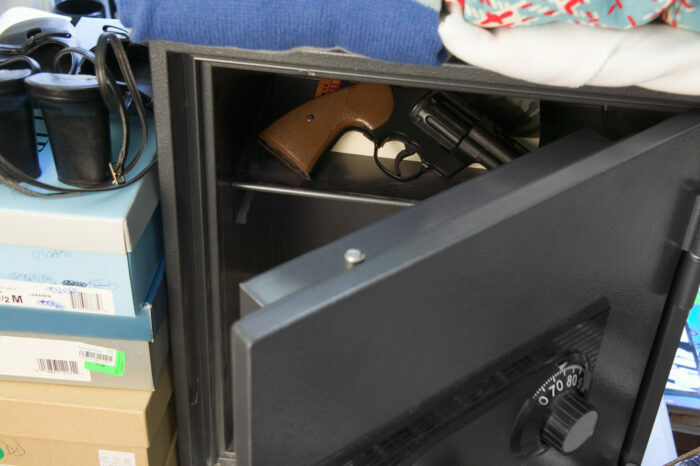
According to data compiled and released by End Gun Violence Michigan, only seven public school districts received an “A” grade for meeting the requirements under Michigan’s Safe Homes, Safe Schools law, which requires districts to publicly notify parents and guardians of the state’s safe firearm storage laws.
Lauren Jasinski, a trustee at Royal Oak Schools, noted that a recent poll from End Gun Violence Michigan showed only 30% of Michiganders were aware of the state’s safe storage law, which led to the need for the Safe Home, Safe Schools law.
“We created a really easy-to-use rubric where we were looking for whether or not the correct link was posted, whether or not they had some additional information, and what they’re messaging to their community surrounding this important issue,” Jasinski said. “Schools are trusted messengers about how to keep kids safe, and we need to make sure that every school is doing their part.”
More than 58% of the 593 public school districts included in the report card received an “F”, meaning that the district is not in compliance with the law that requires schools to link directly to the Michigan Department of Education’s Safe Homes, Safe Schools page on the district website.
Schools are required by law to notify parents by Oct. 1 of that school year. 2026 marks the second of those deadlines, with the law first going into effect in 2025. At a previous press conference, End Gun Violence Michigan noted the importance of meeting that deadline and sharing the information as close to the start of the school year as possible.
The data analyzed in the report card is accurate, according to Jasinski and the group’s website, as of Sept. 1, 2026, so it does not necessarily show a completely accurate portrayal of compliance with this year’s mandate. However, Jasinski said that it can be seen as a reflection of which districts were compliant after the 2025 deadline had passed.
Dr. Brenda Goss Andrews, a retired deputy chief with the Detroit Police Department and the former national president of the National Organization of Black Law Enforcement, emphasized that the report card is not intended to be overly critical of any of the school districts.
“We recognize, and it’s been stated before, the tremendous workload, and we know they’re doing their best,” she said. “Many districts, like Garden City Public Schools, mentioned safety, but did not include the correct links or shared outdated resources. Other districts, like Clio Area Schools, sent letters to the community. However, there was no safe firearm storage information nor resource links on their website.”
Around 18% of the districts received “D” grades, 14% received “C” grades, and 8% received “B” grades — districts that Jasinski said were more complicated than just those strictly out of compliance with the law.
“The only districts that are outright not following the law are the true zeros. That means that we could not find the link anywhere on the whole website,” she said. “Anything that did receive some credit means that mention of safe storage was found somewhere on the website, but it was either super hard to find, not up to date, or not the direct MDE link.”
The research was done by volunteers — something that Ryan Bates, the executive director of End Gun Violence Michigan, said he believed should not be the case going forward when examining compliance with the law.
“This should not be up to volunteers,” he said. “The government should be doing this, so we really want to encourage the Department of Education to take this on and make sure that they’re holding school districts accountable to state law. So we hope next year that the Department of Education does a much better job reminding school districts to do their homework.”
Sherri Masson, a retired teacher and a member of Indivisible Michigan, described how the report card was put together, saying, “Our members graded every single school district website in the state on how compliant they were with the law, over 500 school districts. We weren’t able to track who sent flyers home because that information isn’t public, but the website is the easiest thing for schools to do, and it’s a good proxy for compliance.”
Lansing, MI