Prediction markets spend millions to influence state, federal governments
Oct 01, 2026 | 5:37 pm ET
Description
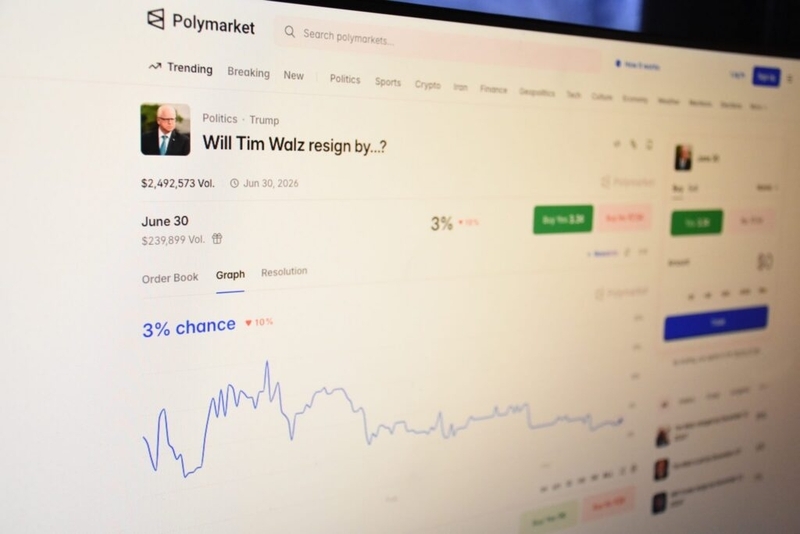
Online prediction markets such as Kalshi and Polymarket are attracting scrutiny from state lawmakers, who argue the platforms are undermining state gambling regulations. (Photo by Alyssa Chen/Minnesota Reformer)
Kalshi, Polymarket and the Coalition for Prediction Markets have spent at least $3 million this year on lobbying and campaign contributions across the federal and state levels, according to a new report from the government watchdog group OpenSecrets.
Prediction market platforms say they are like commodity markets that offer contracts to speculate on the future price of corn or oil — not sportsbooks that allow gamblers to place bets. But many states reject those justifications, arguing the platforms offer a backdoor to skirt state gambling regulations, particularly on sports.
The issue has sparked action from state regulators, new legislation, and a flurry of lawsuits from states, prediction markets, and the Trump administration, which has sought to sideline state oversight.
Kalshi, by far the largest prediction market platform, has targeted much of its political spending on governors and state attorneys general.
OpenSecrets found that Kalshi poured more than $300,000 combined into the two major political organizations dedicated to electing and supporting AGs: The Republican Attorneys General Association and the Democratic Attorneys General Association.
Likewise, Kalshi donated $100,000 to the Republican Governors Association and $150,000 to the Democratic Governors Association in the first half of the year.
“Like many U.S. regulated companies, we support candidates on both sides of the aisle,” Dani Lever, a spokesperson for Kalshi, told OpenSecrets in a statement.
The analysis found Kalshi has hired at least one lobbyist in 41 states, focusing much of that effort on California and New York. That means the company has a lobbying presence in every state that has introduced prediction-market-specific legislation.
State lawmakers of both parties are growing increasingly frustrated with prediction markets, arguing they are avoiding state gambling regulations or gambling bans, gambling taxes and consumer protections.
This summer, Sara Slane, Head of Corporate Development at Kalshi, told lawmakers that the company was committed to building relationships with the states. But she said the prediction markets are not subject to state oversight, as they are regulated by the Commodity Futures Trading Commission, which regulates derivatives such as futures contracts on stocks.
That five-member commission currently has four vacancies. But it has aggressively defended prediction markets and its right to oversee them — going so far as to sue nine states that attempted to regulate the industry. Donald Trump Jr., the president’s eldest son, has financial stakes in both Kalshi and Polymarket.
With litigation flying on the issue, many observers expect the U.S. Supreme Court to ultimately decide what role states can play in regulating prediction markets.
In addition to its political spending in states, OpenSecrets found the industry remains committed to federal lobbying, with Kalshi alone spending nearly $1 million in the first half of the year. Those efforts focused on the CFTC, the White House, the Securities & Exchange Commission and both chambers of Congress.
Brad Lipton, director of the Roosevelt Institute’s corporate power and financial regulation program, told OpenSecrets the lobbying push was evidence of the “existential question” facing prediction markets.
“It’s not at all clear to me that their business model can compete if they are going to comply with state law,” Lipton said. “They’re really trying to create a situation, I think, where they have enough political power to overcome the legal deficiencies in their arguments.”
Stateline reporter Kevin Hardy can be reached at [email protected].