In potentially competitive Huntsville seats, housing and infrastructure loom large
Oct 02, 2026 | 6:01 am ET
Description
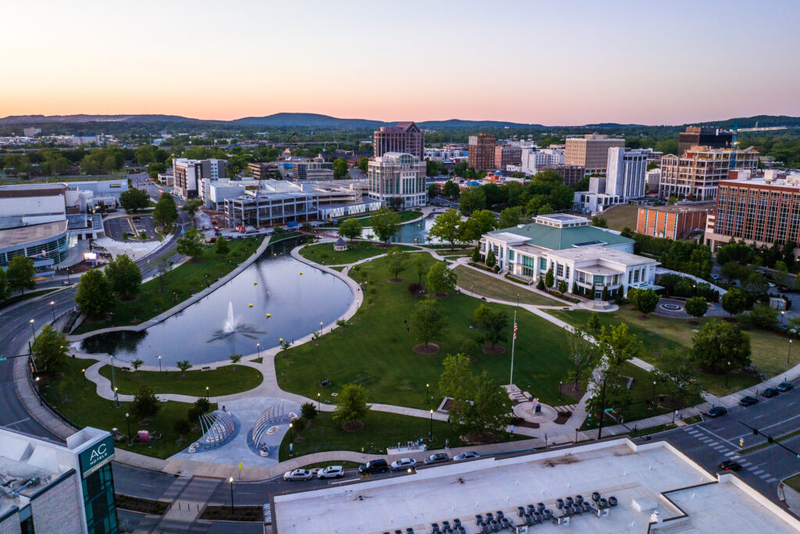
The skyline of Huntsville, Alabama. Nominees from the two major political parties said growth in the region has created some issues with infrastructure, including roads and housing. (Jeremy Edwards/Getty Images)
Key Points
The population boom in north Alabama and its strain on local infrastructure is a major issue in legislative races in and around Huntsville.
Candidates from both parties have heralded the growth but have also cited the need to address its effects on roads and healthcare, as well as the upper pressure it places on housing prices.
“I think the growing pains are simply that when you have rapid growth, it is very difficult for the infrastructure to keep up,” said Rep. Marilyn Lands, D-Huntsville. “We are hearing from a lot of folks about the traffic, and about the time on the road, and the quality of the roads, and all that is part of the growing pains in that our growth has outpaced the ability to provide adequate infrastructure.”
More people are moving into the region from other parts of Alabama and different parts of the country.
Alabama has had steady, albeit minimal, population growth, from 2020 to 2025, according to a study published by the Center for Business and Economic Research at the University of Alabama in April. The population of about 5.025 million in 2020 was approaching 5.2 million by 2025. The growth was due mainly to net migration; the state recorded more deaths than births in those years.
Much of that growth has gone to metro Huntsville. Among the states’ counties, Madison and Limestone ranked first and third, respectively, for population growth between 2020 and 2025, according to the UA study. Madison added 45,000 people and Limestone County grew by 20,000. Baldwin County, in coastal Alabama, added 36,000 people.
A plan for professionals
Nyesha Black, director of demographics and socioeconomic analysis at CBER, said jobs fueled the growth.
“There has been quite a number of investments in that area, increasing industries as far as defense, public sector jobs, and an increase in private investments,” she said. “People are motivated to move when they can make a good living, and also well-paying jobs.”
Huntsville’s long-standing ties with the defense and space industry led to an influx of highly-paid jobs.
Study: Huntsville’s population climbing, other major Alabama cities’ growth stalled
Wafa Hakim Orman, associate dean and associate professor of economics at the University of Alabama in Huntsville, said quality schools in relatively affordable areas, as well as children’s amenities, attracted young families.
“There have been some very intentional attempts to make the city more attractive to young professionals who are not quite settled down with kids yet, because that was the missing piece for a very long time,” Orman said. “If you want to have a growing economy, you have got to be able to attract those people as well, that is where a lot of energy and innovation comes from.”
Local officials developed a plan to accommodate additional people in the area after the military decided to realign bases and have more people move to Redstone Arsenal in 2005.
“The city and our partners basically began the process to build all the infrastructure that was needed to support and make the community attractive to professional men and women,” said Chip Cherry, president and CEO of the Huntsville/Madison County Chamber of Commerce. “That has been very successful.”
Samuel N. Addy, associate dean for economic development outreach at CBER, was involved in the study and called Huntsville “progressive” for recognizing the need for additional infrastructure.
“The north Alabama region has also been successful in economic development because they have one thing which I think is unique to them; they collaborate and cooperate very well in that north Alabama region,” Addy said. “It is no wonder that they have been so successful.”
City officials revitalized the downtown and worked to attract industries requiring highly-skilled labor, such as advanced manufacturing and the pharmaceutical company Eli Lilly.
But growth has created issues. According to the annual report from the Huntsville Area Association of Realtors, the median sales price for homes in Madison County was about $247,000. By 2025, it was about $332,000. In Limestone County, the median home sales price was about $250,000 and by 2025 it reached $322,000, according to the Alabama Center for Real Estate.
Tommy Battle, the mayor of Huntsville and a Republican, said the city is maintaining the infrastructure to meet the growing demand.
“I am not sure I know of any growth city in the south that doesn’t have a rush hour,” Battle said.
During the interview, he mentioned several projects to enhance the interstates and internal road system, and that more are planned.
“I think that if you look at the roads the city is responsible for, we have expanded most of those,” Battle said. “We have done the expansion of those.”
Infrastructure in a competitive area
Madison County’s changing demographics and a favorable national environment have given Democrats hope that they can take some legislative seats in the county this fall, though Republicans hold many local and state seats and have invested in campaigns in the area.
The Alabama Reflector interviewed and received statements from challengers and incumbents who praised the policies enacted by local officials and developers that spurred growth in the northern part of the state. However, they recognized that the influx of residents is having an impact on the infrastructure, from housing, transportation and healthcare.
Alabama Democrats see opportunities to pick up legislative seats in Huntsville
Republican candidates in the area made improving infrastructure a key part of their platforms.
Aaron Thomas, a Republican challenging Lands in a House race, and John Roberts, the Republican candidate hoping to succeed Sen. Tom Butler, R-Madison, referred to aging roads and bridges as part of their priorities on their campaign websites.
Thomas said in an interview that municipalities in his district expand as new buildings are built, which leads to sprawl. The expanding footprint is increasing the needs that residents have for services.
“That puts more of a strain on our first responders, specifically our sheriff’s department and our fire departments as well because we are covering a wider geographic area,” Thomas said.
He added that roads like the Interstate 565 and Memorial Parkway Interchange need to be updated along with bridges located throughout the county.
“We have a limited life cycle on a lot of these key infrastructure points, and we have got to keep it up to date,” Thomas said.
Sen. Sam Givhan, R-Huntsville, mentioned attracting new investment to the region to spur additional jobs along with “strengthening infrastructure” on his campaign website. He cited the need to widen roads “where traffic just backs up going over Chapman Mountain as people travel east.”
“Whoever the new governor is, we are going to be in the person’s ear asking for road money,” Givhan said.
Democrats, for their part, also mentioned specific infrastructure projects as well as basic living issues.
The increasing population added load on the roads, lengthening commuting times and increasing wear on the pavement. The answer for some Democrats is to enhance public transportation options.
“We could have a park and ride where people who work at Redstone Arsenal could get checked in at a station, then get on the bus, and get to Redstone Arsenal without having to get checked in at the gate,” said Forrest Satterfield, who is running against Rep. Rex Reynolds, R-Huntsville. “That should reduce check in time at the gate and traffic on the road.”
Housing, particularly affordable housing, was a common theme among the candidates.
“I don’t care what the prices are in areas that folks are moving from, we have to rein in rental costs before Huntsville natives get priced out of their own city,” said Allison Montgomery, a Democratic candidate challenging Rep. Phillip Rigsby, R-Huntsville, in a statement.
Montgomery said that the city has been building new apartment units to meet the demand, but that has not reduced the cost of rent.
Other candidates mentioned the Affordable Housing Trust Fund, meant to create and preserve housing units for households with lower incomes. However, the fund lacks a dedicated source of funding. Rep. Kelvin Datcher, D-Birmingham, filed HB 401, and Sen. Rodger Smitherman, D-Birmingham, introduced SB 244, bills that would have doubled the mortgage record tax from $0.15 to $0.30 per $100 of indebtedness. The proceeds would fund the housing trust fund, but neither proposal received serious consideration.
“The state passed an Affordable Housing Trust Fund, and the state just never funded it for the last 10 years,” said Jared Sluss, a Democrat running against Givhan in Senate District 7 said. “I think the state could have some levers to pull.”
Montgomery