Pharmacy linked to Indiana execution drug invoice faces possible suspension
Nov 02, 2026 | 12:21 pm ET
Description
Gov. Mike Braun is being asked to halt Jeffrey Weisheit’s Nov. 5 execution while Indiana reviews its lethal injection procedures and drug procurement. (Getty Images)
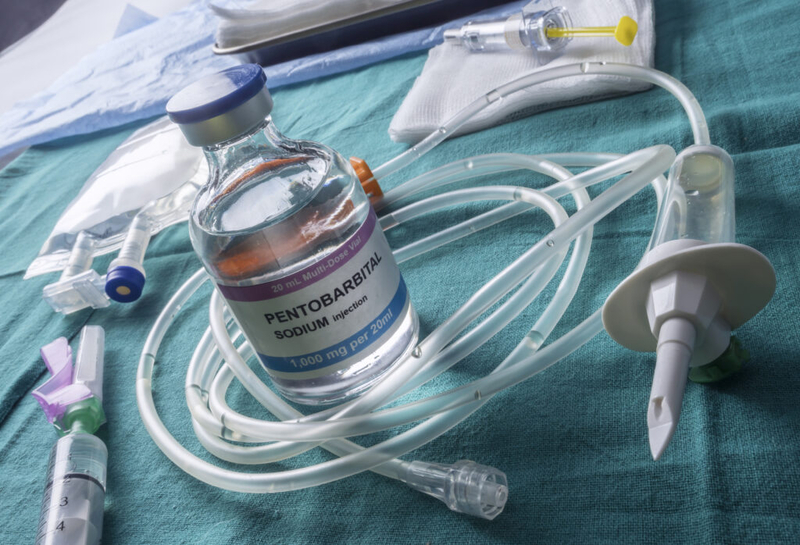
Lawyers seeking a reprieve for Jeffrey Weisheit ahead of his execution this week say Indiana purchased pentobarbital, the lethal injection drug it plans to use, from Pharmaneek Inc., an Indianapolis pharmacy on probation and facing possible suspension of its license.
Weisheit’s attorneys asked Gov. Mike Braun on Monday to halt the Nov. 5 execution and order an independent review of Indiana’s lethal injection procedures and drug purchases. Their application cites pharmacy inspection problems, questions about execution team qualifications and gaps in planning for complications.
The Department of Correction confirmed Monday that it paid $275,000 for the drugs and has them in its possession for Weisheit’s execution. The agency has not released an updated inventory log, which tracks drug purchases, use and disposal, however.
DOC officials declined to discuss the supplier or other procurement details, citing Indiana’s execution secrecy law.
“The Department of Correction is in compliance with Indiana laws that govern the confidential procurement of drugs utilized to carry out a court-ordered execution,” the agency said in a statement. “We remain confident in our process and our ability to humanely carry out the lawfully imposed sentence for the murders of two innocent children.”
The Indiana attorney general’s office and Pharmaneek did not respond to requests for comment before publication.
Story continues below.
The reprieve application asks Braun to exercise his authority as governor rather than seeking a court order.
Indiana law shields the identity of the pharmacist, pharmacy, wholesale drug distributor or outsourcing facility that provides a lethal substance to the Department of Correction. It also makes information that could identify suppliers — including names, addresses, phone numbers and tax identification numbers — confidential, bars its disclosure through discovery and prohibits its introduction as evidence in civil or criminal proceedings.
Pharmaneek is scheduled to appear before the Indiana Board of Pharmacy on Nov. 9 — four days after Weisheit’s scheduled execution — over allegations that it violated restrictions on compounding, the preparation of customized medications.
The board’s Oct. 1 order alleges noncompliance with those restrictions and directs the pharmacy to explain why its license should not be suspended on an emergency basis or subjected to further sanctions.
The board has not ordered a suspension in that proceeding.
Text recoverable beneath a black redaction on DOC’s Sept. 25 invoice includes an address that matches Pharmaneek’s principal office in Indiana secretary of state records and its address in state licensing records.
Those licensing records, dated Oct. 26, list both Pharmaneek’s pharmacy license and its controlled substance registration as on probation.
The Indiana Capital Chronicle previously obtained the $275,000 invoice for the state’s execution drug purchase in October through a public records request. The document describes the purchase only as supplies and does not specify a drug or the number of vials or doses. Weisheit’s attorneys identify Pharmaneek as the state’s pentobarbital supplier.
The Board of Pharmacy placed Pharmaneek on indefinite probation under a settlement approved in March. The agreement documented failed inspections, including expired medications on active pharmacy shelves, inadequate temperature monitoring and deficiencies in handling returned medication.
The board’s final order barred compounding during probation until the pharmacy met specified environmental and inspection requirements. The settlement also imposed a $1,500 fine and required corrective action plans.
In the settlement, Pharmaneek attributed some inspection problems to areas undergoing remodeling and said it had implemented a corrective action plan.
Indiana parole board urges governor to reject death row inmate’s bid to avoid execution
The final settlement also states that the attorney general’s investigation found the allegations in the original consumer complaints lacked merit, although other apparent violations were discovered. The reprieve application repeats accusations from those earlier complaints without noting that finding in the settlement.
A separate U.S. Food and Drug Administration inspection of Pharmaneek between March 30 and April 8 identified inadequate precautions against cross-contamination, insufficient verification of water quality and a damaged ceiling tile above an area where medication was prepared.
“Your facility is not maintained in a good state of repair, creating insanitary conditions whereby drug products may be contaminated with filth,” the inspection report states.
The FDA document concerns nonsterile drug production and expressly says its observations do not represent a final agency determination of compliance. It does not establish that Indiana’s execution drugs were contaminated.
Temperature controls were among the violations documented in Pharmaneek’s March settlement with the state. The agreement recorded a compounding room temperature of 84 degrees, a failure to monitor temperatures in an area holding medications ready for delivery and inconsistent temperature logs for drug-storage areas.
Separate concerns have involved storage at the Indiana State Prison. The Capital Chronicle previously published DOC logs showing drug temperatures outside the recommended range of 68 to 77 degrees Fahrenheit on several consecutive days in January and February 2025, with readings as low as 62 degrees. Pentobarbital’s labeling permits temporary temperature excursions between 59 and 86 degrees.
Defense attorneys have questioned whether those conditions affected drugs used in Benjamin Ritchie’s execution. Indiana executed Ritchie on May 20, 2025, for murdering Beech Grove police officer William Toney. DOC has not released documents showing storage of the newly purchased supply for Weisheit.
The reprieve application also includes an Oct. 27 letter from anesthesiologist Dr. Mark Heath questioning the qualifications required of personnel who establish intravenous access.

“The Indiana protocol does not require or specify that the personnel inserting the IVs have the requisite experience, credentials, or certifications,” Heath wrote.
Indiana’s written protocol does require execution team training at least quarterly, including practical IV instruction with regional emergency medical services oversight. It also provides for physician involvement, monitoring of IV lines and backup doses of pentobarbital.
The attorneys argue those provisions do not adequately address what happens if staff cannot establish IV access or an execution fails. They urge Indiana to review its procedures following Tennessee’s failed Sept. 30 attempt to execute Christa Pike and that state’s decision to order an independent investigation.
Weisheit was sentenced to death for murdering 8-year-old Alyssa Lynch and her 5-year-old brother, Caleb, in a 2010 house fire near Evansville. His execution is scheduled before sunrise Nov. 5 at Indiana State Prison in Michigan City.
His request for a temporary reprieve is separate from his petition to have his death sentence commuted. The Indiana Parole Board recommended against clemency Oct. 28. Braun makes the final decision.
Indianapolis, IN