Permitting reform bill will decimate protections in the National Historic Preservation Act
Nov 03, 2026 | 6:15 am ET
Description
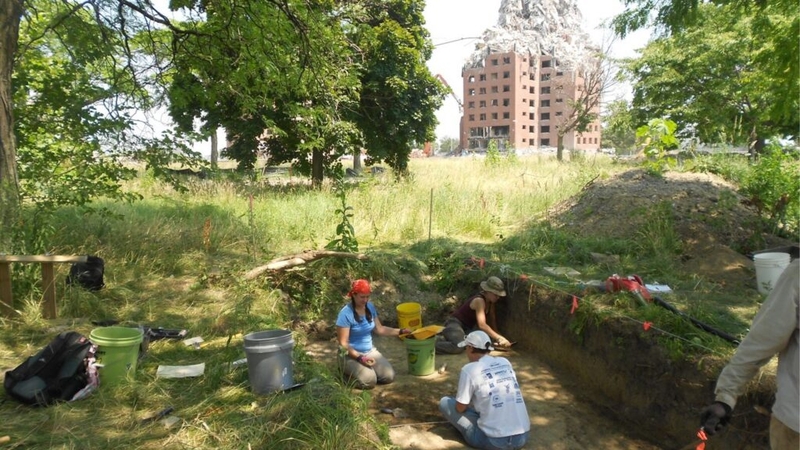
Because archaeological resources in Michigan are often buried, Sec. 106 reviews require identification through methods such as shovel testing or excavation. This photo, courtesy of the Michigan State Historic Preservation Office, is of work being conducted in the Detroit neighborhood known as Paradise Valley.
On September 30, 2026, a permitting reform bill was introduced in the U.S. Senate that would significantly weaken the National Historic Preservation Act (NHPA). The NHPA was passed in 1966 after thousands of historic places around the U.S. were demolished during urban renewal efforts in 1950s and 1960s.
The loss of buildings like Penn Station in New York City produced fierce public outcry because the demolition had occurred without any public review process. In Michigan, it was the destruction of Old City Hall in Detroit 1961 and the demolition of whole neighborhoods for new highways that prompted Michigan’s own reckoning.
Because of these demolitions when the NHPA was passed it included a provision known as Section 106 which required that any federally funded, licensed, or permitted project be evaluated to determine if historic properties would be negatively affected and it requires that state and local governments, Tribal Nations, and the public be provided the opportunity to comment on these projects.
Public input is a specific remedy baked into the NHPA after we learned hard lessons in the rubble of our discontent, the realization dawning that we had no means to preserve our significant places while we sorted through the actual rubble of Penn Station, Old City Hall, and thousands of other places.
The Bipartisan American Affordability and Jobs Act obliterates the public notice and input requirements that were purposefully inserted into the NHPA. Imagine a data center project that requires a federal permit because it’s close to a wetland: if passed, this bill will remove the requirement that federal agencies solicit the public’s input, rather, the public will only learn about federally permitted destruction when the bulldozers arrive on site.
The bill contains additional, highly concerning provisions including narrowing the project types that trigger the Section 106 process in the first place. For instance, it excludes projects that utilize federal loans, grants, and other financial assistance which means that Federal Highway Administration projects, (which are typically funded by grants distributed to states) will largely be excluded from the Section 106 process.
Perhaps some of the most egregious changes in this bill pertain to Tribal Nations. Today, Tribal Nations are key constituents in the Section 106 process because they steward their sacred places and ancestral lands. To ensure these places are accounted for, the Section 106 process requires archeological survey for areas where ground disturbance is proposed. For example, in 2026, an FCC-permitted cell phone tower project in Charlevoix County required ground disturbance and, during the survey work, a Native American burial place was discovered.
After discussing this discovery with the State Historic Preservation Office and the Little Traverse Bay Band of Odawa Indians, it was decided that the best path forward was to redesign the project to avoid the burial site completely. This early identification exemplifies the importance of the Section 106 process under the current law which requires consultation with interested parties like Tribal Nations.
In new collaborations, tribes become stewards of parks and monuments
But the Bipartisan American Affordability and Jobs Act will gut this process as it relates to Tribes because it will make consultation with Tribal Nations optional and it would allow federal agencies to unilaterally decide which Tribal sites are sacred enough to protect. Moreover, the bill has provisions that violate tribal sovereignty because it will allow the federal government to take over tribal preservation offices if they function in a way that displeases the federal government.
This bill was hastily written. Key terms are not defined and, when asked what certain terms mean, the drafters admitted they couldn’t agree on definitions, leaving courts to sort it out. This bill will not streamline projects; it will cause confusion and prompt excessive litigation.
Most people likely don’t realize that architects, archaeologists, architectural historians, and Tribal Nation leaders work every day to protect historic places via the Section 106 process, quietly enfranchising diverse voices in the process.
At a time when some of our most important historic places are under threat, it is vital that we speak up when bad legislation is proposed and this bill is about as bad as it gets for historic places, places we cannot put back together once the wrecking ball starts swinging.
Lansing, MI