Pennsylvania joins 20 states suing EPA to reinstate climate pollution rules for power plants
Oct 05, 2026 | 3:38 pm ET
Description
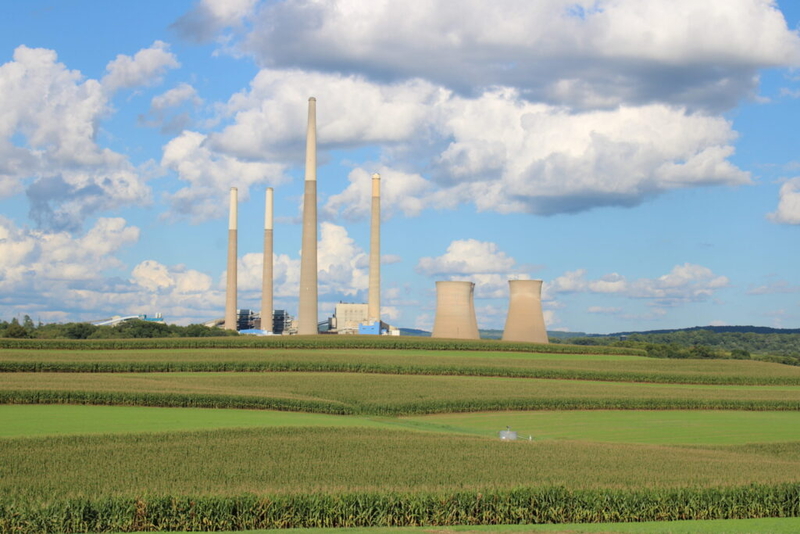
The Homer City Generating Station towers over fields of corn in Indiana County, Pennsylvania. It's owners announced an agreement in principle to purchase $15 billion of Pennsylvania natural gas to support over 4 gigawatts of power generation at the former coal plant. (Photo by Audrey Carleton/Capital and Main)
This article originally appeared on Inside Climate News, a nonprofit, non-partisan news organization that covers climate, energy and the environment.
More than 20 states, including North Carolina, New York, California and Pennsylvania, as well as several cities, are suing the U.S. Environmental Protection Agency over its repeal of most greenhouse gas emissions standards for coal- and natural gas-fired power plants. The agency’s proposal would also thwart future administrations from reinstating the rule.
The state attorneys general, all of them Democrats, filed the lawsuit Oct. 1 in the U.S. Court of Appeals for the District of Columbia. The plaintiffs are asking the court to review the proposed rescission.
In a press release, New York Attorney General Letitia James said the coalition is arguing that the administration’s actions are “clearing the way for millions of additional tons of greenhouse gas emissions that will worsen extreme heat, deadly storms, flooding, and wildfires.” The coalition includes Washington, D.C., Chicago, Denver and New York City.
The EPA told Inside Climate News it does not comment on pending litigation.
“We applaud Attorney General Jackson’s leadership in protecting our air quality and safeguarding public health,” said Jeffrey Robbins, executive director of the nonprofit CleanAIRE North Carolina, of North Carolina’s Attorney General Jeff Jackson. “Joining this lawsuit sends a clear message: North Carolina will not stand by while federal rollbacks force our families to pay higher costs at the pump for dirtier air. Our health should not be secondary to fossil fuel industry profits.”
Duke Energy operates five coal-fired power plants in North Carolina and 17 fueled by natural gas.
In announcing the proposed rule, the agency argued that it lacks the legal authority under the Clean Air Act to regulate greenhouse gas emissions from power plants, the largest stationary sources of the pollutants.
That’s not true, said John Broderick, an assistant attorney general in the New York Environmental Protection Bureau, during an Oct. 1 EPA public hearing on the proposed rule. The agency not only has the authority, Broderick said, it has a “statutory duty to regulate greenhouse gases from power plants.” He called the EPA’s move “a blatantly unlawful attempt to undermine the Clean Air Act.”
Greenhouse gas emissions drive climate change, which causes or worsens extreme weather, such as heat waves, droughts, floods and storms. This year’s Super El Niño is contributing to heat and strong hurricanes in the Pacific, but its effects are amplified by global warming.
August 2026 was the planet’s hottest August since recordkeeping began in 1850, according to the National Oceanic and Atmospheric Administration. Western Europe endured five heat waves this summer, with temperatures at times exceeding 104 degrees Fahrenheit.
Amy Laura Cahn is a special assistant attorney general for the Commonwealth of Massachusetts, focused on energy and the environment.
During the public hearing, Cahn told the EPA the proposal is “wrong on the law, wrong on the science and wrongly ignores the harms it will cause and will be felt first and worst by our most marginalized communities.”
Massachusetts is a primary reason that greenhouse gas emissions regulations exist. In 2007, the U.S. Supreme Court ruled in a landmark case against the EPA that the agency could legally regulate greenhouse gas emissions if it determines they endanger public health and welfare—which it did two years later.
Now the EPA says the scientific and legal foundation for these rules is flawed, an argument rebutted by major scientific organizations and legal experts.
“Carbon emissions contribute to climate change,” Cahn said. “Flawed and unsupported analysis can’t undermine reality.”
The EPA estimates that the repeal would save the power sector $95 billion to $160 billion in compliance costs over the next 20 years. The savings do not account for benefits such as ensuring electric grid reliability and other benefits that cannot be monetized, the EPA said.
Those estimates exclude the health and environmental costs of greenhouse gas emissions—and the financial benefits of reining in the pollutants. The Biden administration calculated the rules would save $370 billion in climate and public health costs through 2047.
“Erasing these standards doesn’t save money,” said Robbins of CleanAIRE NC in a prepared statement. “It simply transfers the financial burden from corporate polluters onto the backs of patients, families and ratepayers.”
This is the second instance in which the EPA has weakened rules governing greenhouse gas emissions. Earlier this year the agency revoked the endangerment finding for the pollutants related to motor vehicles.
“Federal rollbacks make state leadership more urgent than ever,” Robbins said. “We cannot rely on this administration to protect the air we breathe.”

Harrisburg, PA