Opponents of South Dakota court consolidation say move would harm rural access to justice
Nov 09, 2026 | 4:46 pm ET
Description
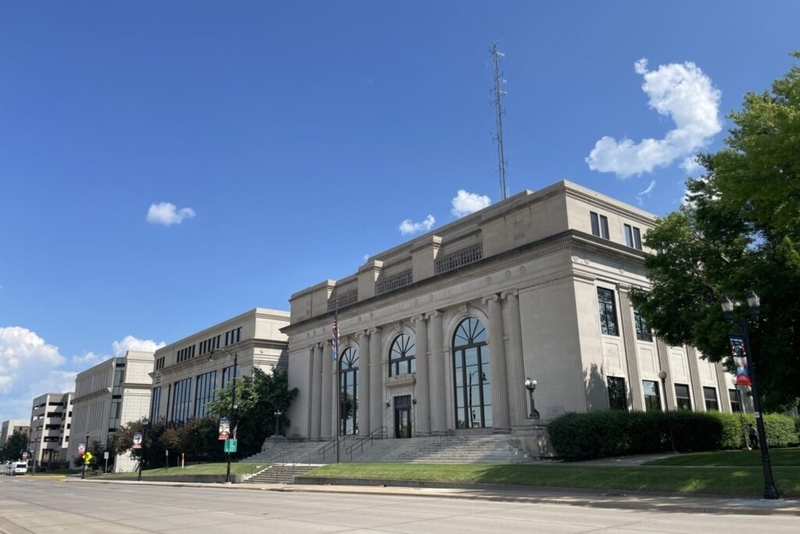
The Pennington County Courthouse and jail complex in Rapid City is pictured in June 2023. A proposal from the state Unified Judicial System would consolidate two western South Dakota judicial circuits into one headquartered in Rapid City. (Seth Tupper/South Dakota Searchlight)
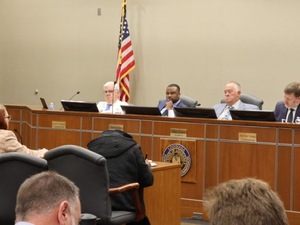
The South Dakota Supreme Court heard concerns Monday at the Capitol in Pierre from people who said the proposed merger of two western judicial circuits could leave rural communities behind.
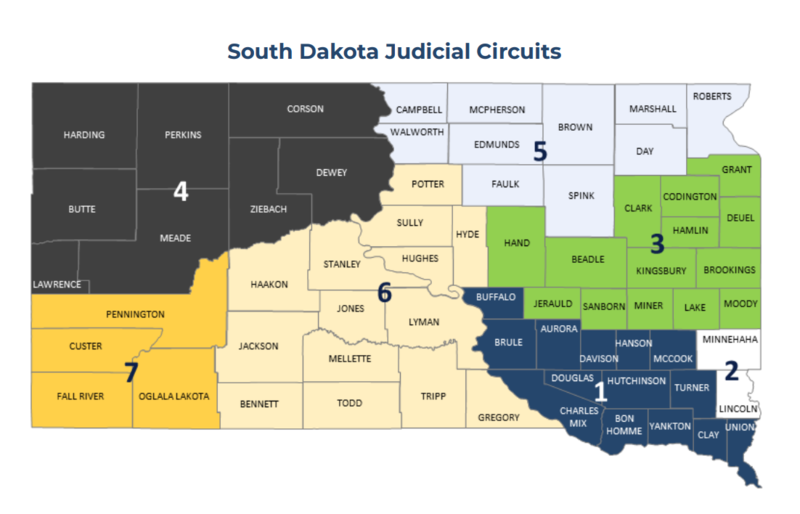
The proposal would combine the state’s 4th and 7th Judicial Circuits into a single 12-county 4th Circuit headquartered in Rapid City, reducing the number of judicial circuits in South Dakota from seven to six.
The 4th Judicial Circuit encompasses the northwestern part of the state, including Butte, Corson, Dewey, Harding, Lawrence, Meade, Perkins and Ziebach counties.
The 7th Judicial Circuit includes the southwestern corner: Custer, Fall River, Oglala Lakota and Pennington counties.
State Court Administrator Greg Sattizahn told justices more than 90% of court business in the affected counties occurs in just Pennington, Meade, Butte and Lawrence counties. He said the merger would allow the courts to share personnel and resources more effectively, and eliminate duplicate positions.
“It’s an important process, even if it’s a hard process,” Sattizahn said. “We need to position and ensure that our courts are stable and responsive and can move forward to the needs that we foresee.”
The Unified Judicial System estimated efficiencies from the consolidation would allow it to “repurpose” three positions, avoiding a $300,000 state funding request to add those positions.
However, speakers at Monday’s hearing raised concerns about access to courts in rural communities.
Attorney Lora Waeckerle, of Black Hawk, said the merger could worsen staffing challenges and questioned what she called a lack of detailed implementation planning. The merged circuit would have the second-largest population and largest geographic footprint of any in the state, and the second-largest caseload.
“No matter how dedicated our clerks and court reporters are, regularly traveling three and a half hours from Rapid City to McIntosh is simply likely not to occur,” Waeckerle said. “And I believe that the major concern of individuals is that there will be fewer in-person judicial services if this proposal is granted.”
4th Circuit Judge Eric Strawn said specific inefficiencies justifying consolidation have not been identified.
“It’s kind of fighting smoke,” he said. “I have asked. We have tried to seek out what the actual harm is.”
Shane Penfield, the state’s attorney for multiple 4th Circuit counties, said combining rural counties with Pennington County could diminish rural residents’ influence in judicial elections. He also raised concerns about impacts on communities within the Standing Rock and Cheyenne River Sioux reservations.
“Not only does it affect the ability of tribal members to choose who their state court judge should be,” he said, “but it also, ultimately, could change how justice is delivered.”
South Dakota Supreme Court Chief Justice Steven Jensen said the court must balance its responsibility to maintain access to justice in every county with its obligation to operate efficiently and spend taxpayer dollars responsibly.
The justices did not announce a decision Monday. Jensen said the court will issue a written order addressing the proposal, but provided no timeline. If approved, the consolidation could take effect at the beginning of 2027.

Pierre, SD