Northeast Kansas education board candidates share ideas for funding, local control, technology
Jul 30, 2026 | 9:00 am ET
Description
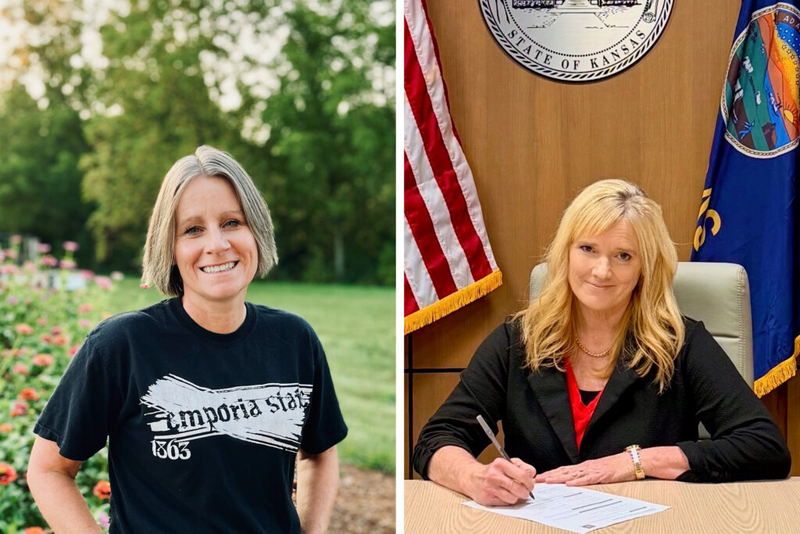
Democrat Jennifer Lloyd, left, and Republican Amy Cawvey will oppose each other in the November general election to represent Kansas' northeastern corner on the Kansas State Board of Education. (Kansas Reflector composite from photos submitted by the candidates)
TOPEKA — While the Democrat running for the Kansas State Board of Education’s northeast district wants the state to fully fund special education, the Republican candidate says the board should investigate spending first.
The Legislature has not met its obligation to fund 92% of special education costs since the 2010-2011 school year, according to the Kansas State Department of Education, which estimated the state fell short of its obligation this current fiscal year by $226 million. In May, four Johnson County school districts announced plans to sue the state for the deficit.
Democrat Jennifer Lloyd, of Ozawkie, and Republican Amy Cawvey, of Lansing, disagree about funding plans. But they both hope to support local control and limit digital technology — in different ways.
Lloyd said fully funding special education is vital.
“Not funding the special ed is what is causing so much crisis in all of the schools, in public schools right now,” she said. “We’re having to use general funds to cover special ed, and then that’s pulling away from all of the kids.”
Cawvey said she has seen schools throw the budget “out the window” and wants to audit special education spending records.
“Yes, it will cost taxpayer dollars,” she said. “But I think it would be well worth it before we just say we need more money.”
The candidates
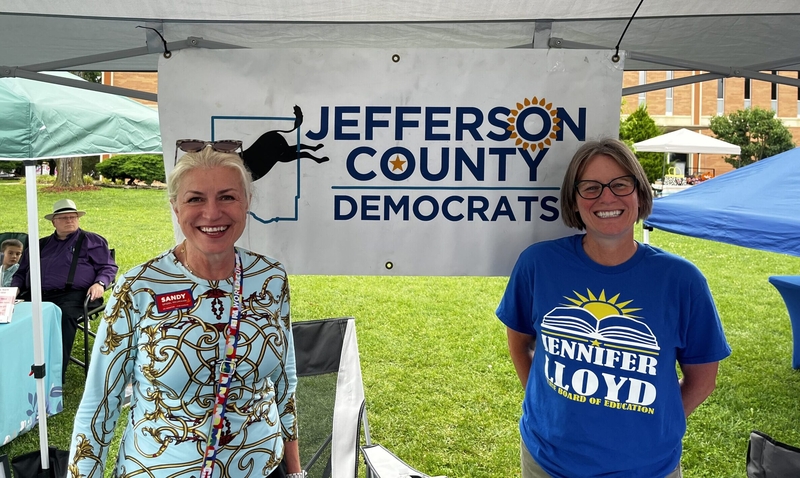
Lloyd, a librarian at Jefferson West School District, grew up attending Jefferson County public schools and earned bachelor’s and master’s degrees in education and library science at Emporia State University. Before becoming a librarian, she taught special education and fifth grade in the same northeast state board district.
Financially supporting teachers is central to her candidacy.
“Our teachers are spending so much money, their own money,” and then not getting the pay raises that they need to be able to keep doing this,” she said.
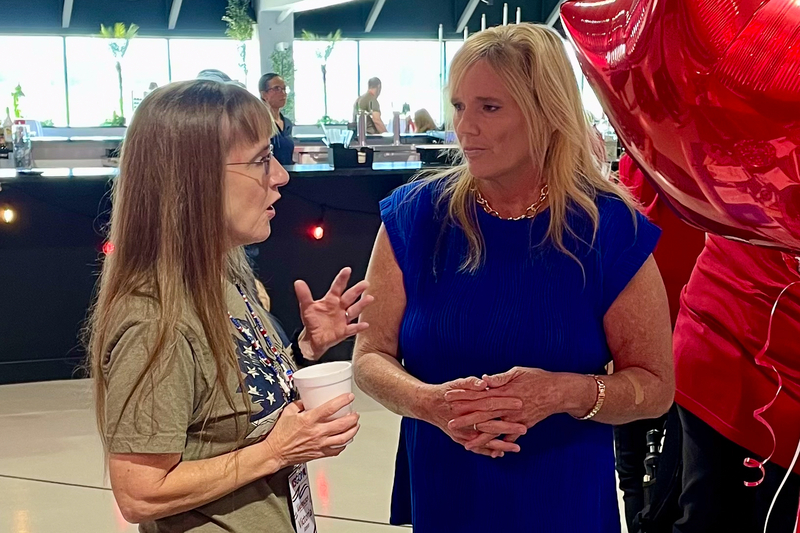
Cawvey volunteers as the Kansas chair of the National School Boards Coalition and previously served on the Lansing school board. Years ago, her husband’s role in the military moved their family to several states across the country, including Hawaii. Wherever they went, she said, she volunteered at her children’s schools as a substitute teacher or in parent-teacher organizations.
She said her experiences in diverse school districts gave her insight into school systems.
“We were in some poor school districts and some districts that had more money,” she said. “We just did the best with what we had and got to know the staff and everyone.”
The northeast district Lloyd and Cawvey aim to represent is one of the state board’s 10 districts. Five seats are up for reelection this year. All five Republican incumbents declined to seek reelection. Because Democrats hold the majority of the other five seats, Kansas voters could switch the board’s GOP majority.
Local control
The state board oversees Kansas K-12 public schools while working with local school districts — responsible for applying the state board’s standards — and the Legislature — responsible for state funding.
Both candidates said they want to maintain local control by improving the state board’s coordination with the Legislature, which considered bills in the 2026 session to impose certain curricula, such as lessons on communism and an annual fitness test.
Gov. Laura Kelly vetoed those bills, but she signed one to bar students from using their cellphones at school. The law requires districts to securely store students’ phones without providing funding for a storage method.
While both candidates said cellphone policies work best under local control, they disagree about the ban.
Cawvey said lawmakers got involved because local districts and the state board failed to set effective rules.
“It was implemented some at a local level, but then it wasn’t consistent,” she said. “The state board in the middle also needs to work. And they didn’t issue a lot of guidance on that either. They didn’t do as much as I felt they could.”
Lloyd said the Legislature’s ban prevented the state board from setting a cellphone standard.
“Instead of letting the schools, the state board having a recommendation and coming down to the local level, the local levels are now having to react,” she said. “So it’s causing some financial burdens on some of the districts to handle the cellphone ban.”
Digital technology
Both candidates want to address technology in the classroom if elected by limiting young students’ access to screens and making recommendations to schools soon.
Specifically, Lloyd said the state board should set standards regarding the one to one student device ratio schools implemented during COVID-19 and have continued.
“The local levels are spending money on technology, and so we need to get ahead of that and make sure the local boards see where the state board is,” Lloyd said.
Those recommendations by the state board, she said, should limit younger students’ access to technology in a way that transitions into greater access as students get older.
Cawvey wants to limit screens for all students. And, she said, local districts and state board should address technology soon before the state does.
“I would suggest,” Cawvey said, “if I was on a local board now, to go ahead and start implementing that now, because that’s kind of what happened with the cellphones.”
Topeka, KS