North Dakota University System envisions more collaboration, efficiency
Sep 28, 2026 | 6:00 am ET
Description
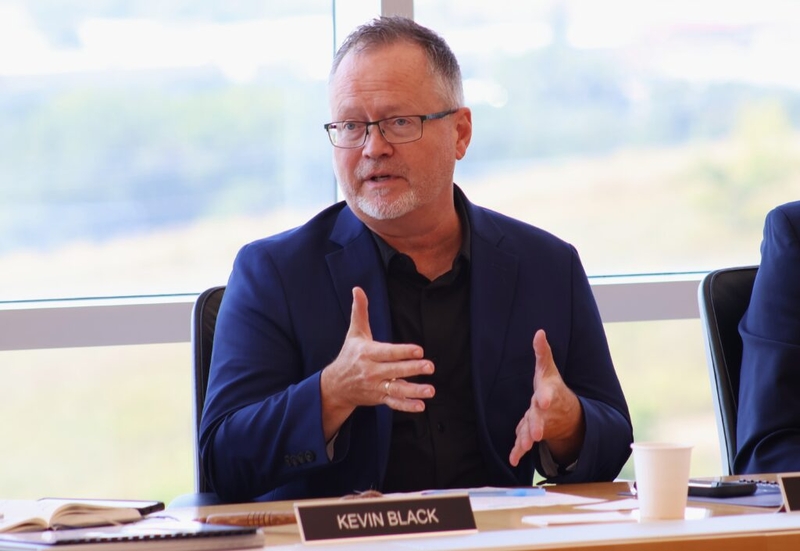
Brent Sanford, commissioner of the North Dakota University System, speaks during a State Board of Higher Education retreat at Bismarck State College on Aug. 27, 2026. (Photo by Michael Achterling/North Dakota Monitor)
The leader of the North Dakota University System is pushing for greater collaboration among its 11 higher education institutions.
Commissioner Brent Sanford on Thursday gained the backing of the State Board of Higher Education for what he calls the coordinated network or “One NDUS” model.
Sanford’s plan presented to the board would create a network of the state’s two-year schools and a network of the state’s smaller four-year colleges, with the two research institutions — the University of North Dakota and North Dakota State University — operating independently.
“So this is not a different model. It’s not, but it is a different mindset,” Sanford said during Thursday’s meeting in Minot, emphasizing collaboration instead of competition among the campuses.
The two-year schools are North Dakota State College of Science in Wahpeton, Lake Region State College in Devils Lake, Dakota College at Bottineau, Williston State College and Bismarck State College, which offers some bachelor’s degree programs as part of its mission as a polytechnic institution.
The four-year colleges are Dickinson State, Mayville State, Minot State and Valley City State.
Sanford said each campus would retain its own leadership and would be responsible for its own accreditation.
Sanford’s presentation said schools within the two-year and four-year networks would be expected to collaborate on academic programs, scheduling and student transfers. Each network would coordinate on developing new programs before campuses compete for the same students.
The presentation said the colleges would be expected to expand academic programming while reducing costs, excessive redundancies and unnecessary duplication of efforts.
Sanford said collaboration has already improved in the months since work on a strategic plan began and has the potential to more quickly address workforce needs.
Bismarck State College, which has energy-related programs, is working with the State College of Science to address the energy training needs of an industry in Wahpeton.
There would also be a shared services system for non-academic services, such accounting, payroll and financial aid at the University System level.
“We have to provide the support that the smaller campuses need,” Sanford said.
There have been some examples of shared services within the University System, but those have primarily been developed as needed, with a larger college helping a smaller one.
A recent example would be NDSU taking over the bookkeeping for Dickinson State.
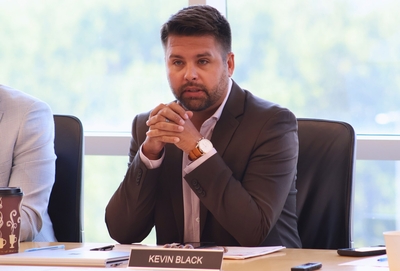
Board Chair Kevin Black called that situation “a launching pad to show us what could be.”
Sanford said the networks would give smaller colleges enough scale to be more efficient, while UND and NDSU are already at that size and would be able to concentrate on their own needs.
The University System started working with a consultant in June 2025.
Sanford said they looked at other models, such as geographic groupings or a “flagship model” that would shift some responsibilities to UND and NDSU.
Sanford said planning teams for the network model could launch in October or November and have more solid information for lawmakers when the Legislature meets in January.
“This is not something that’s a completed playbook with policies intact,” Sanford said.
Bernell Hirning, president of Williston State, said the plan would help build on existing academic consortiums for fields such as agriculture and nursing.
“This is really giving the board a tool to put some support behind a lot of things we’re already doing as a system, and I really, really like that,” he said.
The board, university presidents and system staff also discussed the potential plan at a retreat in August.
“All the details about the connections and how structures might be built, we’ll get through that in time,” UND President Andrew Armacost said after the retreat. “But right now, I think the most important message is that sense of unity and connection across the 11 schools.”
North Dakota Monitor reporter Michael Achterling contributed to this report.
Reach North Dakota Monitor deputy editor Jeff Beach at [email protected]
Bismarck, ND