North Dakota oil contamination poses challenges that could ‘cascade,’ regulators say
Nov 24, 2026 | 2:06 pm ET

Description
Justin Kringstad, director of the North Dakota Pipeline Authority, provides an update on oil and gas infrastructure on Dec. 19, 2025. (Photo by Jacob Orledge/North Dakota Monitor)
The discovery of contaminants in North Dakota crude oil being exported out of state has created a headache for the energy industry that could become a serious problem.
Two major oil export routes, the Dakota Access Pipeline and Enbridge’s pipeline to Minnesota, have begun requiring all crude oil deliveries be tested for organic chlorides before entering the system, North Dakota regulators said this week. The corrosive contaminant was first detected at Enbridge’s hub in Minnesota, according to media reports.
That has left at least Enbridge’s pipeline operating at a reduced capacity as oil companies rush to submit samples to overwhelmed commercial labs and find storage space to hold crude oil produced while they wait for results, according to state officials.
Enbridge confirmed its pipeline system, which crosses North Dakota from the Bakken oil field to Minnesota, is experiencing delays due to the organic chloride contamination.
“We expect delays to continue in the short term, until feeders deliver product clean of organic chlorides continuously,” the company said in a statement. “Enbridge is working with shippers to return service to normal operations as quickly as possible.”
A spokesperson for Dakota Access Pipeline developer Energy Transfer did not respond to a request for comment.
North Dakota Pipeline Authority Director Justin Kringstad said he estimates oil production in the state has decreased between 40,000 and 60,000 barrels per day as a result, a small slice of the state’s 1.1 million barrels of daily production. But that may only last for as long as companies have storage space for oil waiting to be tested.
“We’re probably getting to the point where tanks are full,” Kringstad said Monday during a meeting of the North Dakota Industrial Commission. “This could cascade quickly.”
He noted storage capacity varies by company, and predicting when space will run out is “totally speculative.”
The organic chloride contamination is not a public safety risk, Kringstad said. But it is corrosive, and can damage equipment such as pipelines and refineries. Two refineries have reportedly stopped accepting deliveries of North Dakota crude oil, though Kringstad said he has not independently verified those reports.
Part of the problem is even a few gallons can be enough to contaminate tens of thousands of barrels of crude oil, Kringstad said.
“It does not take much of this organic chloride to contaminate large volumes,” Kringstad said.
Organic chloride does not naturally occur in the Bakken formation, which means it can only have been introduced by an external source. Nathan Anderson, director of the Department of Mineral Resources, said it could have been in chemicals used at a well site for tank cleaning or well servicing.
But identifying the source of the contamination is easier said than done.
“You’re looking for a needle in a haystack,” Anderson said.
Kringstad said producers are being required to test their crude oil before major pipelines will accept it. But those tests have to be sent to commercial labs, such as those in Minot and Bismarck, which are experiencing a backlog.
“Those testing facilities, I was told, are bringing in additional staff and resources to increase the speed of it,” Kringstad said.
He noted the issue has not affected the refinery in Mandan or other retail products sold in North Dakota.
Anderson does not expect it to be a long-term issue.
North Dakota’s state government is heavily reliant on the tax revenue generated by crude oil production.
North Dakota Monitor reporter Jacob Orledge can be reached at [email protected].
- November 25, 20269:34 amThis story has been updated to correct a reference to a contaminant.
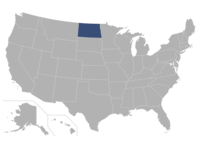
Bismarck, ND