North Carolina’s Latino leaders celebrate heritage, focus on voter engagement ahead of midterms
Oct 05, 2026 | 12:50 pm ET
Description
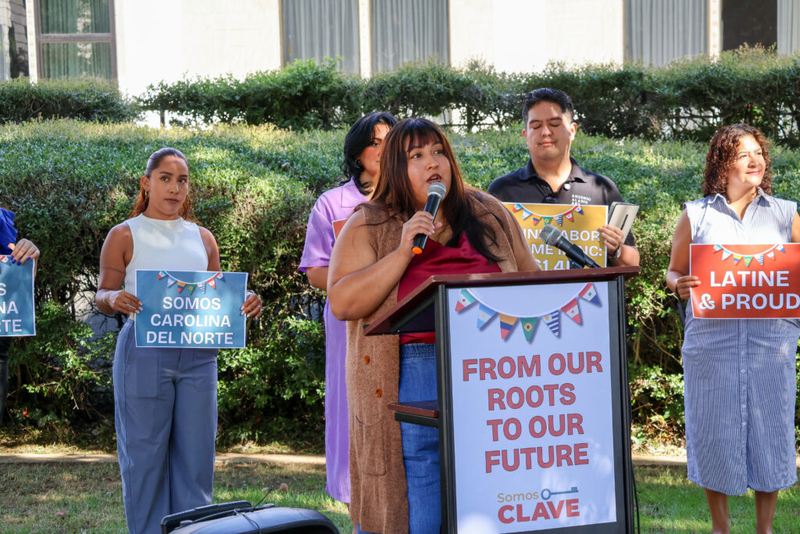
America Juarez-Maldonado with Carolina Migrant Network said she came to the legislature to let others know that Latinos are resilient, and will not allow hate or fear to write their story. (Photo courtesy of ProgressNC)
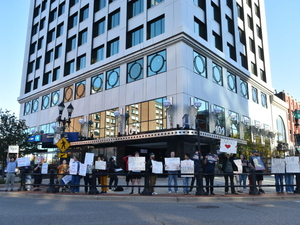
Latino leaders gathered outside North Carolina’s legislative building Thursday to celebrate Hispanic Heritage Month and look ahead to the future.
America Juarez-Maldonado with Carolina Migrant Network said it would be easy to feel anger and despair, especially at a time that U.S. Immigration and Customs Enforcement agents have wrongfully detained and arrested many Latinos.
“Here’s what I find hardest to understand –some of the same people telling us we don’t belong have forgotten their own history,” said Juarez-Maldonado. “Their ancestors also arrived to this land with no papers without permission.”
Juarez-Maldondo and other Latinos highlighted their heritage on the same day that a new law went into effect that requires state law enforcement agencies to sign 287(g) agreements with ICE. Under the arrangement, designated officers within the State Bureau of Investigation, the State Highway Patrol, and the Alcohol Law Enforcement Division will conduct immigration status checks and other immigration enforcement activities.
At least 10 people detained at Columbus County checkpoint, NC advocacy group says
Juarez-Maldonado, an immigration rights organizer, said she came to the legislature to let others know that Latinos are resilient, and will not allow hate or fear to write their story.
“Love is the most powerful force we have,” she reminded those at the press conference.
After the monthly celebration of heritage and culture concludes, Juarez-Maldonado said caring people will stay engaged and push for a better tomorrow.
“Love shows up, love organizes. Love says stop detention centers here in North Carolina,” said Juarez-Maldonado. “Love says vote.”
Finding inclusion, finding a voice
Luis Lozano said higher education was critical for him in finding his place in the world.
Lozano recalled being a student at N.C. State University in Raleigh and feeling so lonely that he had called his parents in Asheville to come pick him up. He was ready to drop out just two weeks into his freshman year of college.
By chance, he saw an invitation to a Latino Heritage Month event on campus.
“It might have just looked like a cookout, but to me, that space changed the direction of my life,” Lozano said.
He found not only people who looked like him, but people who shared his passion for creating change in our communities.
Now an organizer for La Fuerza NC, a nonprofit advocacy group, Lozano said he is committed to helping other young people find their voice and recognize that they, too, have the power to create change.
Lozano said rather than impose restrictions on diversity, equity, and inclusion programs, state legislators should listen to the next generation of leaders.
“Listen to the young North Carolinians who are telling you that belonging matters,” said Lozano. “Invest in programs and organizations that give young people a place to grow instead of creating more barriers to these opportunities.”
‘Prepare to participate’
Kiara Aranda, deputy director for the nonprofit LatinxEd, said there are more than 1.2 million Latinos who call North Carolina home, with about 300,000 children attending school here.
“We’re raising families, building businesses, working in hospitals and farms, and contributing to communities across the state,” Aranda said.
The statewide nonprofit is working to increase educational equity and post-secondary opportunities for Latino students, who may not see higher education as a possibility.
Aranda reminded the community of the importance of using their voice this fall.
“As you prepare to participate in this election season, we have to ask what our vote could mean for our ability to invest in the public services that our communities depend on,” she said.
Aranda said it’s especially important to understand the constitutional amendments. Promises to limit property tax increases and cap the state’s income tax may sound appealing but may also limit opportunities for future generations.
In a recent proclamation, Governor Josh Stein recognized Hispanic and Latino North Carolinians as one of the fastest-growing ethnic groups in North Carolina, making up approximately 12% of the state’s residents and 17% of children under 18.
Raleigh, NC