No longer lagging, Oregon economic growth catching up with nation, state economists report
Aug 26, 2026 | 12:30 pm ET
Description
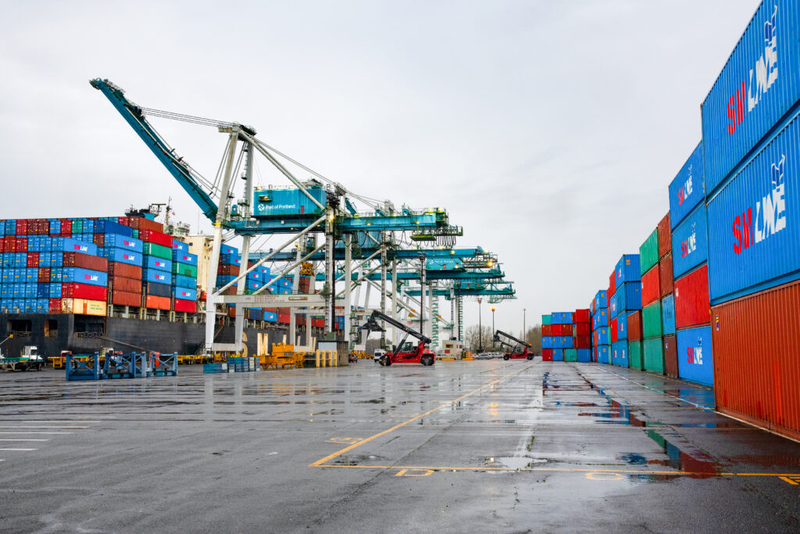
Imports in Oregon in 2026 outpaced exports for the first time in years following Trump tariffs. (Photo courtesy of the Port of Portland)
This is a developing story and may be updated.
Since the COVID-19 pandemic, economic growth in Oregon has underperformed the nation’s.
Now, the gap between the two is closing and the state’s economic output is growing at about the same pace as the national economy, according to Oregon’s chief economist, Carl Riccadonna, and senior economist, Michael Kennedy.
The two presented the data, part of the state’s latest revenue forecast, to reporters Tuesday evening ahead of a Wednesday meeting with the House and Senate revenue committees.
Overall state revenue for the current biennium is up $55 million from the previous forecast in May, and expected to be up $538 million for the 2027-29 biennium. Combined, the state could start next year with nearly $600 million more dollars in its coffers, Kennedy said.
That’s largely from an unexpected increase in personal income taxes, which is buffering an unexpected decline in corporate income taxes. The higher income taxes indicate more people are working, more people are earning higher wages, or both. Oregon’s relatively stagnant employment rate indicates it has more to do with wage growth than job growth, though Riccadonna said the employment gap should be starting to close as well.
The revenue boost is good news to lawmakers who will meet for six months beginning in January to negotiate state spending priorities, though two more revenue forecasts to come before the session could change the picture.
Riccadonna described Oregon’s economy at present as “relatively steady.”
“The long and short of it is that the economy kind of continues to chug along at a fairly decent pace,” he said.
It’s a departure from the last forecast in May, when the economists expected a steep drop in state income tax revenue from sluggish job growth, wage stagnation and higher inflationary pressures — especially due to rising gas prices from President Donald Trump’s war on Iran.
Thresholds for gas prices that would have tipped the U.S. economy into a recession have not been reached, Riccadonna said, but he added that “energy prices are still very much a headwind for the economy, but not a headwind in the way that is actually leading us to worry about a growth stall.”
Despite inflation running between 3% and 4% throughout the year — that’s about double the 2% inflation rate most economic policy makers target — consumer spending is up in the U.S. and in Oregon. But so is what Riccadonna called “dissaving,” which is individuals saving less than they would otherwise to cover spending and racking up debt to maintain spending levels.
Rep. Ben Bowman, House majority leader and a Democrat from Tigard, said in a statement that the latest forecast shows the economy is steady, but maintains a status quo that has left many Oregonians “barely hanging on.”
“The reality is that next session, because of President Trump’s tax cuts for the rich, Oregon will be forced to cut hundreds of millions of dollars from programs working families depend on, including health care and food assistance,” he said.
Gov. Tina Kotek in a statement echoed Bowman’s frustration with federal cuts to Medicaid and the Supplemental Nutrition Assistance Program, or SNAP.
“There are promising indicators in today’s forecast, but too many Oregonians are struggling to make ends meet. Oregon families continue to face rising prices and that’s likely to continue as President Trump’s tariffs drive up costs for everyday goods and the war in Iran keeps gas prices high,” she said. “President Trump and Republicans in Congress are also cutting crucial social programs, such as SNAP and Medicaid, meaning Oregon’s resources will need to go further.”
Sen. Bruce Starr, a Republican from Dundee and Senate minority Leader, said in a statement that the forecast shows Oregonians are “doing their part to keep our economy moving, even as energy bills and the cost of living take a bigger bite out of their paychecks.”
He said he was concerned about the expected drop in Corporate Activity Tax revenue, and said it shows that policy makers should do more to keep businesses in the state.
Impacts of tariffs, inflation, GOP tax and spending law
The Supreme Court ruling striking down Trump’s tariffs in February stabilized some of the unpredictability in the economy during the first half of the year, but recent attempts by Trump to reinstate many of those have caused uncertainty, the two economists said. When tariff rates were effectively dropped, imports surged, adding to economic growth.
Tariffs didn’t start Oregon’s economic slowdown, but they exacerbated it, report finds
Tariff refunds following the Supreme Court decision also acted as an effective tax refund for businesses, which helped to stabilize the economy and offset some of the worst headwinds from rising energy prices throughout this year, Riccadonna said.
Riccadonna said overall corporate income taxes show “unusual developments” in large part because of the tax and spending law congressional Republicans passed in the summer of 2025 that was made retroactive to the beginning of 2025. That shifted how corporations paid their taxes, applied refunds forward and interacted unpredictably with the tariff refunds corporations received.
Kennedy expects corporate income tax revenue to come in $92 million less than expected during the next biennium, and explained that the state’s so-called “corporate kicker” rebate that has during the last decade consistently sent millions of higher-than-expected business tax revenue to Oregon’s schools is “no longer kicking.”
Recession odds remain relatively unchanged, Riccadonna said, at about 18% likelihood. He said he does not expect that will fall in part because risks remain high that inflated valuations for artificial intelligence and technology investments could cause the stock market to fall.
The other recession risk is persistent inflation. Wages are up but are being diluted by rising prices on everyday goods.
That means at some point the Federal Reserve will need to get aggressive about raising interest rates to cool the economy or investors themselves will push interest rates up via demanding inflation premiums on their investments. Both would drive down sales of vehicles, houses, and any big purchases that require borrowing, which could slow the economy.
- 10:15 amUpdated with comment from Oregon Gov. Tina Kotek.
- 10:09 amUpdated with comments from Rep. Ben Bowman, House majority leader, and Sen. Bruce Starr, Senate minority leader.
Salem, OR