NJ e-bike law requiring registration, insurance now in effect
Jul 20, 2026 | 7:19 am ET
Description
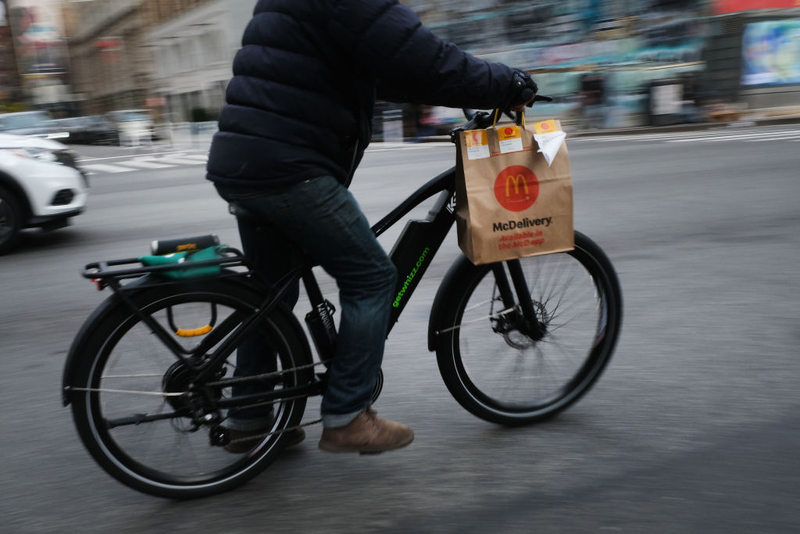
New rules for e-bike riders went into effect Sunday. They require registration and in some cases insurance. (Photo by Spencer Platt/Getty Images)
New Jersey’s overhauled e-bike rules are now in effect, meaning thousands of riders across the state must be licensed, registered, and in some cases insured for the first time.
Under a law signed by then-Gov. Phil Murphy before he left office in January, e-bikes fall into two groups: low-speed electric or pedal-assist bikes that top out at 20 miles per hour, and faster, throttle-powered bikes that can reach up to 28 miles per hour.
The lower-speed bikes must now be registered with the state Motor Vehicle Commission. Riders of the higher-speed bikes must register them and obtain liability insurance to ride them.
Riders of both types must be at least 15 years old, hold a valid driver’s license or a special e-bike license issued by the Motor Vehicle Commission, and wear a helmet regardless of age. Riders can face fines of up to $50 per violation.
As of July 15, the commission had issued more than 4,100 e-bike registrations and 250 e-bike permits, said agency spokesman William Connolly.
“MVC is working hard to service as many riders as quickly and efficiently as possible,” Connolly said.
Out-of-staters who bring their e-bikes across state lines will have to register their bikes in New Jersey and get licenses if they don’t have a regular driver’s license.
The push for tighter regulations followed a string of fatal e-bike crashes around the state. Murphy’s office cited “numerous dangerous crashes” when he signed the bill, while bill sponsor state Senate President Nick Scutari (D-Union) has argued that e-bikes have gotten faster and more powerful and that younger, inexperienced riders are using them.
Nationally, e-bike injuries rose by 293% from 2019 to 2022, according to Columbia University researchers.
Bike advocates opposed the new law, saying it adds unneeded barriers for cyclists.
Trenton, NJ