NJ Democrats eye data center, AI regulation if Congress changes hands
Oct 26, 2026 | 6:48 am ET
Description
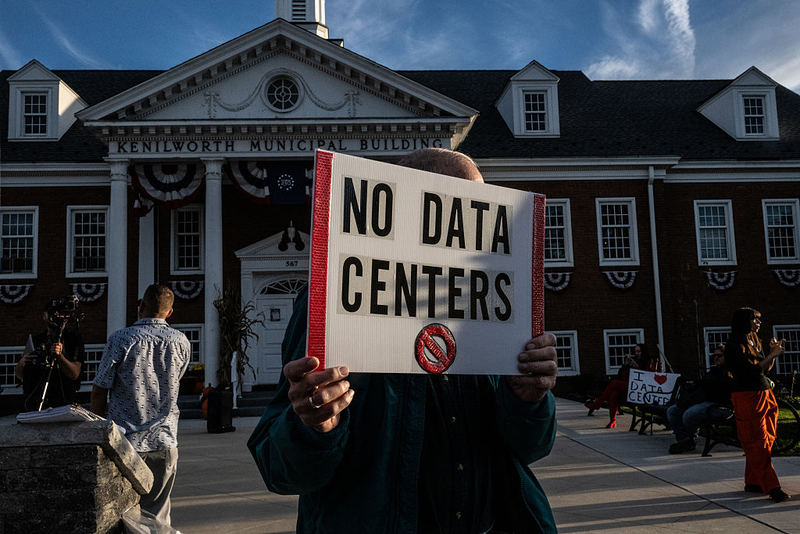
People participate in a protest of the CoreWeave AI data center outside the municipal building on October 21, 2026, in Kenilworth. New Jersey Democrats hoping to flip control of Congress say they want to curb data center development. (Photo by Stephanie Keith/Getty Images)
On the second day of early in-person voting for the upcoming midterm elections, Democratic House hopeful Adam Hamawy joined a group of environmental activists to protest a planned data center in South Brunswick.
The campaign stop shows Hamawy, a physician who is hoping to succeed Rep. Bonnie Watson Coleman in the 12th Congressional District, recognizes that public anger over data centers is key to energizing Democratic voters hoping to win back control of the House of Representatives.
In an interview last month with the New Jersey Monitor, Hamawy said federal regulations on data center construction are needed because the environmental and energy issues they present cross state lines. He said he does not support a ban on data centers, but backs a temporary pause on construction to study their impact.
“We need to slow down. We are moving too fast,” he said. “It’s uncontrolled.”
The election is Nov. 3. All 12 of New Jersey’s House seats are on the ballot, as is Sen. Cory Booker (D), who is seeking a third full term against Republican Justin Murphy.
New Jersey Democrats say if they take back control of the House next year, moving to rein in data center construction and the artificial intelligence industry is a top priority. They say they want to push bills to make data centers supply their own clean power and call AI executives to testify before Congress.
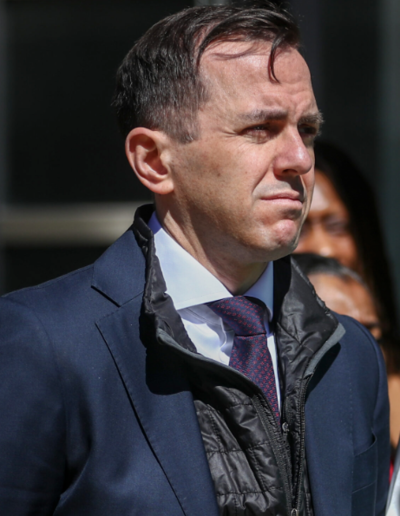
“I think the entire AI conversation is very high on the priority list,” said Rep. Rob Menendez (D-08), who is running for a third term with no GOP challenger. “We can’t wait another day to have this conversation.”
A new Politico Poll says half of Americans oppose data centers being built within three miles of their home and are more likely to oppose candidates who back data center construction. Democrats are benefiting from the backlash, the poll says.
So far, the fight over data center regulation has played out largely at the local level. In New Jersey, more than 100 of the state’s 564 municipalities have banned or restricted new construction.
There are at least 80 data centers in New Jersey, according to South Jersey Climate News. And while some states are considering moratoriums on data center construction, including neighboring New York, our governor, Mikie Sherrill, a Democrat, has resisted calls for such a ban.
In January, Menendez introduced two bills targeting data centers, one that would require them to generate all the electricity they use, with clean energy targets in 2040, and another that would require them to report how much water is used and greenhouse gases emitted every six months. He also pointed to other legislation introduced that would halt construction of AI data centers until the federal government requires approval for new AI models.
“States are sort of in the laboratory now, and they’re thinking about AI regulations, but we very much need a federal framework,” Menendez said.
Hamawy, a surgeon whose chief opponent is Republican Gregg Mele, said he’s used AI in his medical practice to increase efficiency with paperwork, but sees clear downsides of the technology, like the mistakes it makes when used for research or the impact it’s had on children’s reading and writing skills.
“We need to just kind of make sure that we are doing this correctly, and maximizing the good and minimizing the bad,” he said.
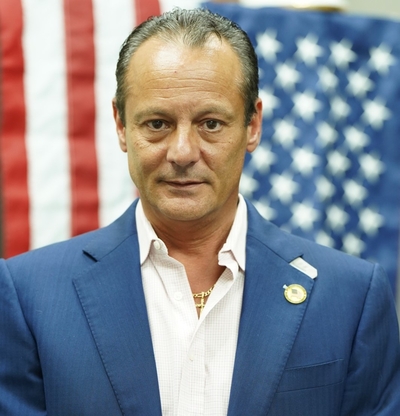
Carmen Bucco, a Republican challenging Rep. LaMonica McIver (D) in the 10th District, lives in Kenilworth, about a mile from where the cloud computing company CoreWeave is now building a $1.8 billion data center. So he fully understands the community’s concerns about how much water the facilities use, the noise they make, and the energy they consume.
But he finds some hypocrisy in the revolts now raging in communities around the state, noting that no one protests outside golf courses over their water consumption.
People initially complained about the effects of cell phones and microwaves when they were first introduced too, he said.
“And all these things are here now, and maybe they’re affecting our lives, maybe they’re not. We’ll never know the truth. Science is good, but there’s no 100% in science either,” he said.
Data centers are also a hot issue down in the 2nd District, where Rep. Jeff Van Drew is seeking reelection against Democrat Zack Mullock.
Mullock, the Cape May mayor, regards data centers as an environmental justice issue, pointing to the controversial data center in Vineland that state officials recently fined $1 million for installing dozens of unpermitted power generators. The problems that have arisen since that project broke ground earlier this year prove that policymakers must demand more transparency around data center development before greenlighting anything, he said.
“This is a huge, huge, huge project, and that’s not what it was sold to the public,” Mullock said.
Mullock said he would support a moratorium on data center development until policymakers can learn more about their impacts. He opposes tax breaks for developers, noting the multibillion-dollar price tags of bigger projects.
“I think data centers are a part of our future. But we’re at the genesis. We are at the moment where we can choose our future,” he said. “We the people should shape that future. It shouldn’t be made in backroom deals.”
The CEO of the firm behind construction of the Vineland data center has said Van Drew’s support of the facility was critical. Van Drew has expressed support for data centers but has joined some of his colleagues in pushing for guardrails on the industry.
Earlier this year, he joined Rep. Josh Riley (D-New York) on a bill aimed at stopping data center projects from driving up energy bills.
“Artificial intelligence has the potential to do a lot of good for our country, but that growth must be handled responsibly,” Van Drew said in a statement when that bill was introduced. “Families and small businesses are already paying far too much for electricity, and they should not be hit with even higher bills because major data center projects require massive amounts of energy and new infrastructure.”
Bucco said if elected, he would restrict data center development to rural areas, prioritize bolstering the power grid, and require data center developers to generate their own power and water supply. He opposes tax breaks for them, but said their development is inevitable.
“I understand progress. I might get hated for it, but that’s life. If we don’t progress, we sit in the Stone Age, and AI is going to be here,” he said. “It’s just a matter of what towns want them and what towns don’t.”
Trenton, NJ