Newcomer challenges 30-year incumbent in Alabama’s most Republican U.S. House district
Oct 21, 2026 | 5:59 am ET
Description
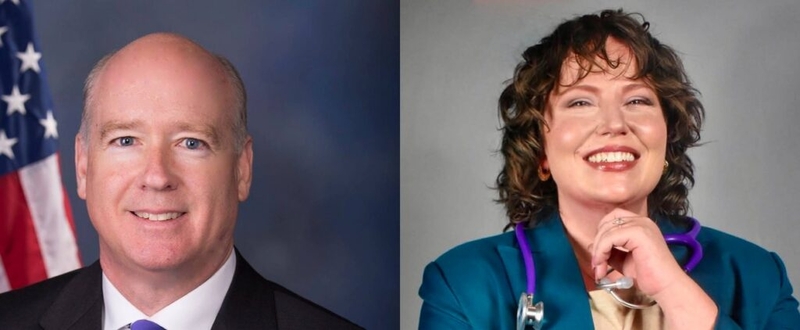
In Alabama’s 4th Congressional District, U.S. Rep. Robert Aderholt, R-Haleyville (left), who has held the seat since 1997, faces Democratic nominee Amanda Pusczek (right), a first-time candidate. (Photos courtesy of candidates; photo illustration by Ralph Chapoco/Alabama Reflector)
Candidates for Alabama’s 4th Congressional District both said residents are facing ongoing hardships but the two focused on different issues as part of their campaigns.
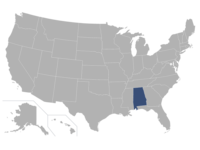
Democratic nominee Amanda Pusczek, a first-time political candidate, is challenging U.S. Rep. Robert Aderholt, R-Haleyville, who has represented the district since 1997. The district comprises parts of the northern part of Alabama. It includes Blount, Cullman, DeKalb, Fayette, Franklin, Lamar, Marion and Marshall counties, and parts of Colbert, Lauderdale and Tuscaloosa counties.
The area is one of the most conservative in the country. In 2024 more than 82% of voters in the district chose Donald Trump for president, according to an analysis from The DownBallot. The Cook Political Report, a nonpartisan newsletter that analyzes elections, rated the district as “Solid Republican.”
Pusczek moved to the district from Missouri when she was 6 years old. She works as a nurse.
“I learned something from an early age, which is to be of service,” she said in an interview on Monday. “Your life only has value as to what you can give out into the world. That has been my guiding star for a very long time.”
Aderholt said Monday that he was “learning everyday how to better serve the district I represent.”
“Seniority matters in Washington, and I feel I am in a position where I can continue to help the people of the 4th District,” he said.
Both candidates cited the pressures of inflation and high gas prices. Pusczek blamed tariffs imposed by Trump as well as the conflict with Iran.
“People are burning through their savings right now, and people might lose their entire savings. Those who have worked for their entire lives are now almost gone,” she said. “Younger folks like me, we can’t even begin to contemplate saving when we are living paycheck to paycheck. I would say we are living in an affordability crisis.”
Aderholt cited the war in Iran, and said he was hopeful “that the President will move on this war and end it in a very short period of time, if nothing else, because of gas prices.”
But Aderholt added that he does not second-guess the president’s decision to initiate the conflict because “I know Iran wants to destroy the United States. I know they would love nothing more.”
Pusczek also criticized Aderholt for voting for the One Big Beautiful Bill Act touted by Trump in 2025. The legislation did not extend enhanced tax credits for the Affordable Care Act to reduce insurance premiums for households who buy insurance in the marketplace. In Alabama, ACA enrollment dropped 23% after the tax credits expired last year.
The legislation also shifted some of the cost of the Supplemental Nutrition Assistance Program to the states. Alabama could pay an additional $174 million if the state does not reduce the error rate, which is affected by changing household circumstances.
“With the cuts, I have thousands of constituents who are in a greater threat of food insecurity than they were before,” Pusczek said.
Aderholt pointed to tax cuts in the legislation, such as reducing the taxes on tips earned by workers.
“At the end of the day, it is going to lower prices,” he said. “I think, for the average person, it will help. This is bringing more money back to the average person, even the low-income person.”
Each candidate focused on a different set of priorities for the campaign. Pusczek highlighted healthcare, protecting people’s rights and affordability. Her campaign website said she wants to raise the federal minimum wage to $15 and enhance collective bargaining for unions. She also wants to increase resources for rural healthcare. She proposed forgiving some of the student loan debt for physicians who choose to practice in rural areas and reclassify emergency medical service as a public utility.
Aderholt focused on economic development on his campaign website. One of his goals is to secure funding for the district to expand the economy. The U.S. Navy invested $900 million in a manufacturing project involving Hadrian, a defense contractor developing a facility in Cherokee, through funding provided by the One Big Beautiful Bill Act.
“I have had the opportunity to work with a lot of counties and cities that are not highly populated, or a lot of income because of their tax base, and trying to help them with sewer connections, and trying to get some highways in there to connect to certain areas so that they can do economic development on their own,” Aderholt said.
Montgomery