New Plan Aims To Extend Honolulu Rail Line For An Extra $4 Billion
Oct 23, 2026 | 6:01 am ET
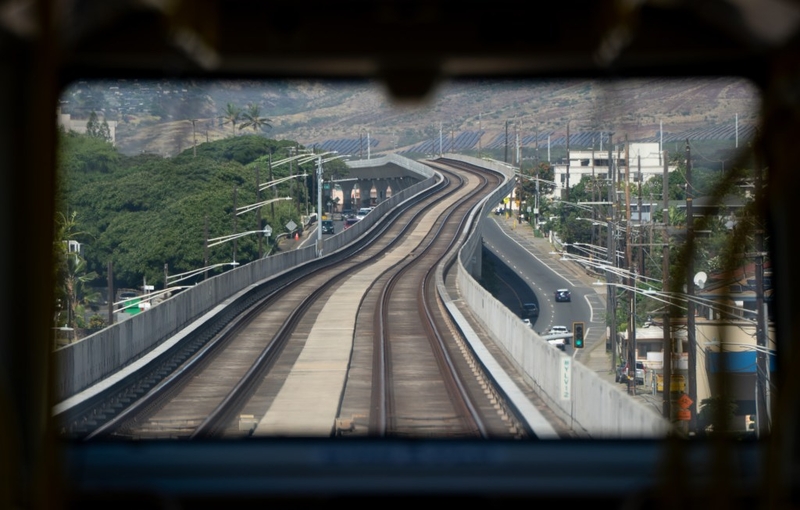
Description
Photo courtesy of Honolulu Civil Beat
In a move that sets up the next big political play for the Honolulu rail project, a new report to the rail authority is suggesting extending the Skyline system east to Ala Moana Center and west to central Kapolei at an estimated cost of as much as $4.8 billion.
Although it is unclear how the new rail segments could be financed or when they would be built, Honolulu Mayor Rick Blangiardi has already endorsed the idea of extending the rail line in both directions in a Sept. 29 letter. The state Office of Planning and Sustainable Development is also backing the proposal.
The new report by the subcommittee of the Honolulu Authority for Rapid Transportation board mentions a half-dozen ways the city might raise the billions of dollars needed to build the rail extensions. The most obvious strategy would be to ask the state Legislature to extend Honolulu's half-percent excise tax surcharge for rail.
That surcharge on goods and services sold in Honolulu raises about $360 million a year, and provides most of the funding for the $10 billion, 18.9-mile rail line now under construction. But the surcharge is scheduled to expire at the end of 2030, and the Legislature would have to vote to extend it to finance any extensions.
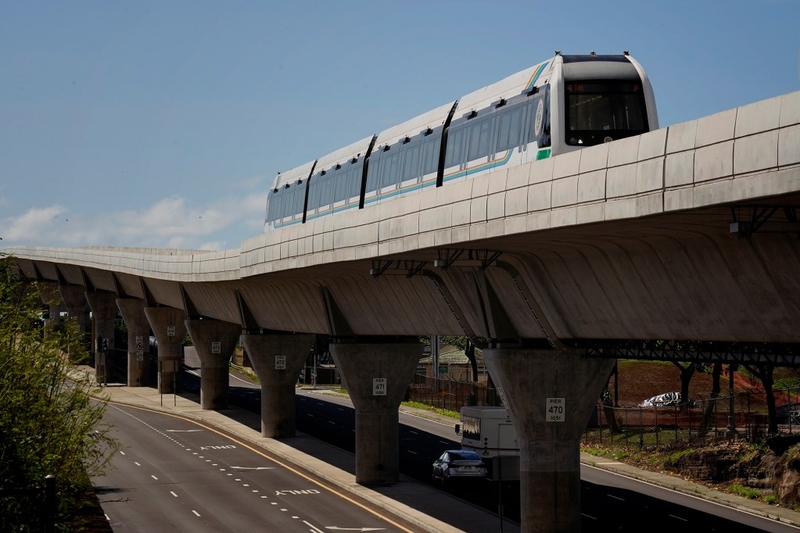
Given the long, fraught history of Skyline, a vote by the Legislature to extend that excise surcharge for rail could add to past controversies.
The project was budgeted at about $5 billion when construction began in 2011, and the line from East Kapolei to Ala Moana Center was supposed to be completed by 2020. As cost overruns drove up the price of the project, HART was forced to ask state lawmakers and the Honolulu City Council for financial bailouts in 2015, and again in 2017, and yet again in 2021.
The current rail project budget is about $10 billion, and the city was forced to shorten the line to end it in Kakaʻako instead of at Ala Moana Center to stay within that budget. Even so, a federal consultant has warned rail costs appear to be climbing again.
The first two segments of rail from East Kapolei to Middle Street are open, but construction on the rest of the project has been running more than a decade behind schedule. HART CEO Lori Kahikina acknowledged in June the full rail line as currently planned may not open until 2032, or a dozen years later than originally planned.
A Need To Move Quickly
The report by the HART subcommittee, which is officially known as a permitted interaction group, sets up another chapter in that saga. The HART board voted in June to create the subcommittee, which was instructed to produce a report by Oct. 2 on possible future extensions for rail.
HART board Chair Kika Bukosky explained at the time the subcommittee had to move quickly because the Legislature meets in January, and "this next session is going to be critical for seeking additional funding options, if any, from the state."
The report recommends HART proceed with a feasibility study of a 1.2-mile extension of the elevated guideway through Kakaʻako to Ala Moana including two new rail stations, and an additional mile of guideway in Kapolei to a new station that would be built near the Ka Makana Aliʻi mall.
Rough cost estimates in the report suggest the addition of the Ala Moana segment and its two new stations would cost $2.2 billion to $2.5 billion, while the Kapolei segment with one additional station would cost $2 billion to $2.3 billion. The HART board will officially receive that report on Friday.
The subcommittee noted there has been extensive development in both Ala Moana and Kapolei in the past 20 years, and the planned alignment for the rail system developed in 2007 for those areas may not be workable today. However, if the study concludes the extensions are "viable," the subcommittee recommended HART proceed with design, planning and construction.
The report was based on "the widely accepted belief that the current funded Skyline alignment between East Kapolei Station and Civic Center Station falls short of maximizing Skyline's ridership potential," according to the subcommittee. The subcommittee heard repeatedly during a series of seven meetings that stakeholders supported extending the rail system to the University of Hawaiʻi Mānoa to help reduce rush-hour traffic, according to the report.
The meetings by the permitted interaction group were not open to the public. They were attended by city and state officials including Blangiardi and HART staff as well as executives with developer Howard Hughes Communities and shopping mall operator GGP.
The subcommittee was made up of HART board members John Katahira, Chris Takashige and Kaulana Park. City Department of Transportation Services Director Roger Morton and state Department of Transportation Director Ed Sniffen, both members of the HART board, were also part of the subcommittee.
A Changing Political Scene
State lawmakers in the past have attacked city officials -- including former Honolulu Mayor Kirk Caldwell -- when they asked for state money for rail bailouts, but the politics of rail may have changed in recent years.
Two particularly powerful lawmakers who questioned spending on the city rail project were Sylvia Luke, when she was House Finance Committee chair, and former House Speaker Scott Saiki. Saiki in particular feared the state might someday need the hundreds of millions of dollars in revenue from the excise tax surcharge that now goes to rail to resolve chronic problems such as improving Hawaiʻi's education system.
But Saiki was voted out of office in 2024, and Luke was elected lieutenant governor in 2022. She was later indicted as part of an ongoing corruption probe by the state Attorney General's Office, and she has been on unpaid leave.
That sudden shift in political players may translate into less resistance at the state Capitol if the city seeks another extension of the excise surcharge next year to fund rail construction. It might also help that the four county mayors appear to be united on the issue, and all want the excise surcharge extended.
In a written statement Thursday, Senate President Ron Kouchi said that Senate Democrats will discuss next year's priorities in a caucus early next month, after the Nov. 3 election. "Anything before that would be premature as far as a caucus position," the statement said.
House Finance Committee Chair Chris Todd said House leadership has not yet had detailed discussions with HART or the House Democratic caucus, but some House members have stated they want more details about how the excise tax revenue is being spent, and want to know more about plans for housing along the rail line.
"I think it's too early to tell," he said when asked whether the surcharge might be extended. "To be quite frank, the state does have tremendous needs. We have a massive backlog of deferred maintenance, and ... we need to kind of weigh all those things out together."
There is concern because of things "on the state's back burner currently," Todd added. "But you know, people are excited about the rail becoming a fully functioning part of that transportation ecosystem."
Honolulu, HI