New Mexico educators lay out proposals to improve student job prospects
Oct 29, 2026 | 1:00 pm ET
Description
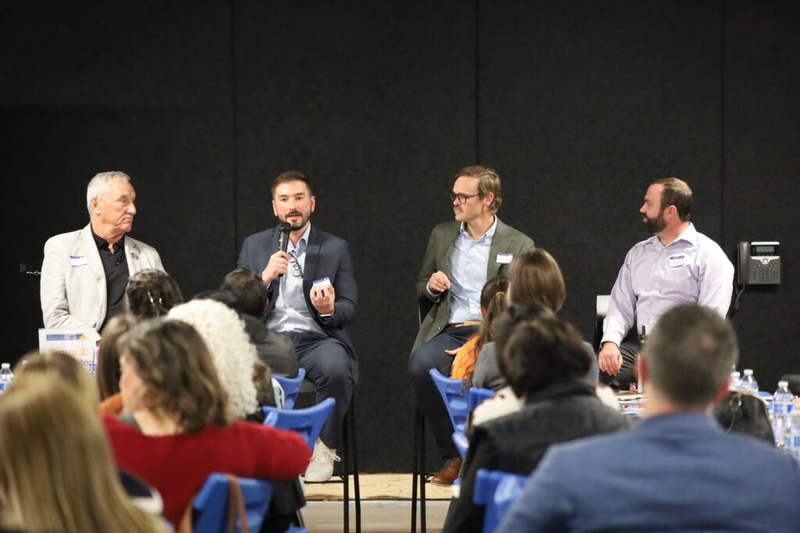
Photo caption: From left to right: Sen. Bill Soules (D-Las Cruces), KYVA Analytics President Scott Secamiglio, Pacific Fusion External Relations Lead Matt Pahl and New Mexico School Counselor of the Year Teach Robert Wiebelhaus at Teach Plus New Mexico’s Statewide Economic Mobility Summit in Albuquerque on Oct. 26, 2026, where three recommendations to address student economic opportunity and mobility were announced. (Photo by Matt Mondschein/Source NM)
A group of New Mexico educators presented policy recommendations this week to improve student job prospects.
The recommendations, presented Monday in Albuquerque at Teach Plus New Mexico’s third Statewide Economic Mobility Summit, build on feedback the nonprofit gathered at conferences in Hobbs and Santa Fe last year and include creating more workforce opportunities for students, boosting the student-counselor ratio and improving workforce data collection.
Hope Morales, Teach Plus New Mexico executive director, told Source NM that middle and high school students at both previous conferences expressed the desire for more hands-on learning through internships and more information about job opportunities. The group also recommends boosting the number of school counselors to help students learn about and find those opportunities.
“If counselors have too high a caseload, we’re stretched too thin and not able to guide students in emotional coping strategies and career readiness,” Robert Wiebelhaus, New Mexico’s 2026 school counselor of the year, told Source NM. Teach NM recommended focusing first on schools and communities with the greatest caseloads and opportunity gaps.
According to the American School Counselors Association, New Mexico has a 406-to-1 student-to-counselor ratio. The association recommends a 250-to-1 ratio.
State Sen. William Soules (D-Las Cruces), chair of the Senate Education Committee, attended the summit and told Source NM that New Mexico is “short hundreds of counselors” and the state “ought to be actively recruiting counselors from other states to come to New Mexico while we’re building our counselor program at our schools.”
The organization also wants New Mexico to make its current state student data program, called Rise NM, more accessible and usable by educators in the classroom. Rise NM links records from the Public Education Department, Higher Education Department, Workforce Solutions, Early Childhood Education and Care Department and the Department of Vocational Rehabilitation to track student outcomes from K-12 to the workforce.
The group said the program’s information can be fragmented because of limited teacher and counselor input, particularly in historically underserved communities, making it difficult for educators, policymakers and communities to understand what is working.
Source NM has a pending request for comment with the Public Education Department.
“We’re not recommending that we start over,” Morales said. “We’re recommending that we strengthen what exists and ensure that the information that we are collecting is accessible, meaningful and actually used to improve decisions and student outcomes.”
Santa Fe, NM