New Mexico Democratic lawmakers discuss possibilities for proposed statewide data center moratorium
Aug 11, 2026 | 5:59 pm ET

Description
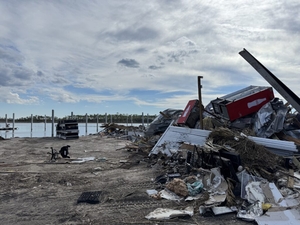
Aerial photos taken on June 26, 2026, show the construction site for Project Jupiter, the Oracle and OpenAI data center project planned for southern New Mexico. (Courtesy of Alexa Reynaud, Food & Water Watch, with aerial support provided by LightHawk)
Two Democratic New Mexico state lawmakers pitched a panel of their colleagues on taking up a data center moratorium in the 2027 legislative session.
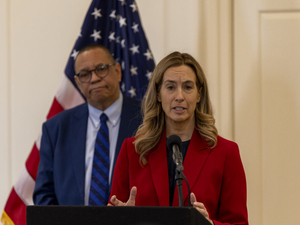
Reps. Micaela Lara Cadena (D-Mesilla) and Angelica Rubio (D-Las Cruces) spoke before the interim Science, Technology and Telecommunications Committee in Socorro on Tuesday about what they envision for the proposed moratorium, which they first announced alongside fellow Democrats in July.
The pair said there are key questions to answer in the months leading up to formally sponsoring legislation for a moratorium, such as what types of data centers should this apply to, and how long should a moratorium last?
Rubio, who along with Lara Cadena has been a vocal critic of the Project Jupiter data center campus under construction in southern New Mexico, compared it to other extractive industries the state has long relied on, such as oil and gas.
The two said that the state needs guardrails around data center development, and cited multiple ongoing lawsuits that accuse Doña Ana County officials of violating the state Open Meetings Act and voting on draft versions of documents when they approved Project Jupiter and issued $165 billion in industrial revenue bonds for it last year.
“Extractive industries and false promises from corporations have been part of New Mexico’s legacy for generations. Our communities have been told time and time again that the jobs will come, that they will be sustainable and that this time, things will be very different,” Rubio said. “Constituents in Doña Ana County are being handed the same promise, just with a fancy new label: artificial intelligence and data centers.”
Republican lawmakers on the committee told Lara Cadena and Rubio that they should conduct a study on how a moratorium would affect the state’s economy and job growth. Rep. Joshua Hernandez (R-Rio Rancho), in particular, questioned the wisdom of a moratorium.
“All of the cat pictures, pictures of our kids, everything we post on Facebook — it’s still going to live somewhere,” he said. “The reality is everybody’s not going to stop posting to social media or consuming that content.”
Lara Cadena and Rubio clarified that there can often be a significant difference between the energy needs of cloud storage data centers and hyperscale AI data centers that often propose to construct their own electric grid for power.
“We need to figure out how to define data centers. That’s going to be really important,” Lara Cadena responded.
Santa Fe, NM